
MARISA MERZ
LISTEN TO THE SPACE
KUNST MUSEUM
Bern
31 January – 1 June 2025
Curator; Livia Wermuth
Reporter; Nazli Kok Akbas
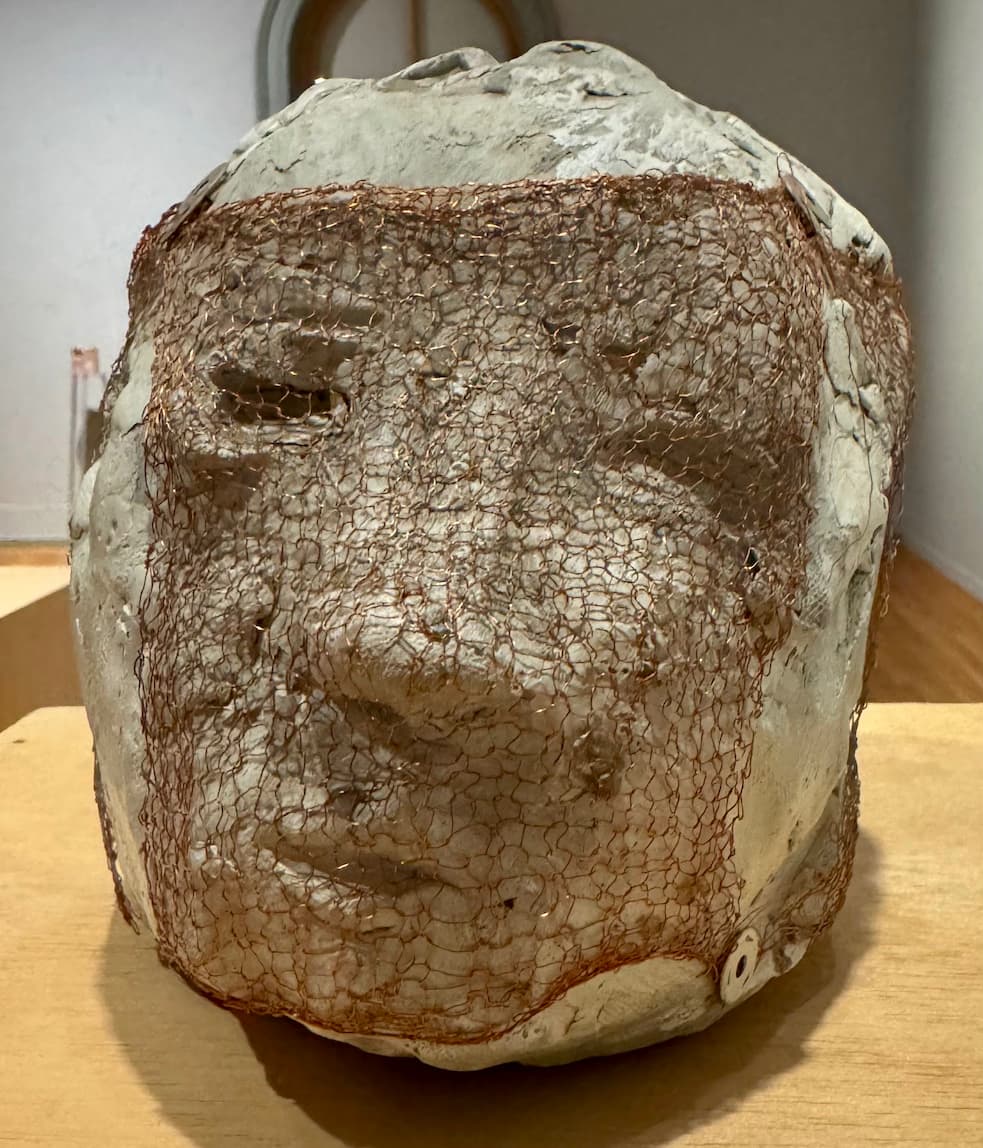
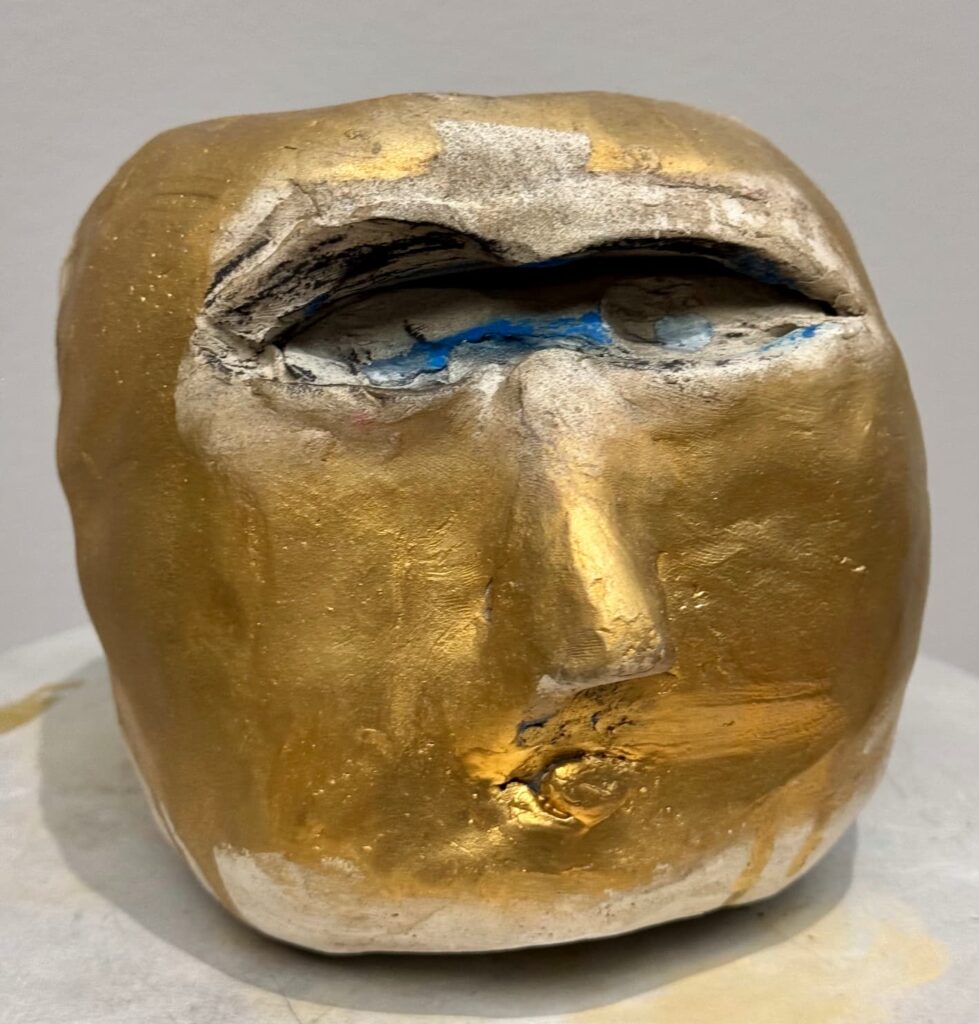
Marisa Merz, Untitled, raw clay, copper wire, tracks.
THE SUBTLE POWER OF MARIZA MERZ’S WORK
The subtle power of Marisa Merz’s work is reflected in a vision that comes from within.
She believed that;
‘THE EYE GUIDES THE HAND, WHEN THE EYES ARE CLOSED, THEY ARE EXTRAORDINARILY OPEN’.
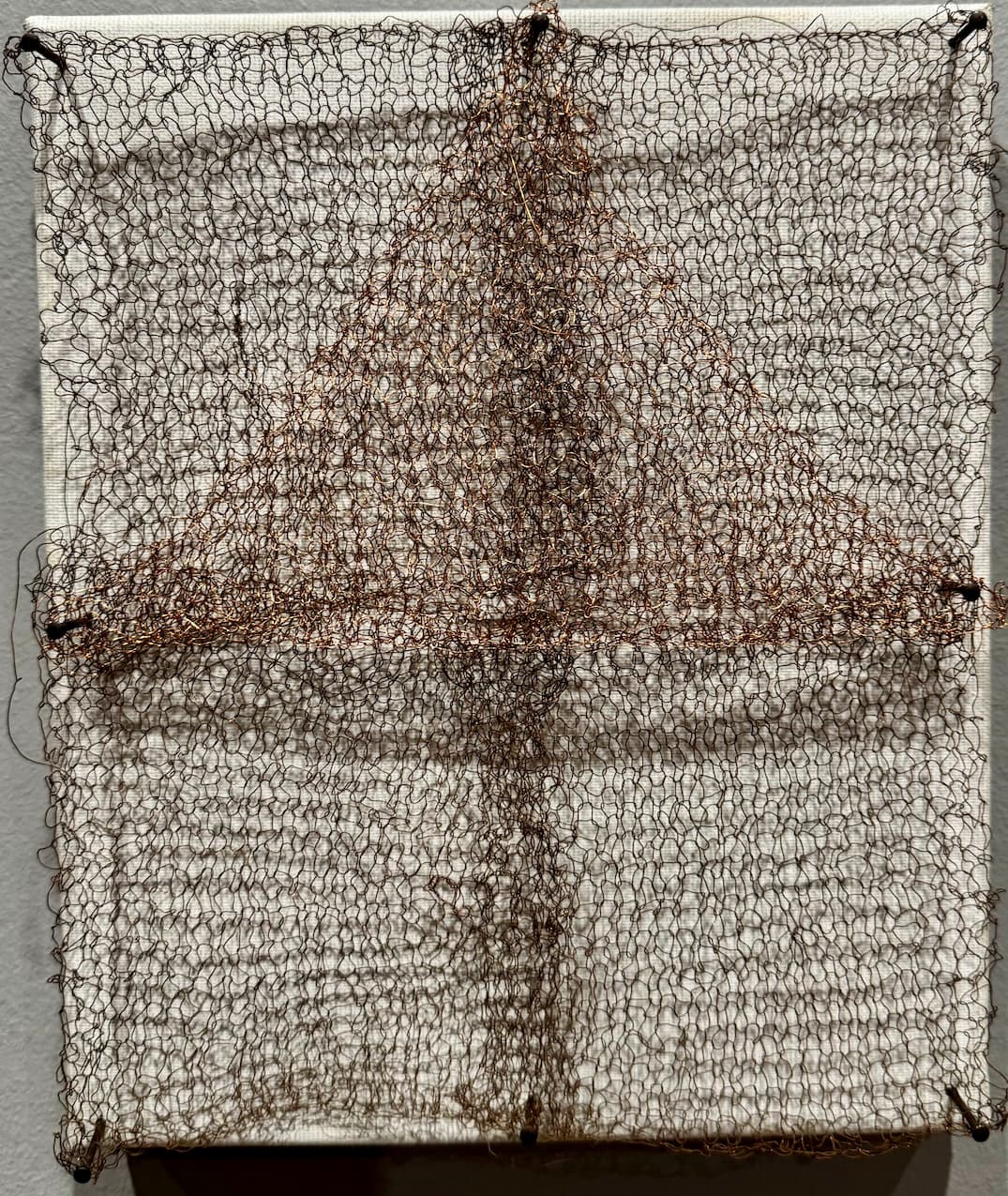
Marisa Merz, Untitiled, copper wire, tracks, canvas
Her work is characterised by SILENCE, POETRY and a search for the FRAGILITY OF ART. According to Marisa Merz, this corresponds to the delicacy of life.
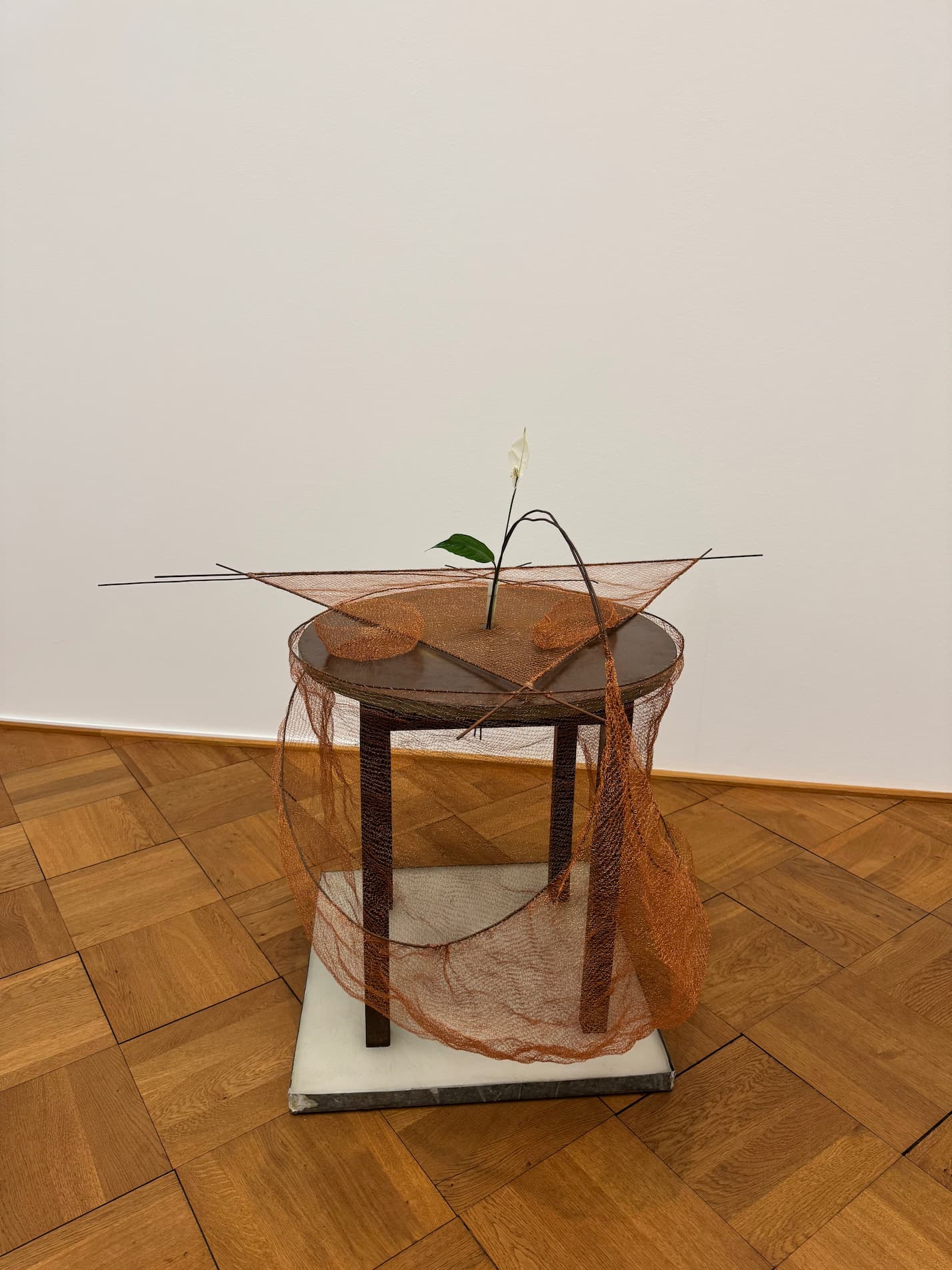
(Photography copyright, Nazli Kok Akbas, NKA Art Reports Switzerland-France-Istanbul Photography 2024. All rights reserved)
SILENCE AND THE MOVEMENT
EVERYTHING IS SO STILL
AND IN THAT INSTANT THE LEAF MOVES
MARISA MERZ
Marisa Merz, Living Sculptures, 1967, Merz Collection
Marisa Merz knew that art and life could not be separated from one another.
“There was never a seperation between my work and my life” is one of the most famous quotes, taken from one of her rare interviews in 1975. The statement refers both to her career and life as a woman in post-far Italy.
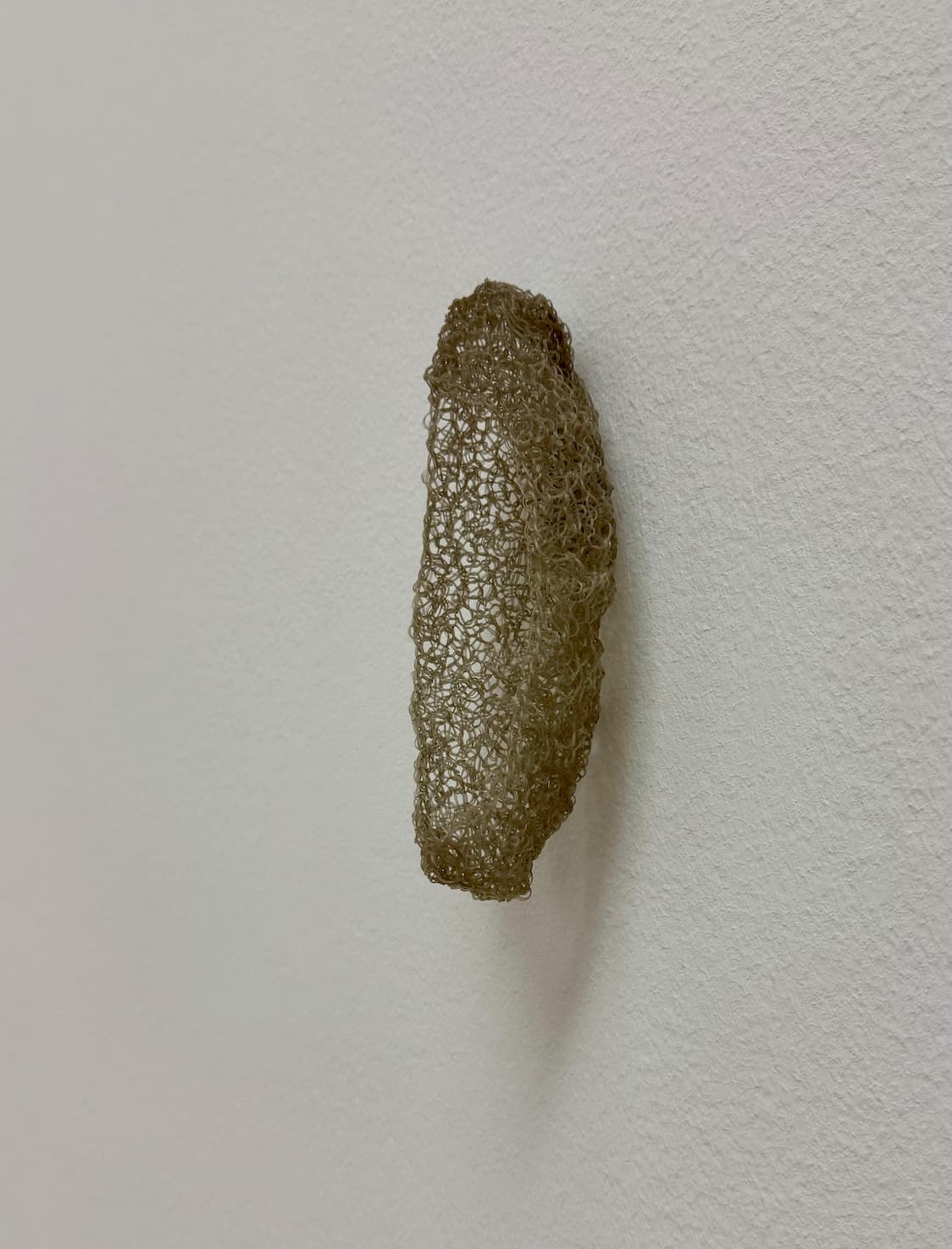
Marisa Merz, Scarpette, 1968,
Living Sculptures are part of a larger series, Untitled, that she began working on in 1965.
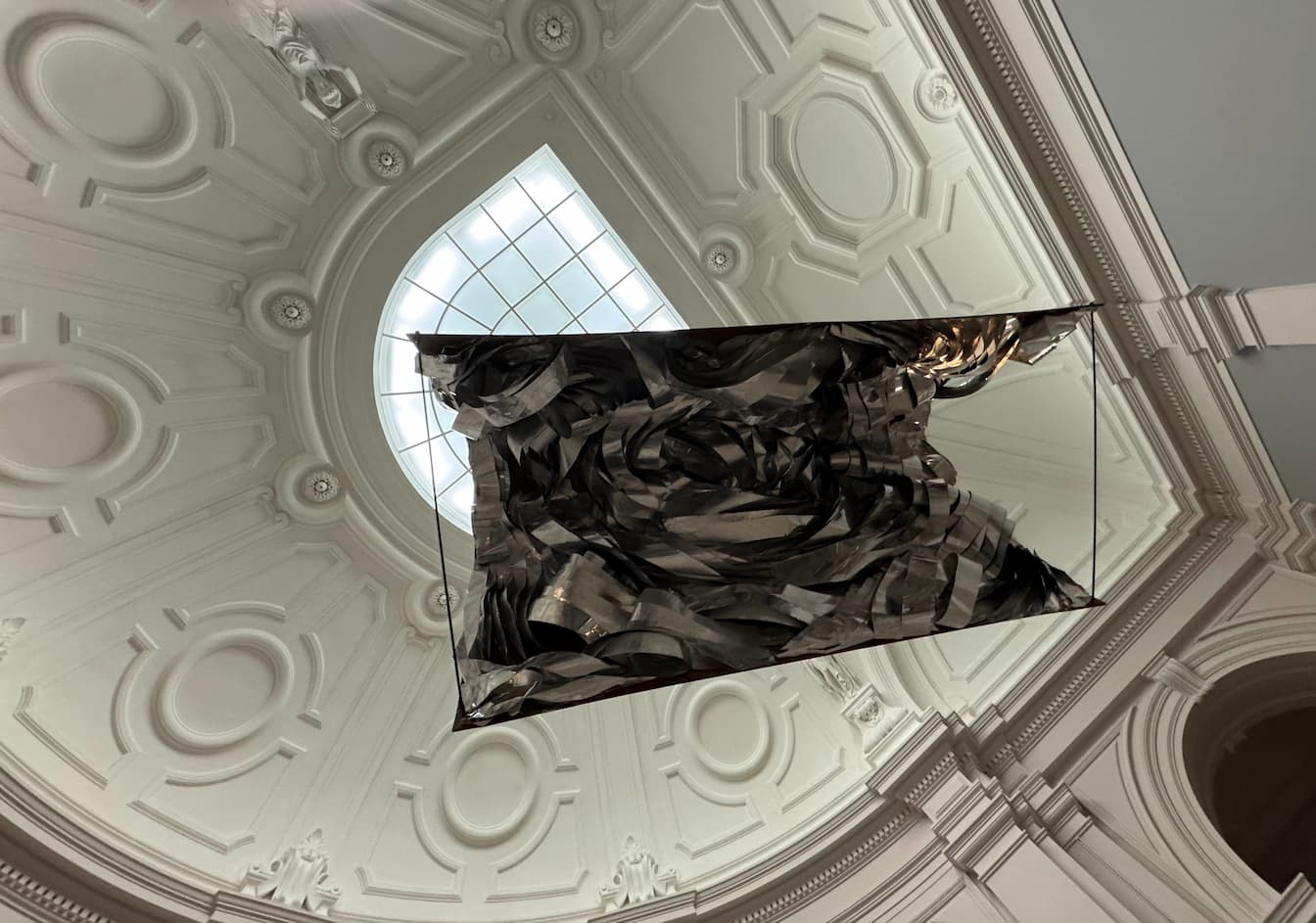
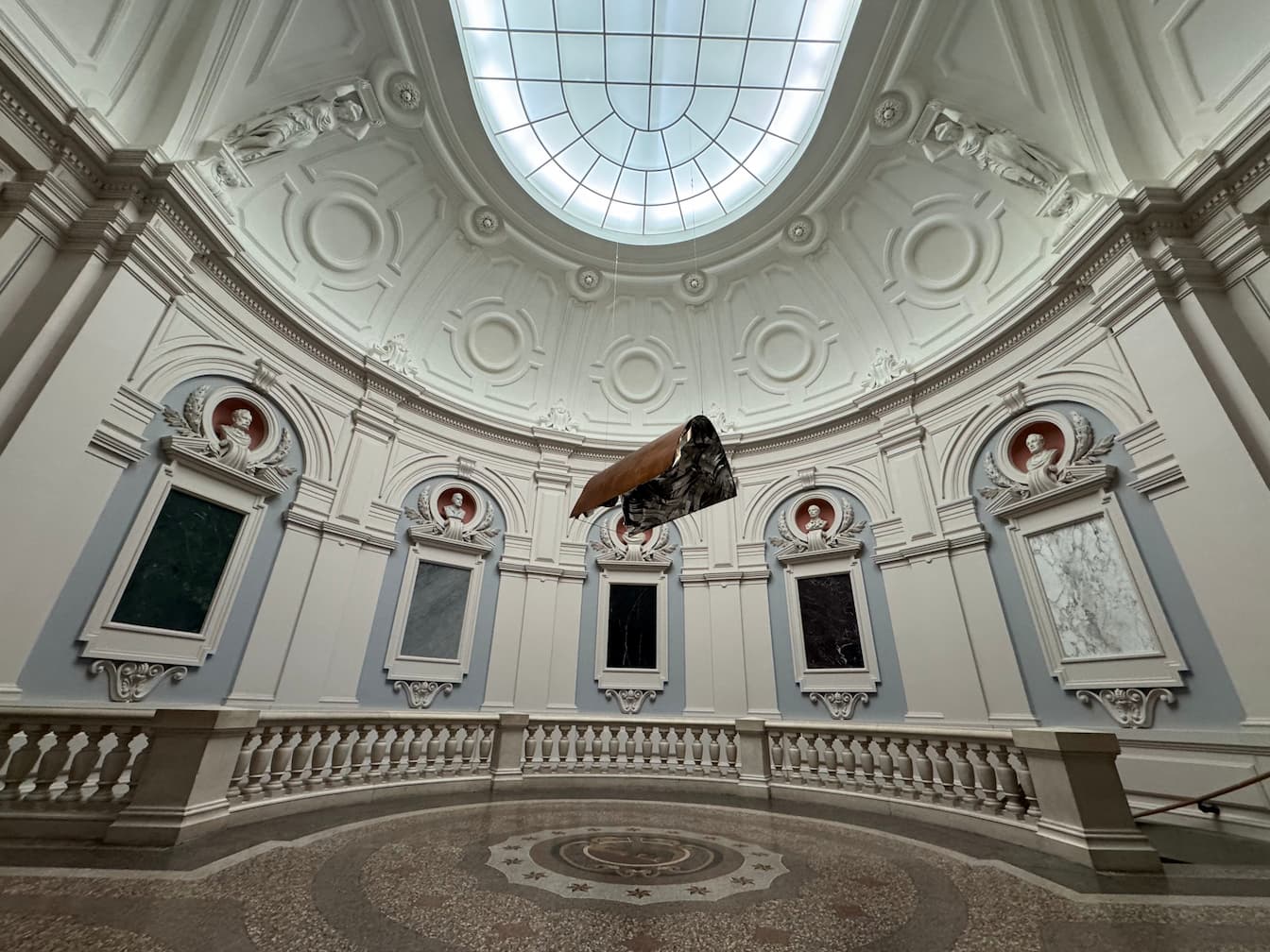
Kunst Museum, Bern.(Photography copyright, Nazli Kok Akbas, NKA Art Reports Switzerland-France-Istanbul Photography 2024. All rights reserved)
This extraordinary object is made of layered sheet metal. It was handcrafted and hung from the ceiling of her apartment in Turin.
Much of the spirit of Germano Celant’s Arte Povera is directly connected to the Merz family. Celant’s fundamental writing “Arte Povera : Notes for a Guerrilla War” was concived and written in their small kitchen Turin appartment.
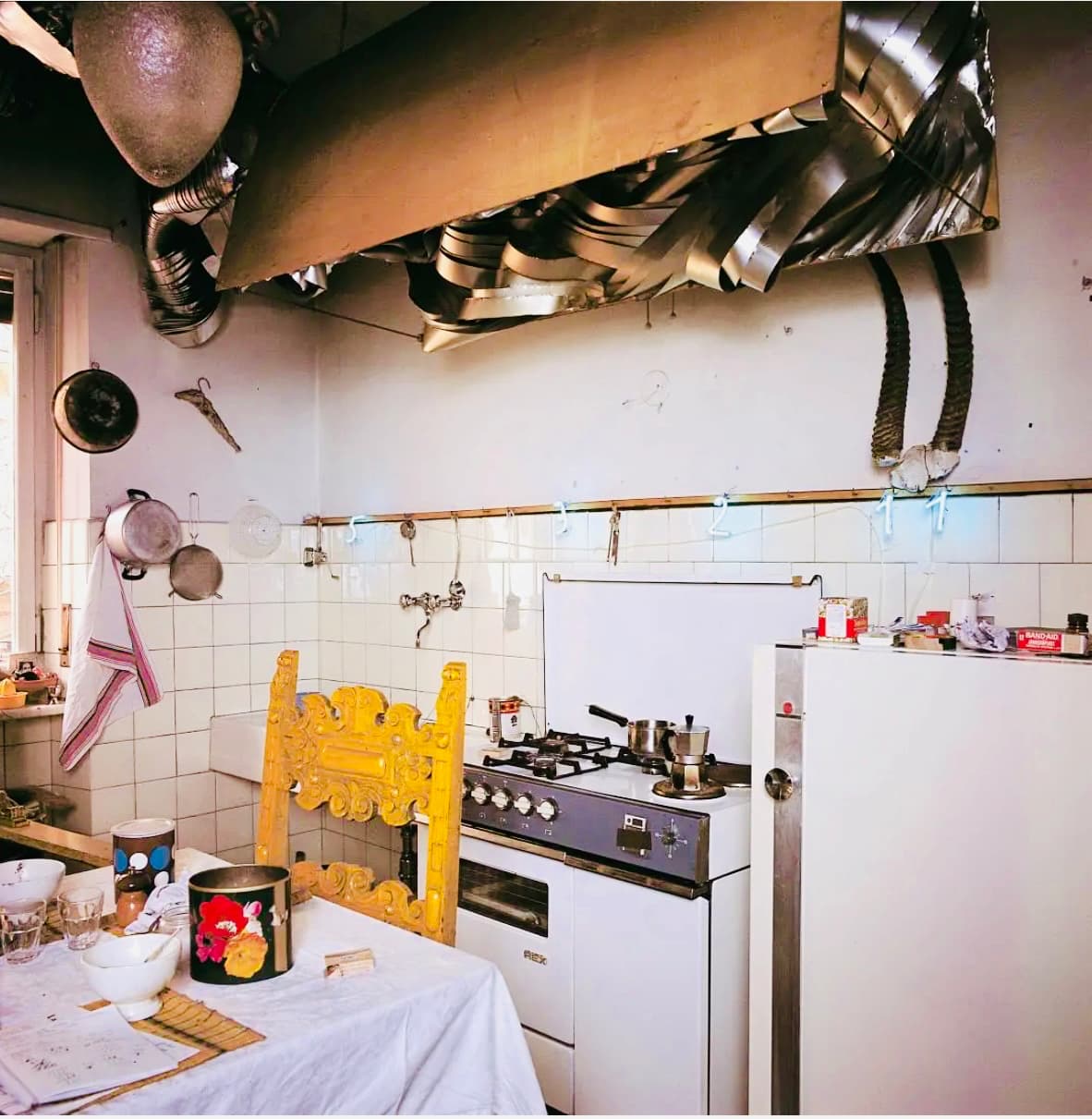
(Photo Copy Right, SIAE, Rome, 2024) Her kitchen Turin Appartement.
Marisa Merz was born on May 1926 in Turin. As a teenager she developped an interest in the rich culture of her hometown.
Very little is known about her early life, including her maiden name. Her father worked at Turin’s Fiat car factory.It is reported that she studied dance, and than she modeled for the neoclassical painter Felice Casorati in the 1940’s.
In 1950s she met her future husband the artist Mario Merz, who was studing in Turin.
in 1960, they maried and had a daughter named Beatrice.
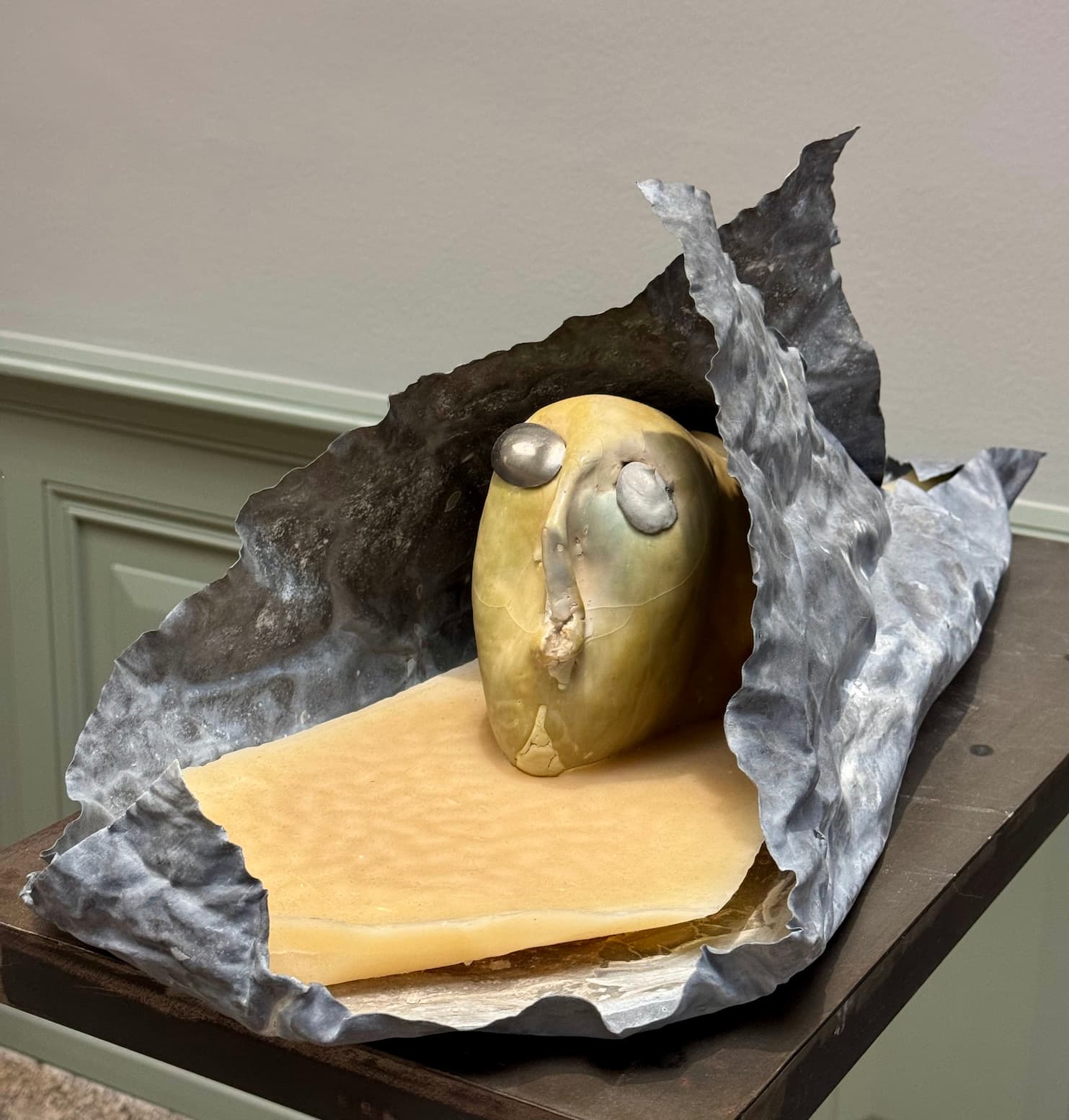
Marisa Merz, Untitled, 1988, Raw Clay, wax, lead, on a metal base. Merz Collection.
During the 1960’s Marisa Merz worked privately in isolation. She made works of art based on her own body measurements and created toys to her daughter Beatrice.
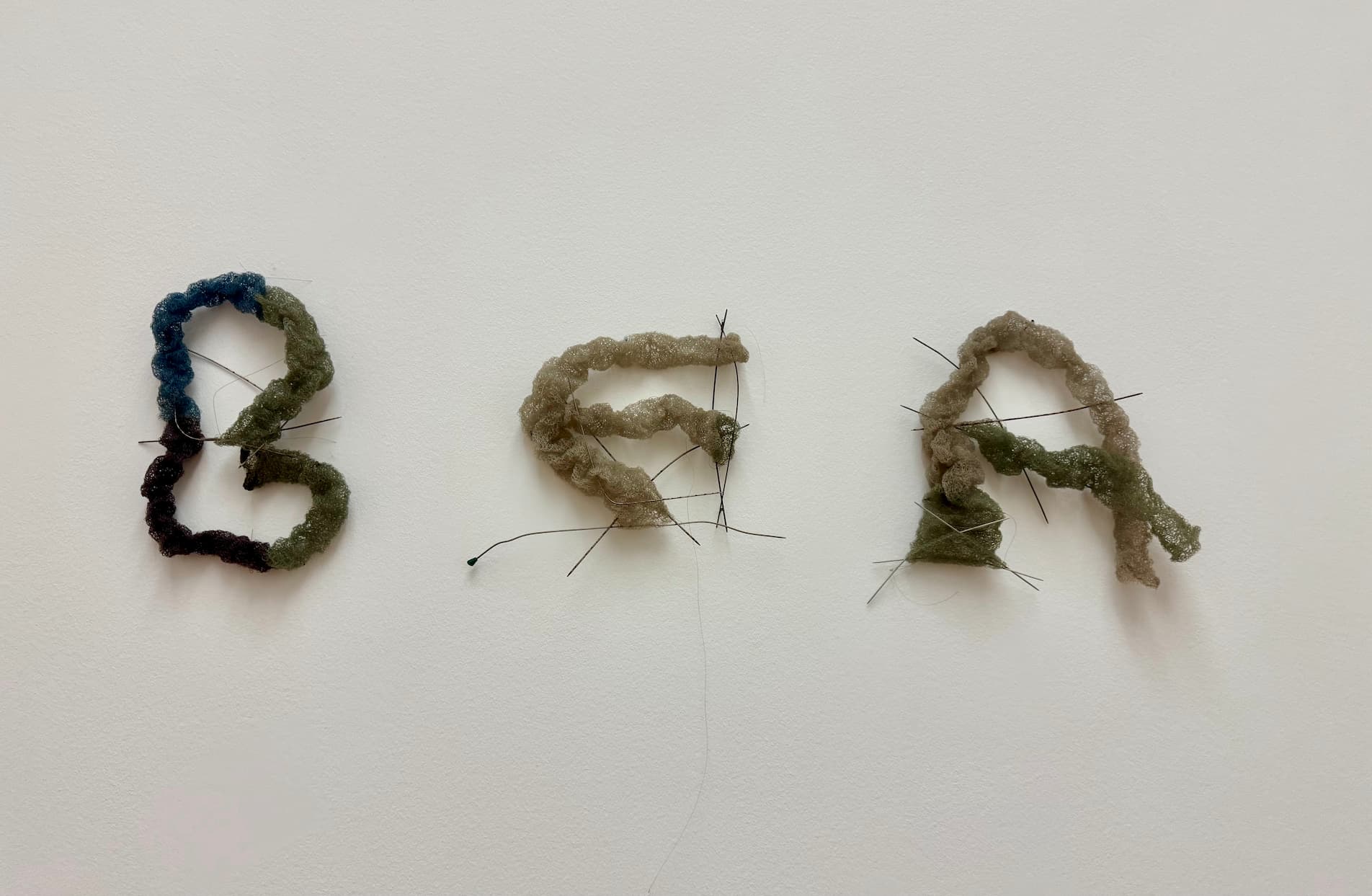
Marisa Merz, Bea,1968, Nylon wire, knitting needles.
She transformed mundane and humble meatrials such as aluminium foil and nylon thread and techniques such as sewing and knitting into art.
Marisa Merz not only explored the traditional forms and techniques of sculpture, but also used the works to ritually mark her personal space.
The artworks both protect and invade her private world.
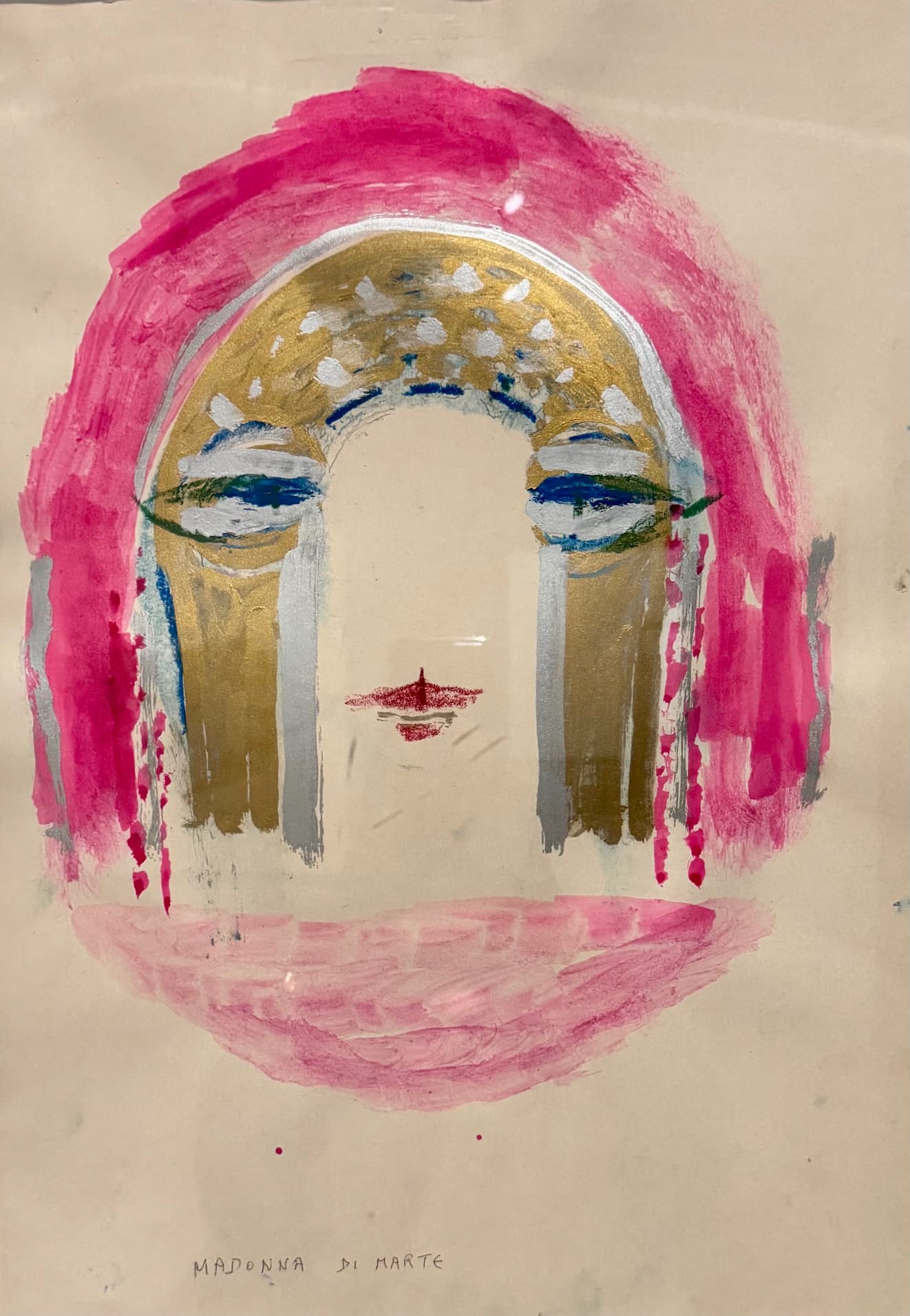
Marisa Merz,’MODONNA DI MARTE’, Madonna of Mars, mixed media on Rice paper.
Marisa Merz refused to title or date her works because she regarded them as being in constant flux. She returned again and again to her same motifs, materials and techniques in order to arrive as closely as possible at their essence.
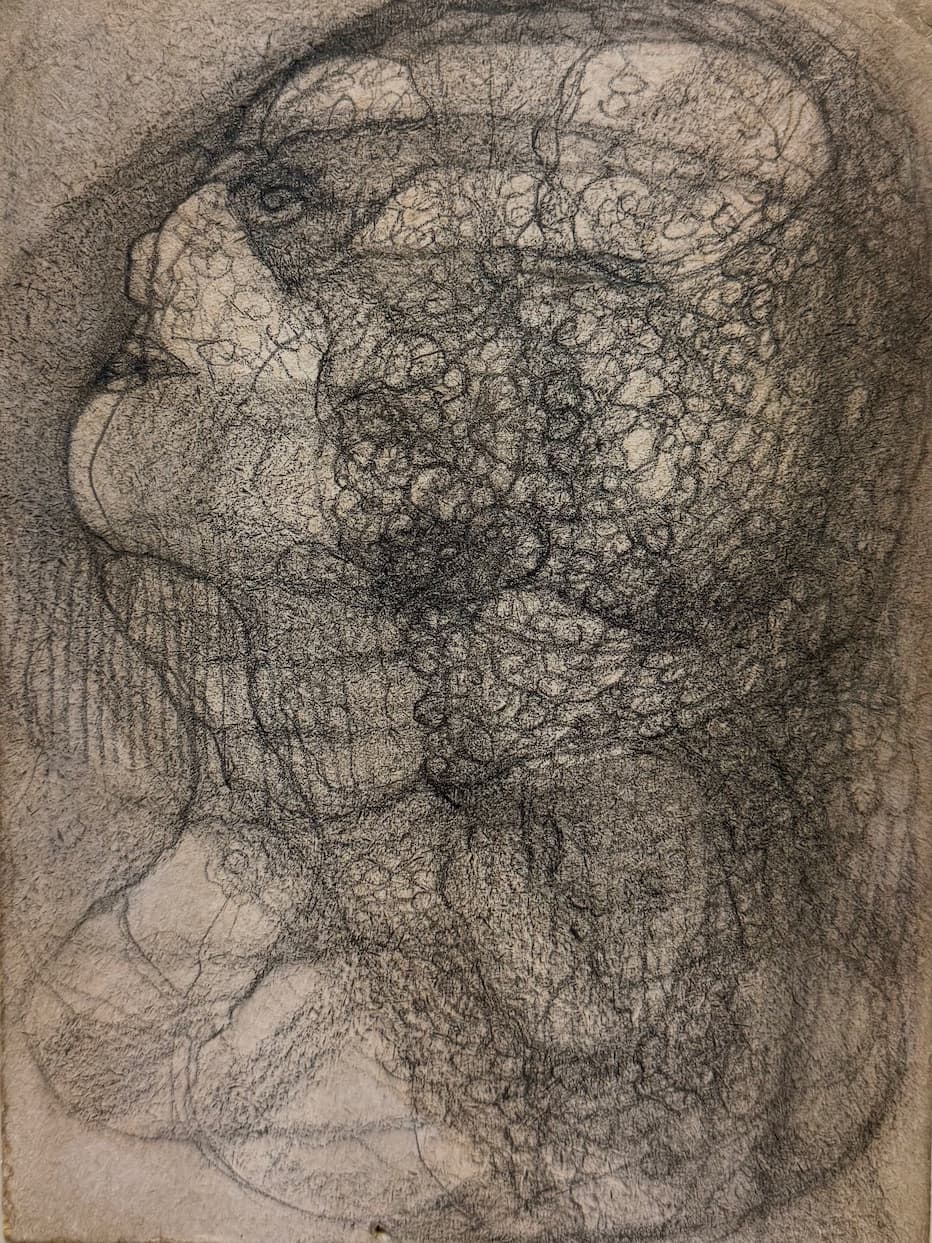
Marisa Merz, Untitled, Graphite on paper, on cardboard. Private Collection, Belgium.
IN THE REALM BETWEEN
THE ROOM OF THE SEE
THE ROOM OF EMPTINESS
THE ROOM OF HUNGER
THE RAINBOW ROOM
MARISA MERZ
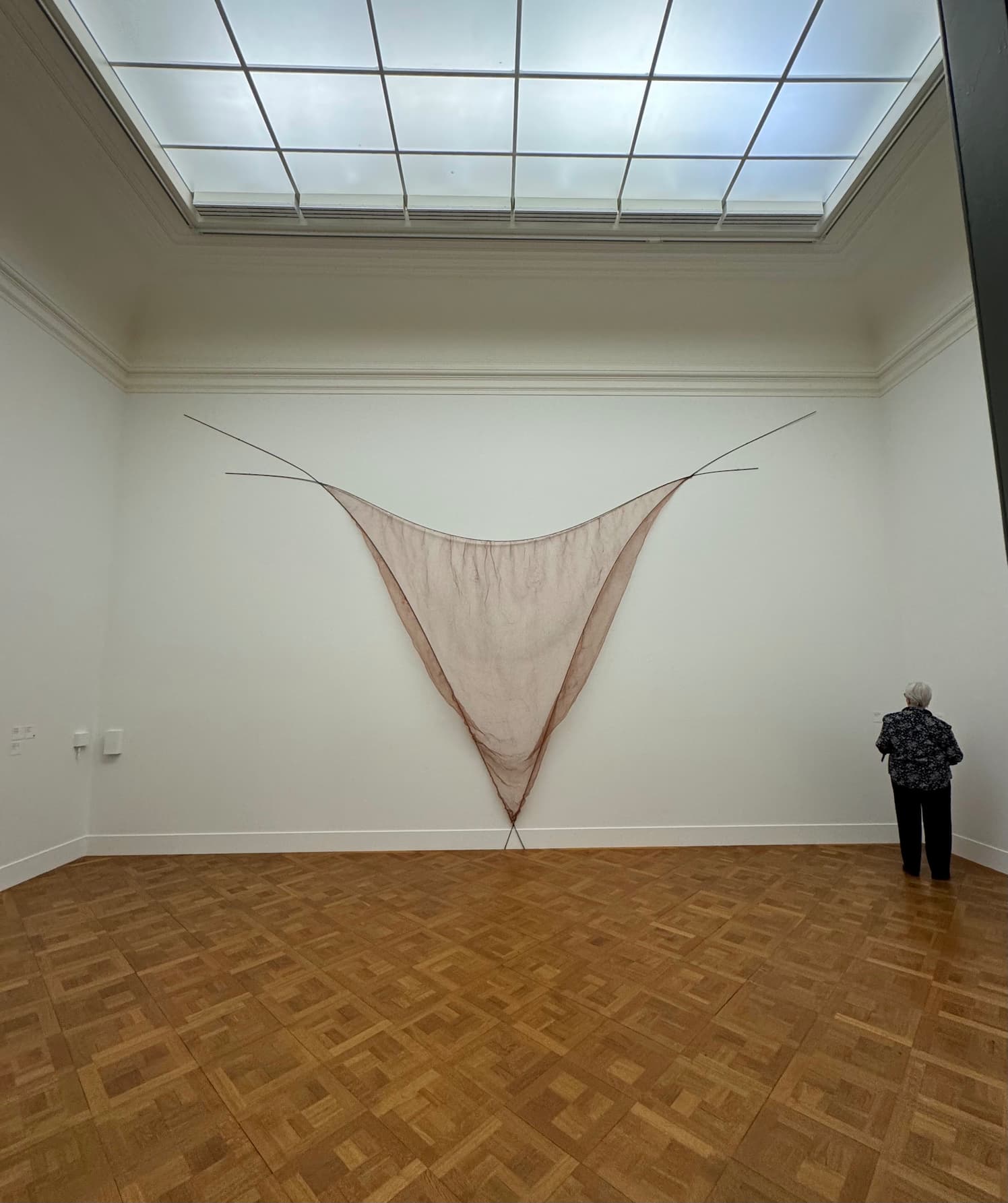
Maris Merz, Untitiled, Copper wire, steel rods. Merz Collection.
Marisa Merz redefines the way we see and feel. The exhibition, ‘Listen to the Space’in Kunst Museum, Bern, is characterised by a highly sensual dialogue between the visible and the invisible, in which Merz constantly questions the boundaries between the intimate and the domestic.
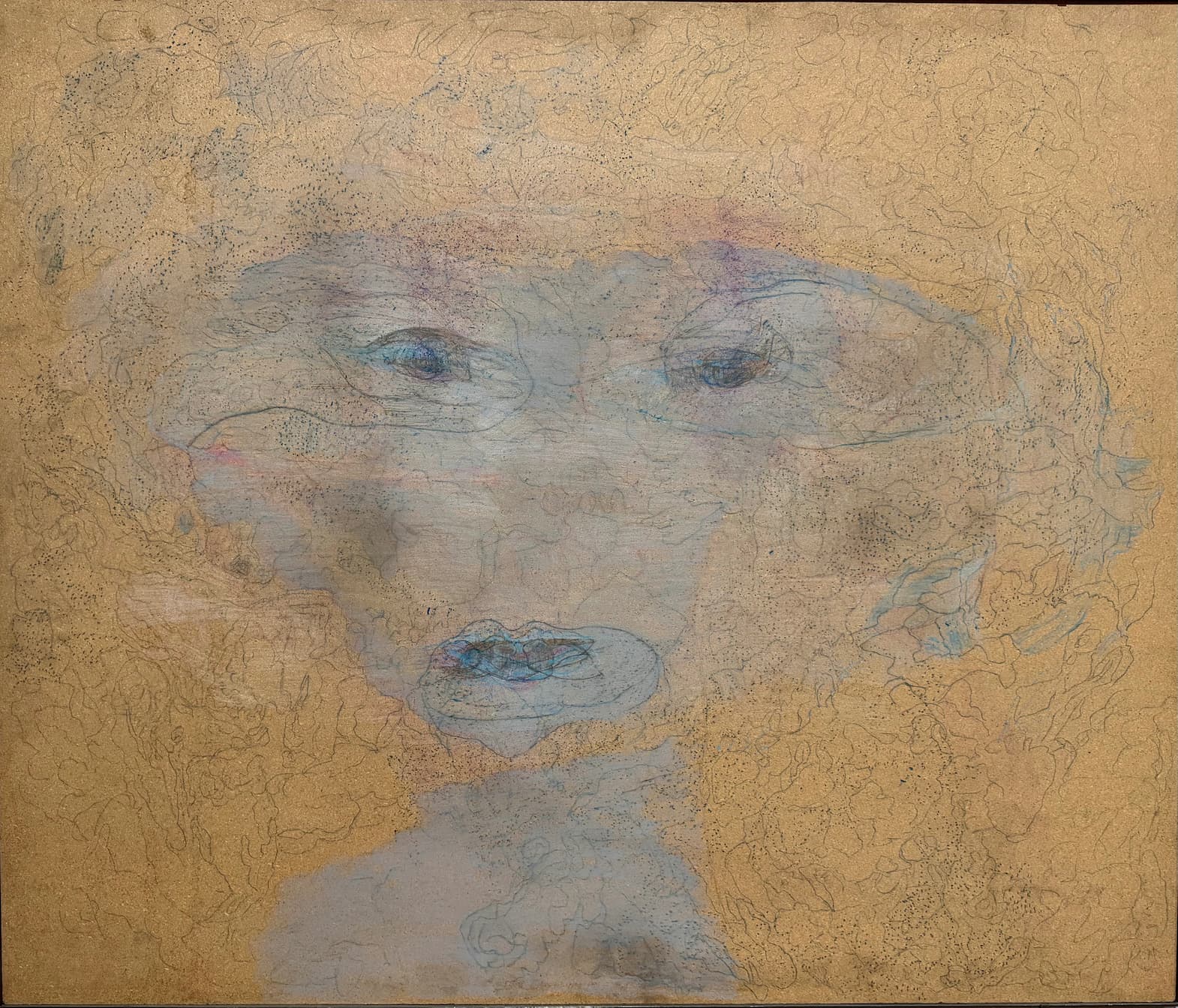
Marisa Merz, Untitled, 1979, Merz Collection. Mixed media on chipboard.
From the mid-1970s, Merz’s sculptures and installations communicated with the space they occupied, changing with it. At the same time, she developed an interest in the human face, which she explored using a wide range of materials and techniques until her death in Turin in July 2019.
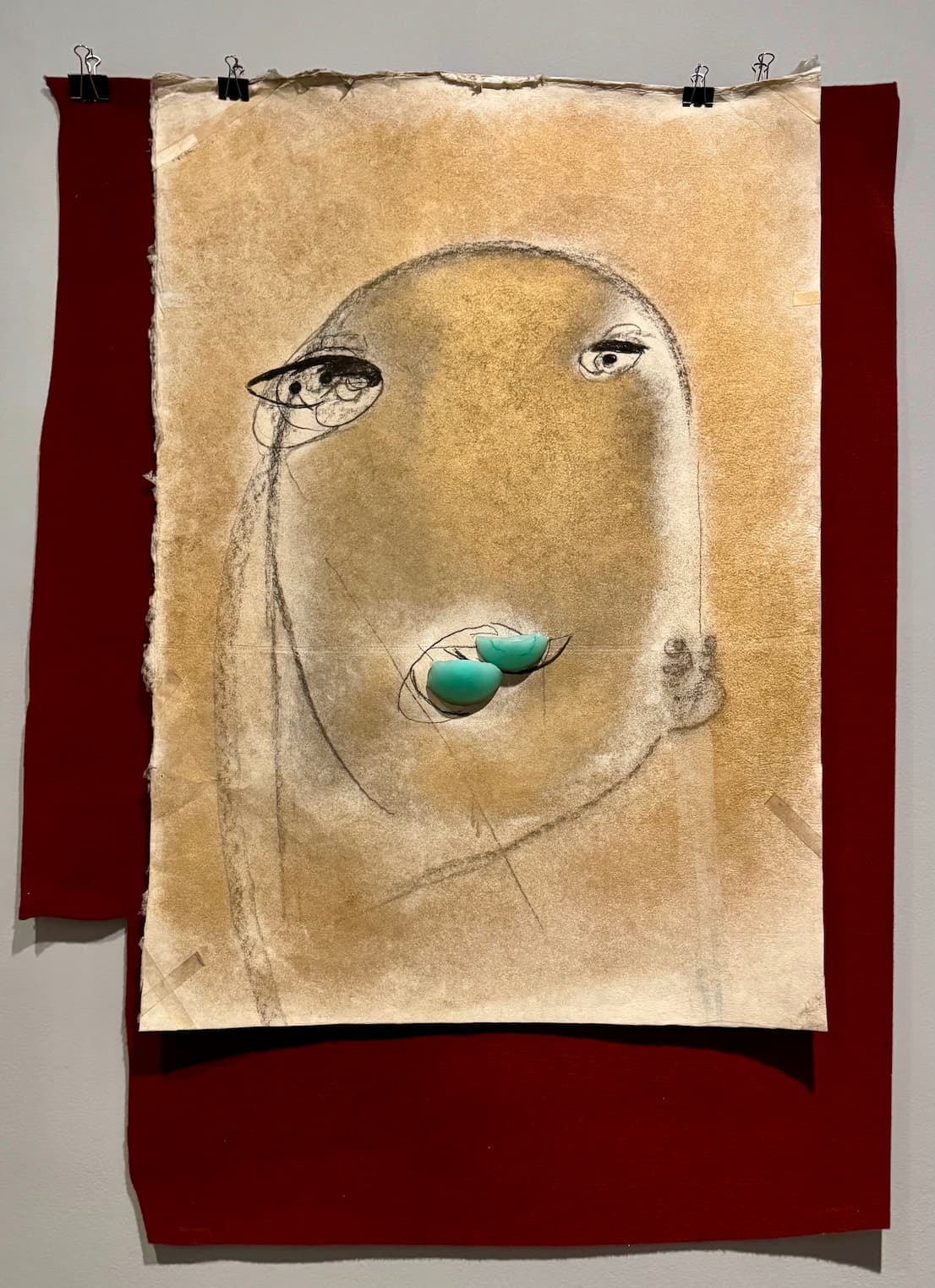
Marisa Merz, Untitled, Mixed media, parafine on japanese paper, on carpet.
When Marisa Merz did write about her work, it was often in the form of beautiful gnomic poems.
THE SKY IS A GREAT PLACE
TELL ME ABOUT ANTONELLO DA MESSINA
TELL ME ABOUT GENTILLE DA FABRIANO
TELL ME ABOUT THE LAM OF GOD
TELL ME ABOUT THAT THE SKY IS A GREAT SPACE
MARISA MERZ
From the 2000s onwards, Marisa Merz spent ever more time in her studio, proceeding in her dialogue with the great masters of the Renaissance.
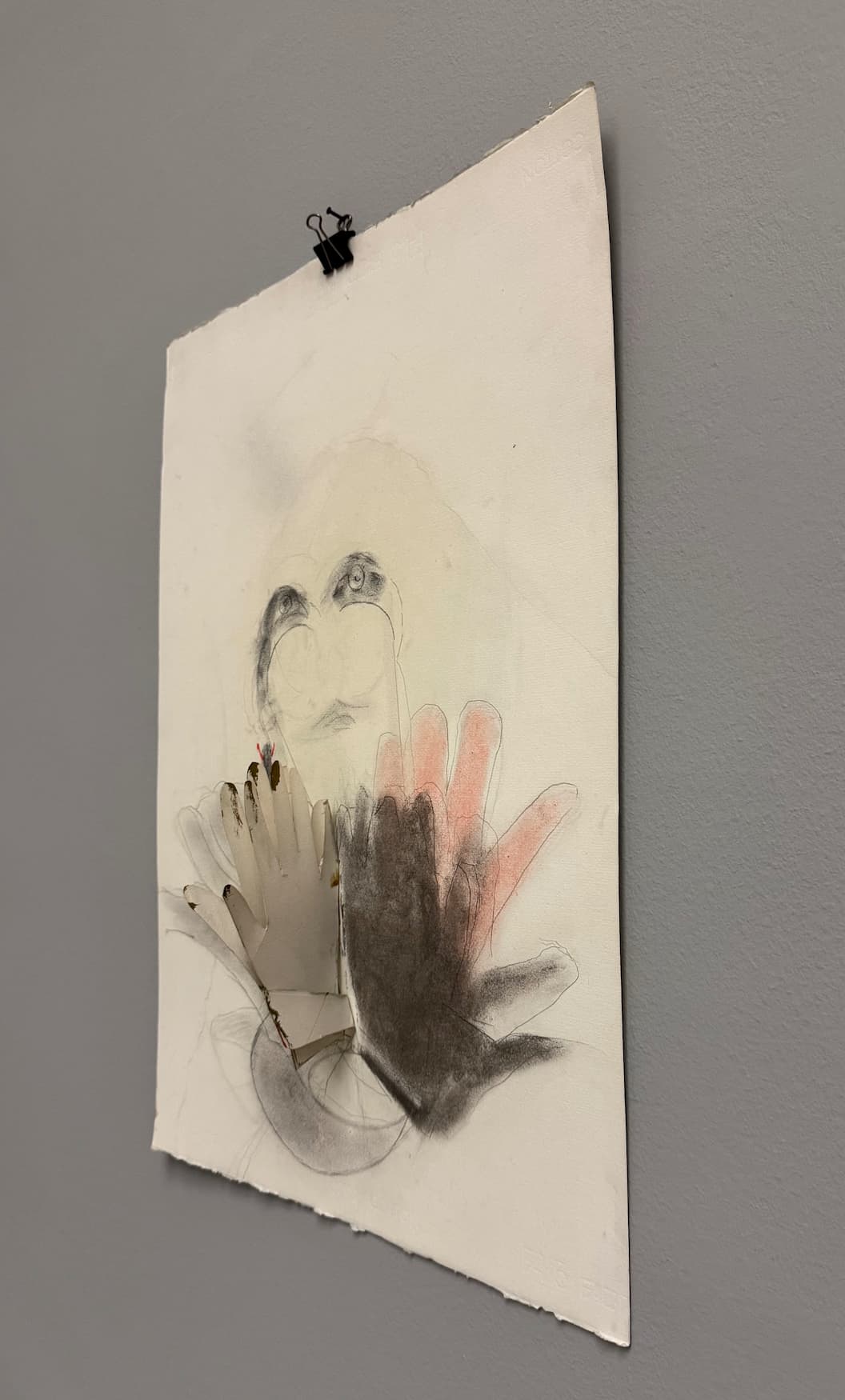
Marisa Merz, Untitled , Mixed media, collage on paper. Merz Collection.
She increasingly produced drawings and paintings of winged figures, reminiscent of imaginary figures in sacred art: Madonnas, angels and other celestial creatures.
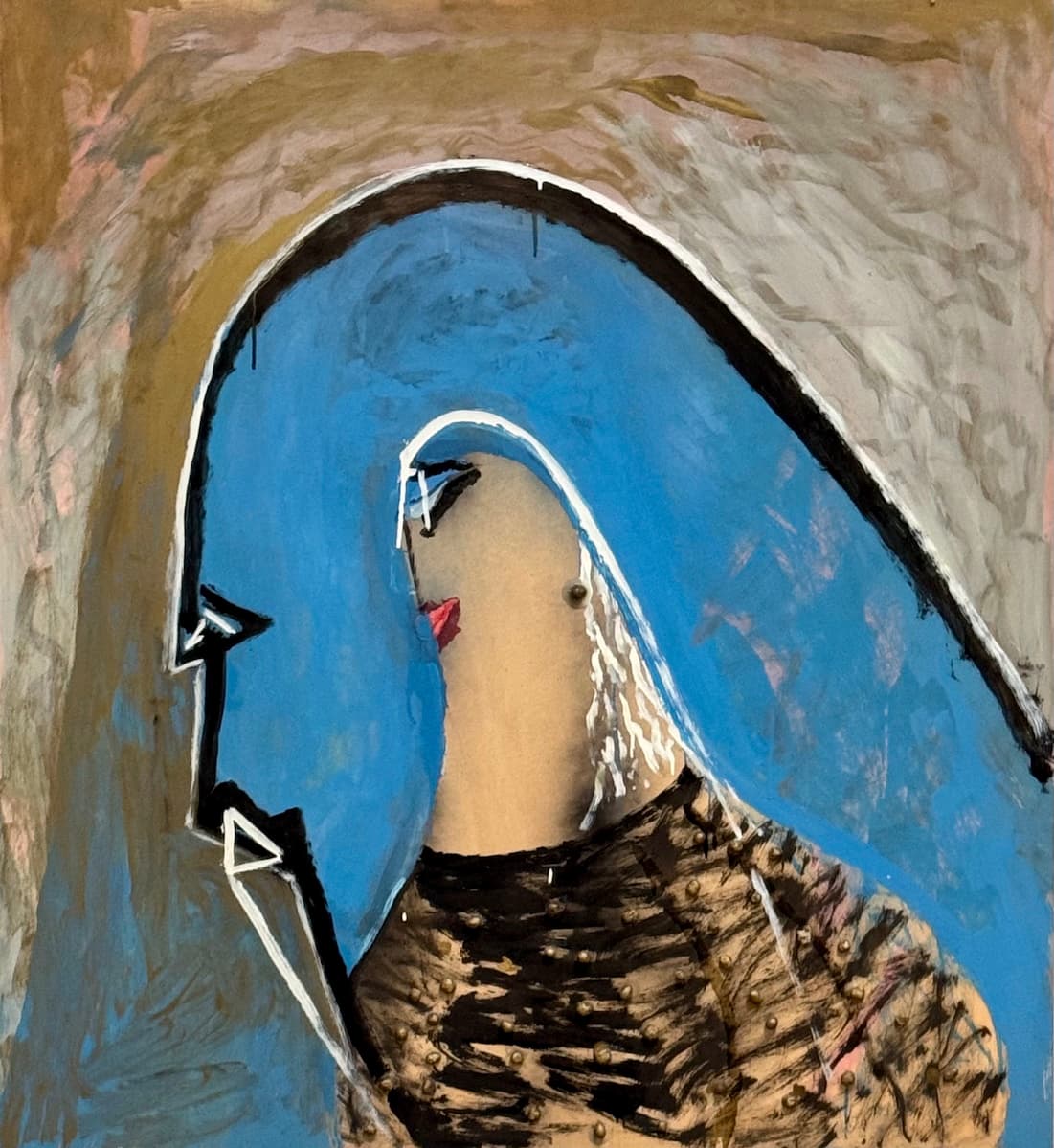
Marisa Merz, Un titled, mixed media on plywood . Merz Collection
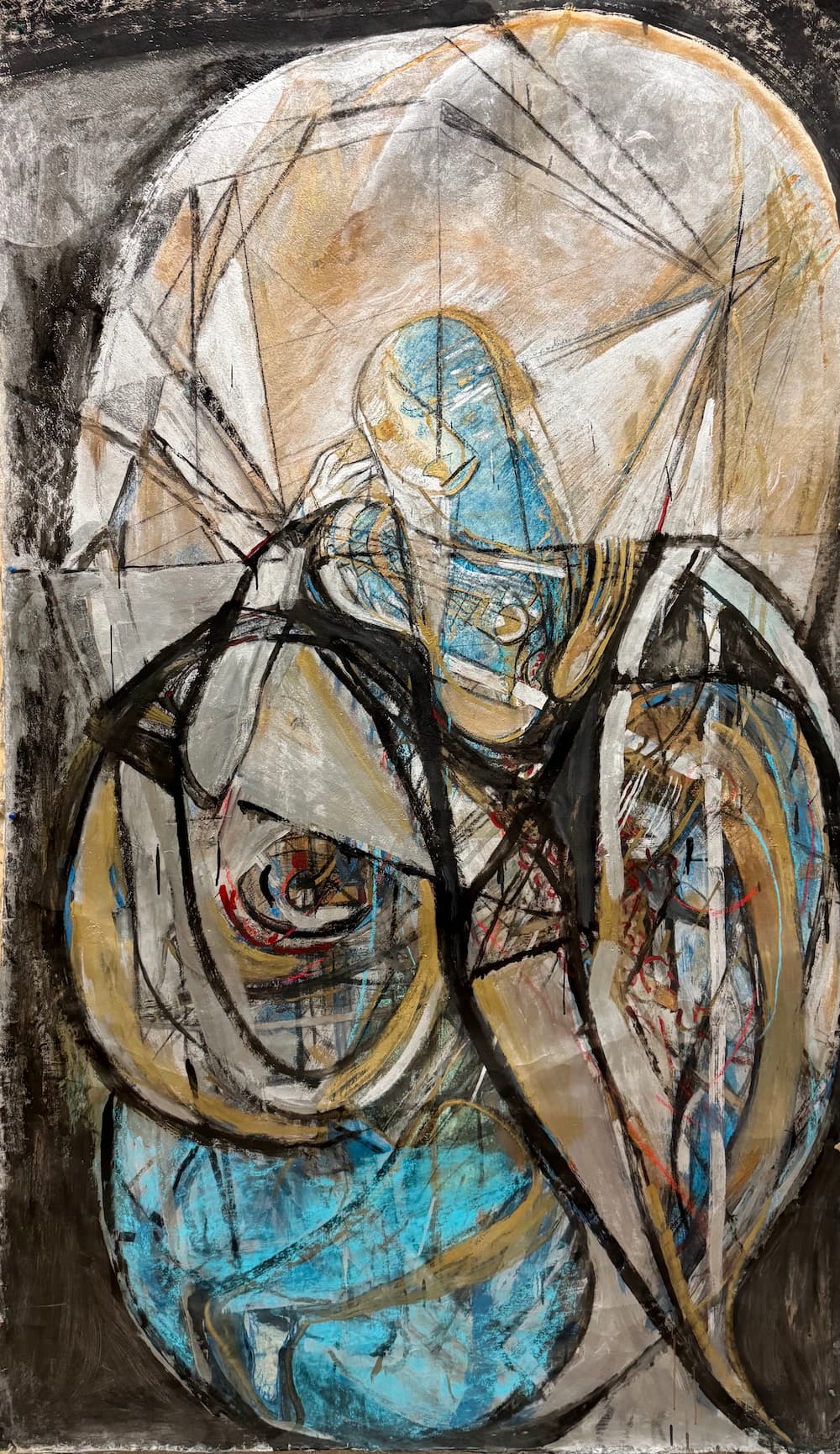
In 1968 she made her own statement, one of the rare occasions on which she made a public statement;
“I am not interested in power or in career; only myself and the world interest me.I can do little, very little.I am batting aganist malice and competition.I cannot escape the reality I see.”
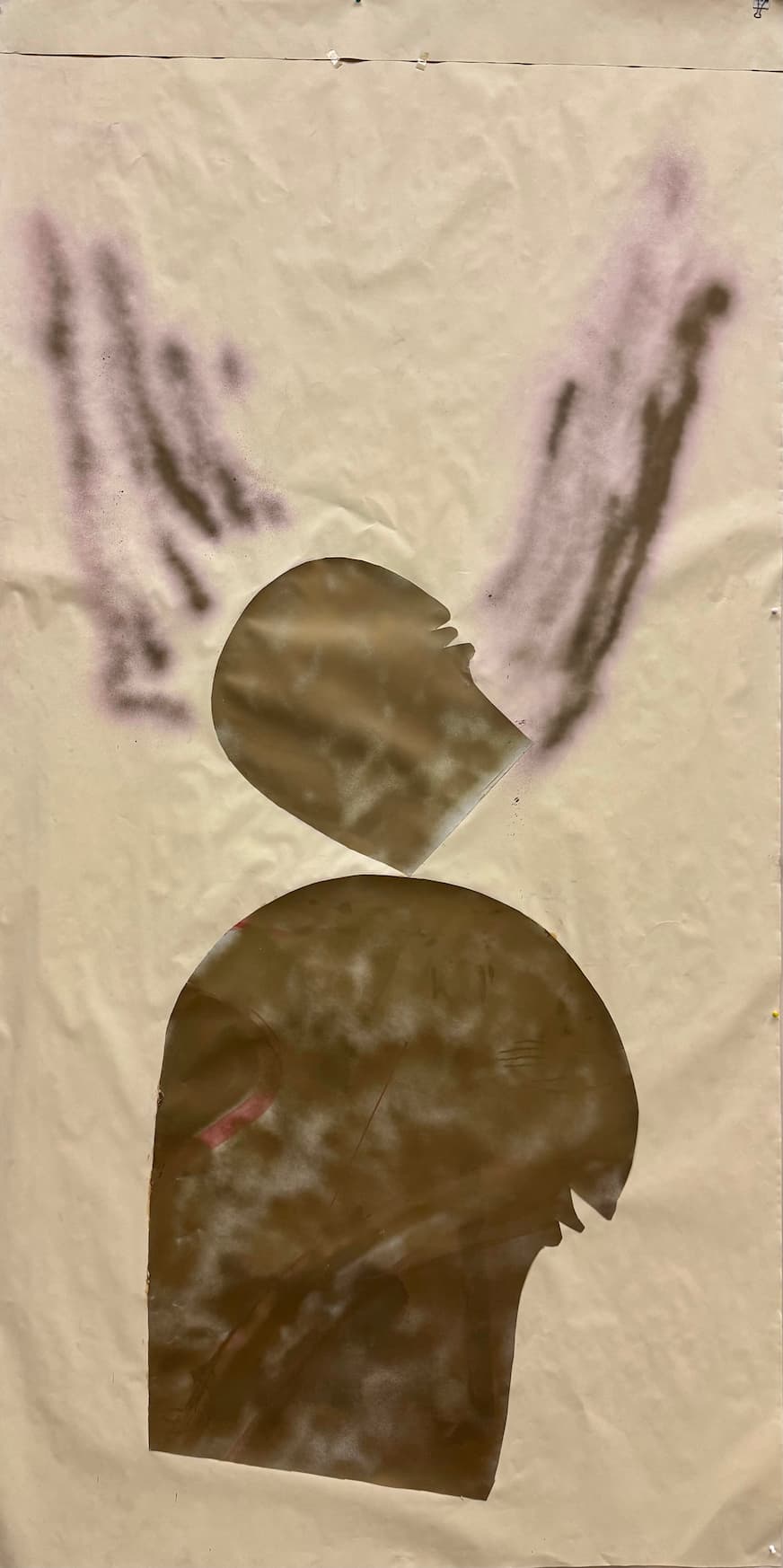
Marisa Merz, Untitled, mixed media, collage on the paper.
She refused to formally name or date her works.It was not always clear what was her labour and what was her husband’s ; both worked on each other’s art in the neigbouring rooms. Tommoso Trini an Italian critic wrote in 1975 that “Marisa divided herself into Marisa and Mario. Mario divided himself in Mario and Marisa.An extraordinaire community, in which identification has resisted in the individualisme that separetes the names.”
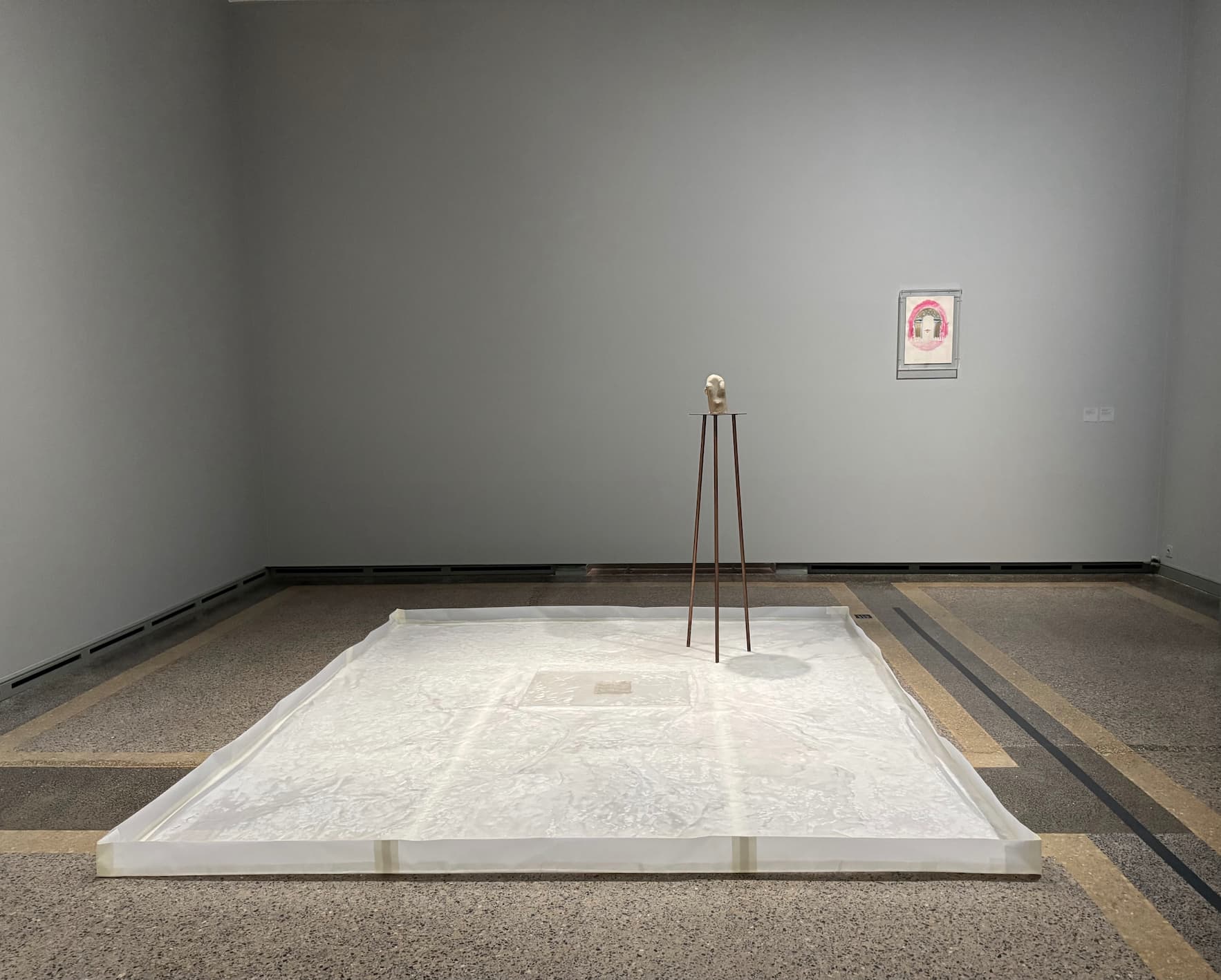
Kunst Museum, Bern.(Photography copyright, Nazli Kok Akbas, NKA Art Reports Switzerland-France-Istanbul Photography 2024. All rights reserved)
When Mario died in 2003, Marisa left his studio untouched. She continued to make art well into her 90s, following a strict daily routine, recently refusing visitors but producing large drawings of angels and Madonnas, clambering up a staircase to reach the top of a two-metre sheet of paper.
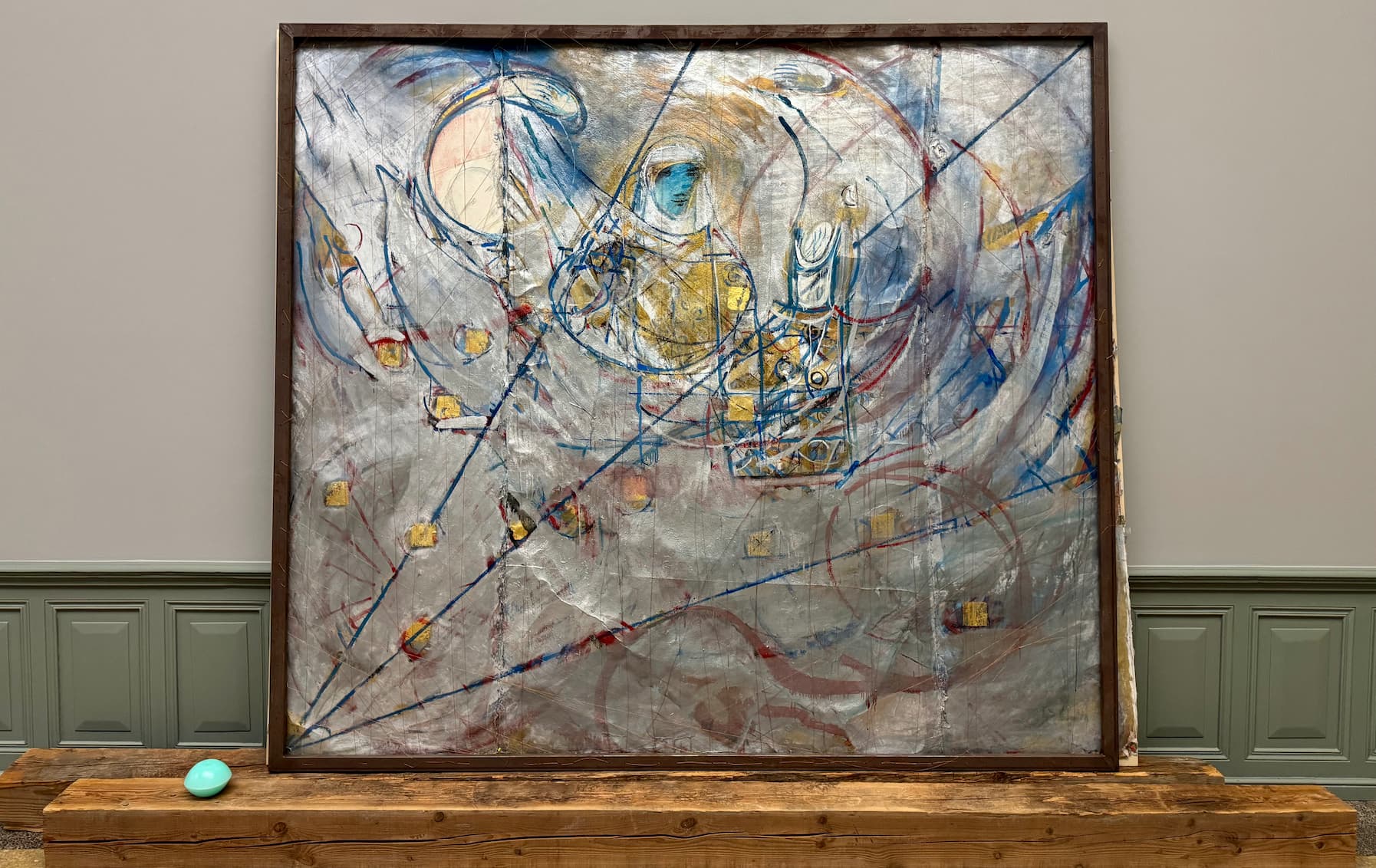
Marisa Merz, Untitled, 2010, mixed media on paper mounted on wood with iron and copper frame,beams, wax. Private Collection Switzerland.
Marisa Merz saw painting as a language with a memory. The artist with the ‘absolute eye’ was known for reconceptualising her works for each exhibition.
SACRED SPACES
THE EYE GUIDES THE HAND
(IS THE EYE THE ANGEL?)
MARISA MERZ
Nature and time have helped to shape her work, and she has used ‘poor’ materials and techniques to create poetic works that draw the viewer in. Even in her late years, her work remains complex and extremely open, with a very wide range of approaches and interpretations.
Nazli Kok Art Reports

