
A CAKE FOR THE MUSEUM
“OEDIPUS’S BIRTHDAY CAKE” IN THE MANNHEIM MUSEUM PEMANENT COLLECTION
Share this article:
Nazli Kok Akbas, Art Editor, Geneva – Switzerland
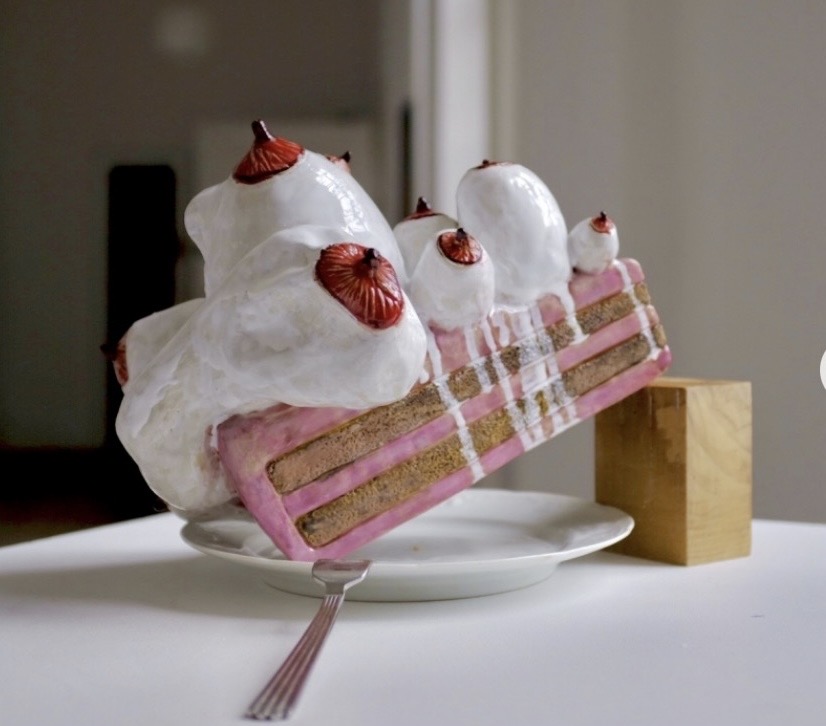
Irmak Donmez’s Oedipus’s Birthday Cake was presented at the MOTHER exhibition at the Kunsthalle Mannheim in 2021, after which it joined the museum’s prestigious permanent collection. The acquisition of Irmak Donmez’s work by one of Germany’s leading institutions places it within a museum tradition that has long shaped the discourse of modern and contemporary art.Founded in 1909, the Kunsthalle Mannheim is renowned for its collection of works ranging from classical modernism to conceptually driven contemporary pieces. With its delicate materiality and symbolic tension, Donmez’s Oedipus’s Birthday Cake (2021) enters this lineage with quiet force, marking a significant moment of institutional recognition for a contemporary Turkish artist on the international stage.
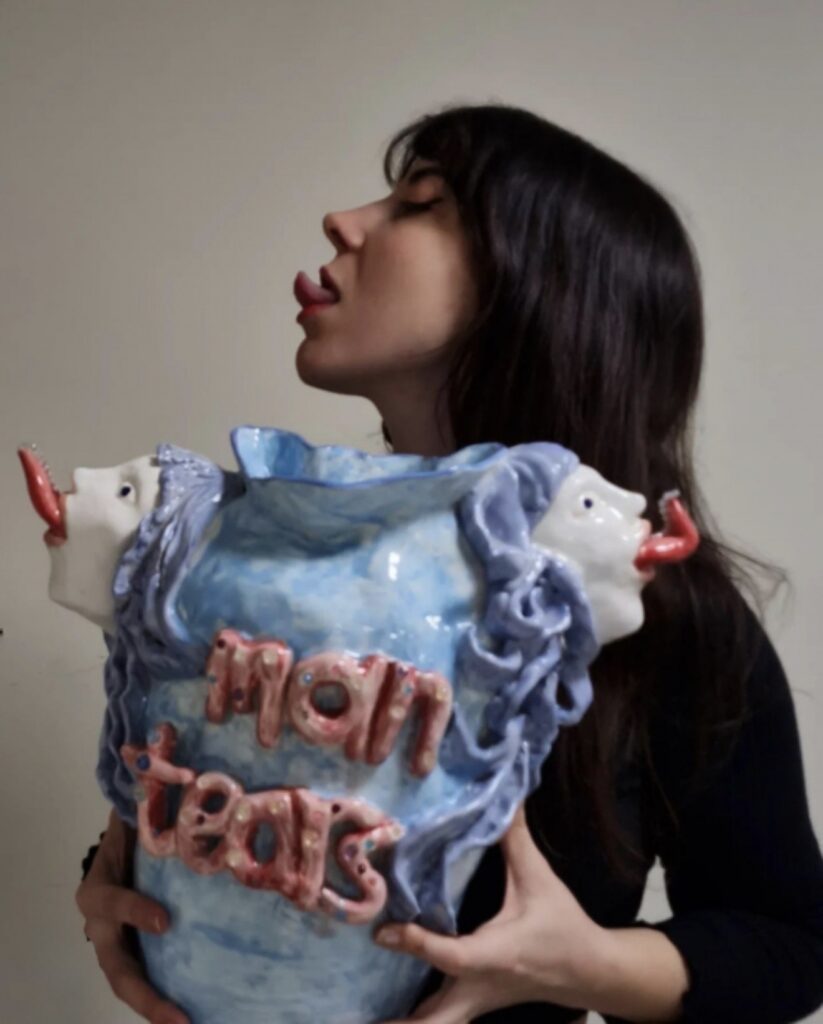
Born in Istanbul in 1987, Irmak Donmez initially trained in painting and drawing. Over the past decade, Donmez has developed a body of sculptural work in porcelain and mixed media that explores the female body as a subject rather than as an image. Her work is marked by fragmentation and displacement, and is rendered through objects connected to care, nourishment, and domestic ritual. Before pursuing doctoral research in art theory, Donmez completed both a BA in Visual Arts and an MFA in Painting at Isik University. Her academic background is integral to her work, providing a foundation for her ongoing exploration of psychoanalysis, feminist criticism, and visual culture.
During her time as a visiting PhD researcher at the Royal Danish Academy of Fine Arts in Copenhagen, she presented her first solo exhibition, ‘My Thoughts Are Breaking My Hair’ (2018). This exhibition marked the point at which her interests in theory, body politics, and material experimentation began to converge in sculptural form. Around the same time, a residency at a fish factory in Iceland inspired her to move away from two-dimensional work and explore ceramics and sculptural forms. Clay presented both material and conceptual challenges to Donmez. She often mentions that the material pushes back, framing the creative process as a negotiation rather than an exercise of control.
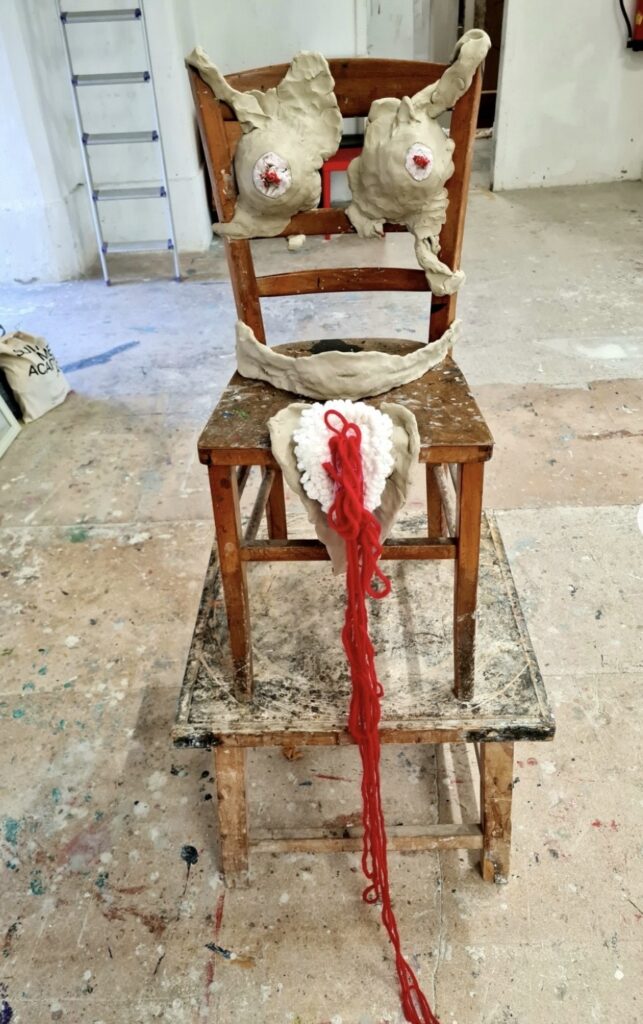
The female body is a recurring theme in her work. Donmez’s art explores themes of fragmentation and isolation, with a focus on breasts, curves and soft protrusions that exist somewhere between abstraction and identification.In her work, fragmentation functions as a critical tool. When detached from the body, these forms become containers for social projection, such as desire, anxiety and control.
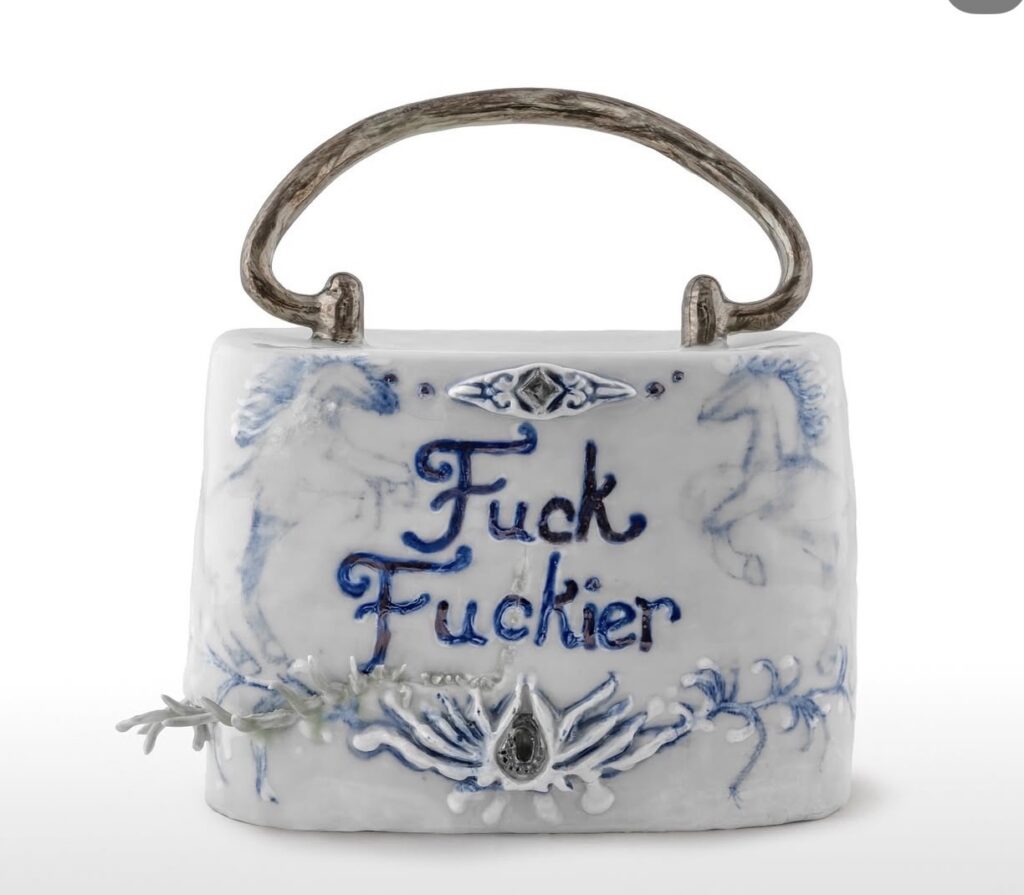
Donmez articulates this separation masterfully, using it as a means of examining how specific body parts accrue meaning when they circulate independently of lived experience.Rather than providing narrative closure, her sculptures remain suspended and unresolved.Donmez’s porcelain often resembles skin, smooth, pale, and vulnerable. Yet it retains visible seams and cracks. These are not technical failures, but rather deliberate marks of labour and exposure. In her view, perfection risks erasure.By allowing the object to retain its scars, she links material fragility to bodily precarity, presenting breakage as a condition and content.
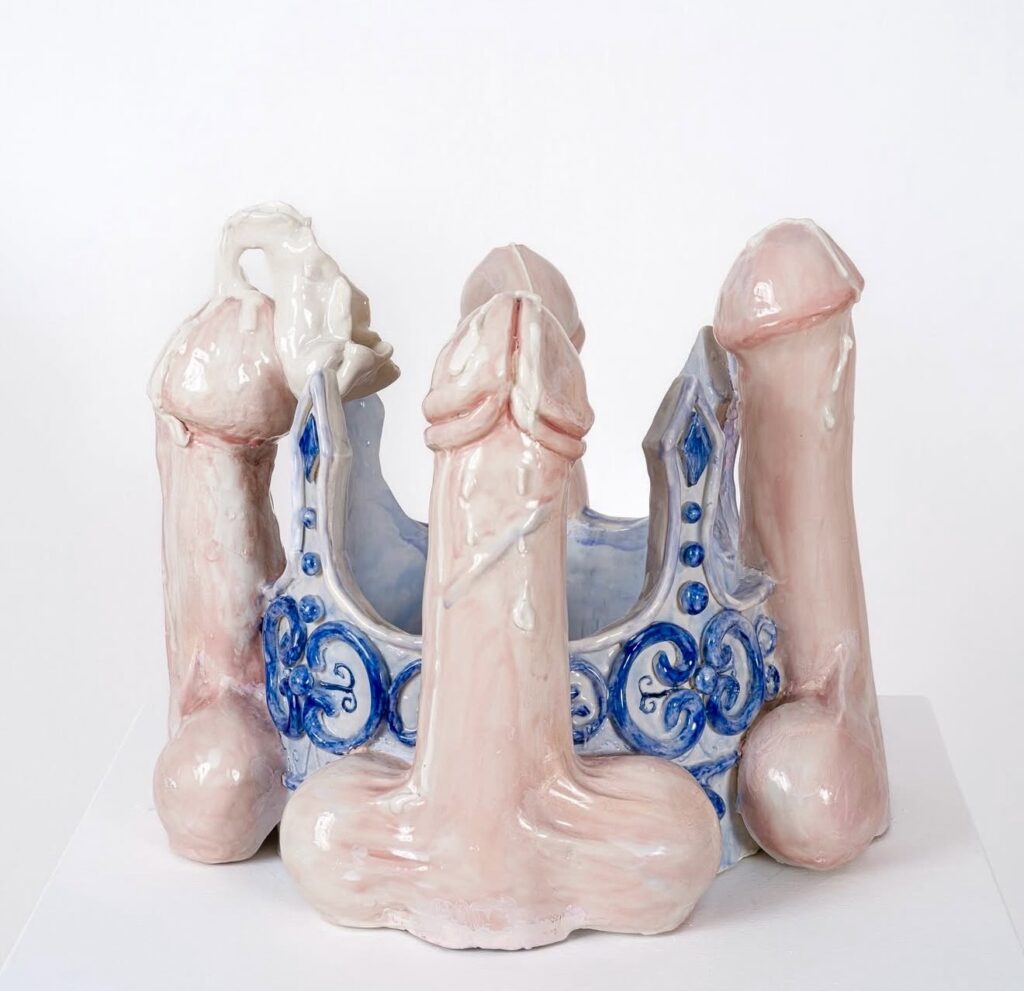
Food and domestic vessels are recurring themes throughout her work, furthering this exploration. Series such as ‘Milk’, ‘The Feast’ and ‘Vases of Vengeance’question objects traditionally associated with care and femininity, reframing them as sites of regulation and power. In recent years, Donmez’s practice has extended beyond Europe and Turkey. She has produced ongoing work in Mexico and established connections with the country’s ceramic production context.
While the formal language of her sculptures always remains consistent, these shifts have introduced new material tempos and technical negotiations, creating a dynamic and ever-evolving aesthetic.
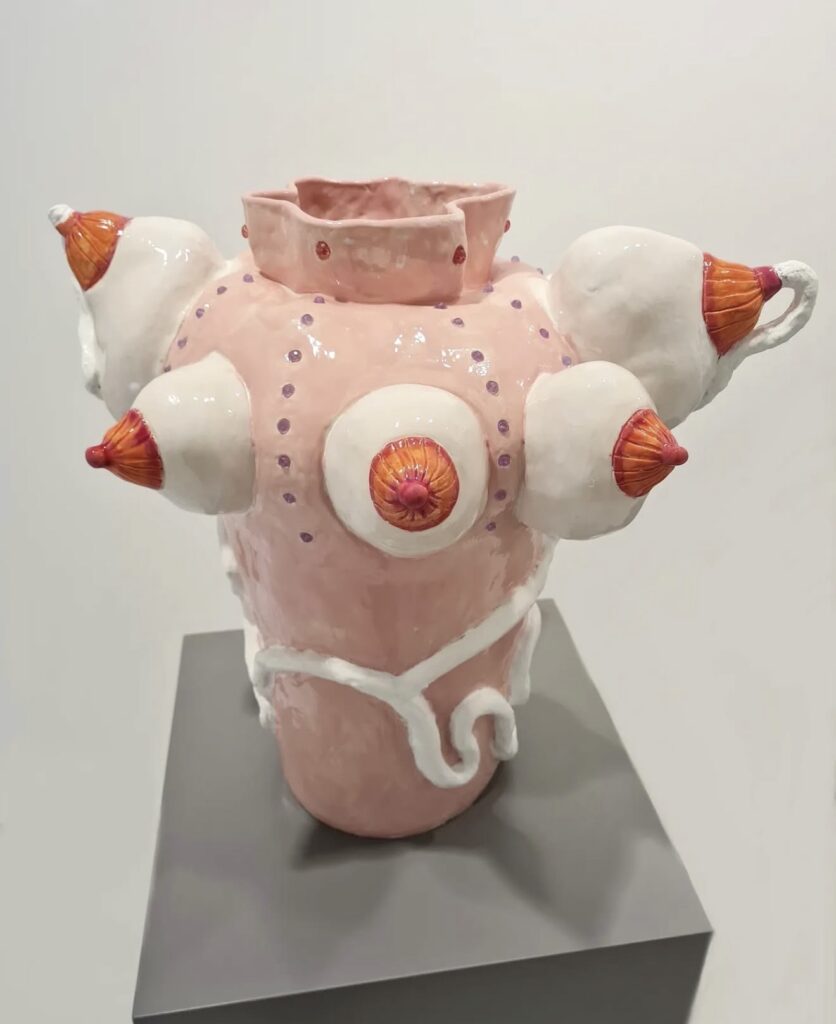
Despite the explicit political nature of her subject matter, Donmez resists didacticism. Rather than instructing, her sculptures engage with the subject in a playful manner. As she suggested, the work is intended to remain unresolved, ‘like a thought that won’t settle’.
Her refusal to provide strict narrative clarity aligns her practice with a broader contemporary tendency to prioritise ambiguity over definitive statements, particularly regarding gendered representation.
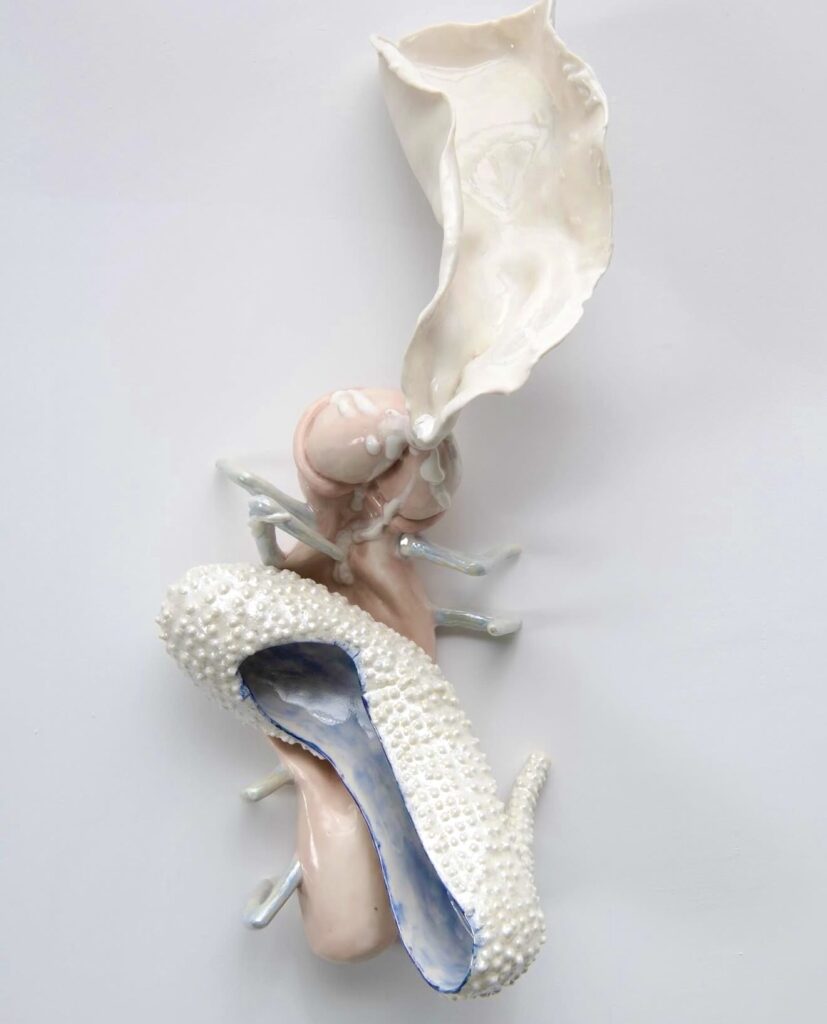
At a time when ceramics are often viewed through the lens of craft revival or sensory appeal, Donmez’s work calls for a more critical interpretation of softness. Rather than celebrating tactility as a refuge, her objects expose it as a contested terrain.
The result is a practice that treats clay as a political material capable of containing the contradictions of care and control, pleasure, and discipline, without reducing them to simple metaphors.

