
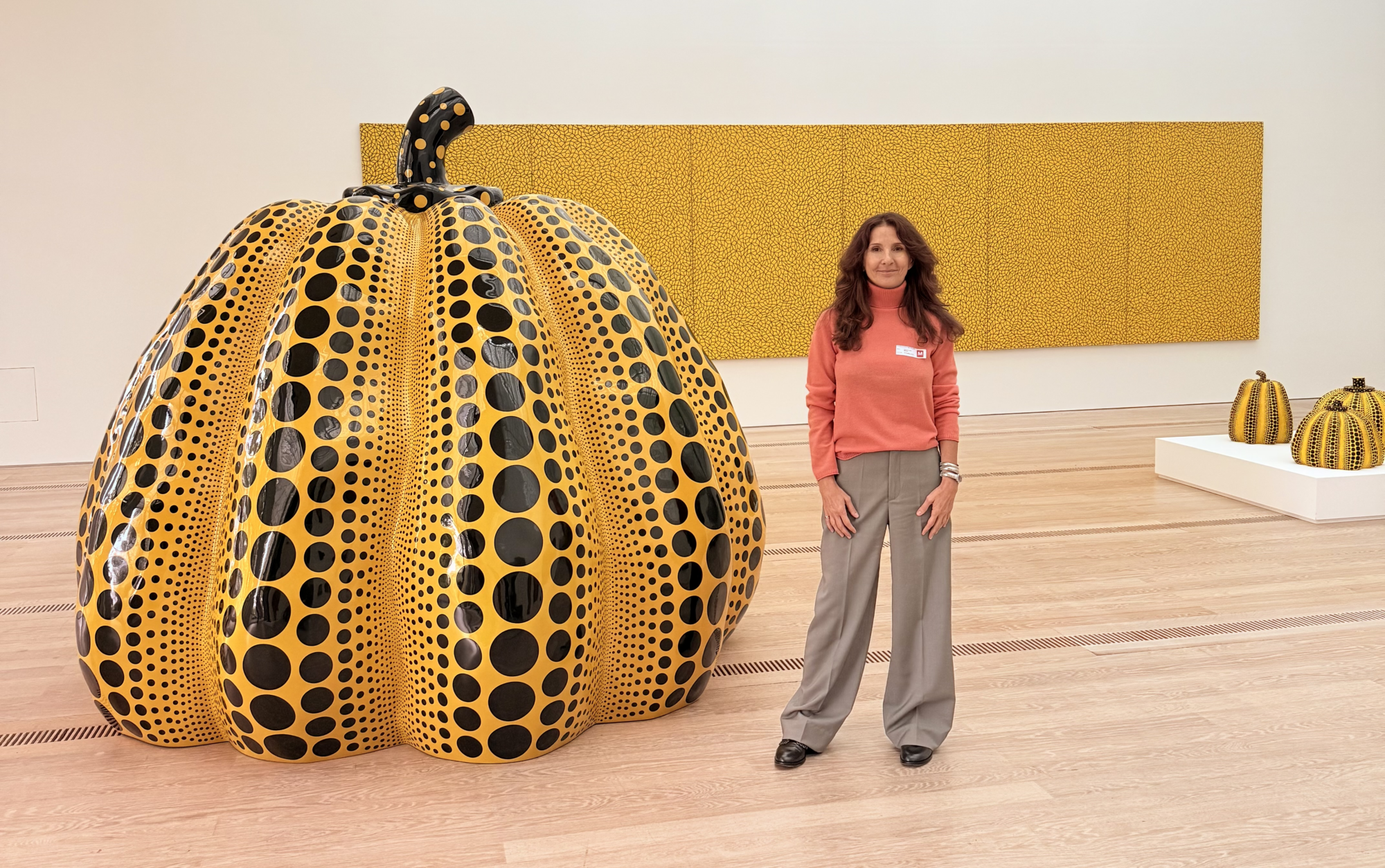
YAYOI KUSAMA
A SUPERSTAR IS IN BASEL
12 OCTOBRE 2025 – 25JANUARY 2026
THE FOUNDATION BEYELER,
Basel, Switzerland
Nazli Kok Akbas, Art Editor, Geneva,Switzerland
…
‘I’m wide awake, my eyes won’t shut
inside my head it’s cold and wet with raindrops
I want you let me sleep
what is this madnes in my heart?
O raging storm outdoors subside awhile for me’
Yayoi Kusama, AGAINST THE GLASS, SLEEPLESS NIGHT,1983
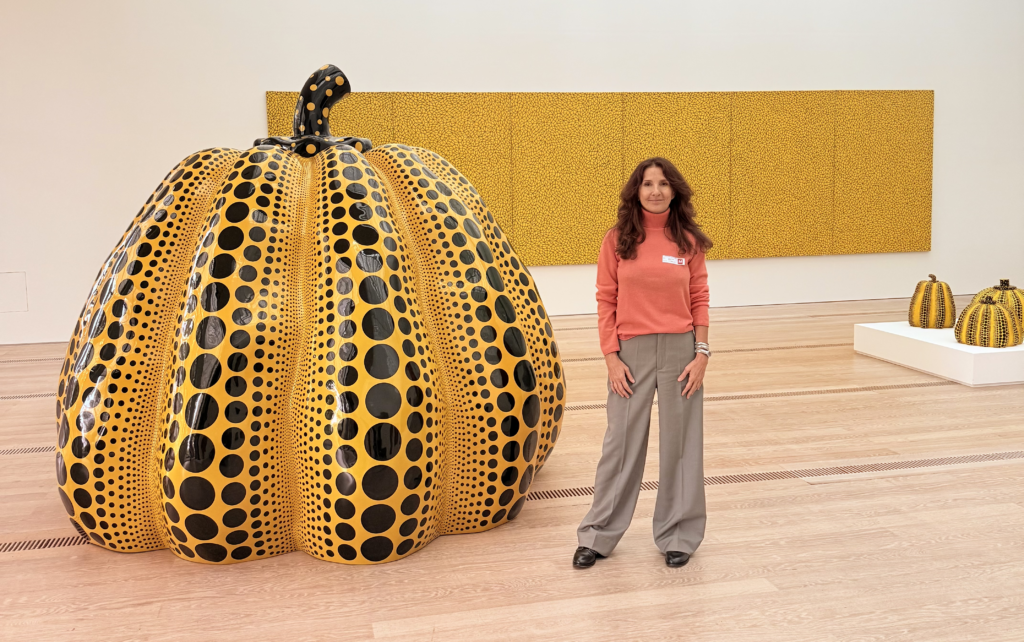
‘I HAVE SEEN THE BIG BANG.
IT LOOKS LIKE POLKA DOTS.’
Yayoi Kusama
Visitors to Basel’s Fondation Beyeler are now immersed in Yayoi Kusama’s vibrant world: polka dots, oversized pumpkins, dreamlike flowers, infinity mirror rooms, and fantastical sculptures create a surreal, ‘Alice in Wonderland’-like experience for all ages.
WHAT ELSE !
Kusama’s shows are a fascinating mix of mass audience popularity and serious curatorial attention, which makes them a unique and captivating experience. Most recently, Yayoi Kusama’s Infinity Mirror retrospective at the National Gallery of Victoria in Melbourne attracted more than half a million visitors in four months making the gallery’s most popular ticketed exhibition to date.
What makes Kusama’s shows so unique and how come the magic operate for visitors of all ages?
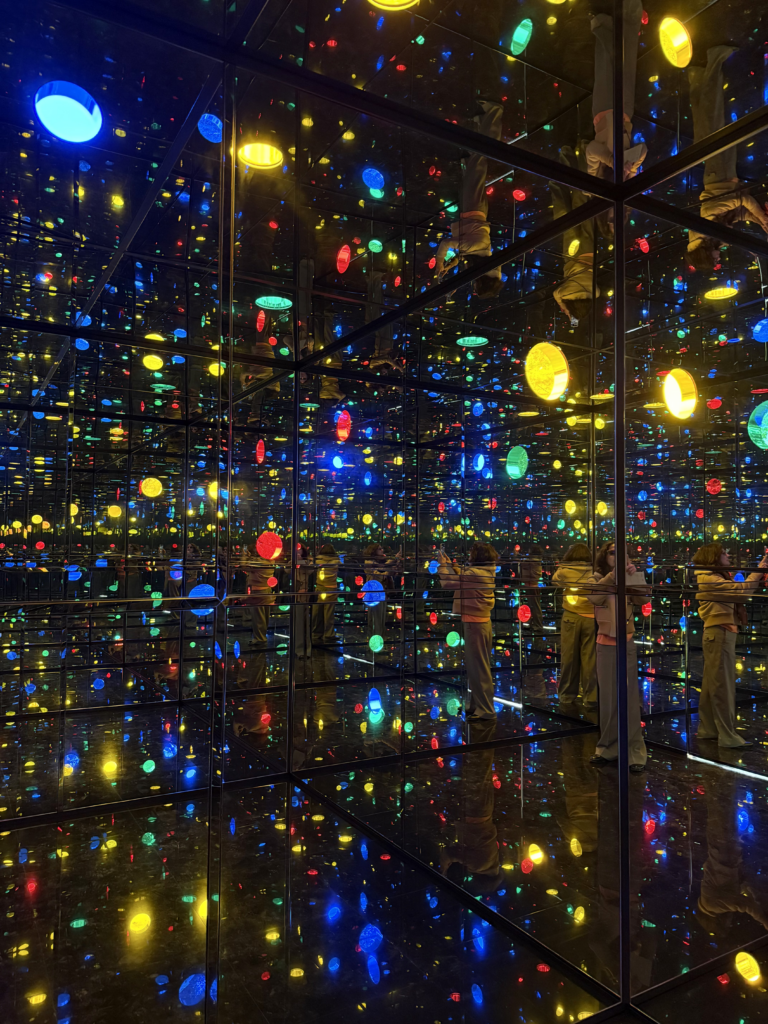
Infinity Mirrored Room- Illusion Inside the Heart, 2025,
(inside view)
Kusama’s unique artistic fusion and emotional universe resonate deeply with contemporary audiences, forging a powerful connection between artist and spectator. There is a cosmic tension that makes every one of Kusama’s art work a spell intended to enchant both the artist and the public. I would even say that it is like an invisible source of power.
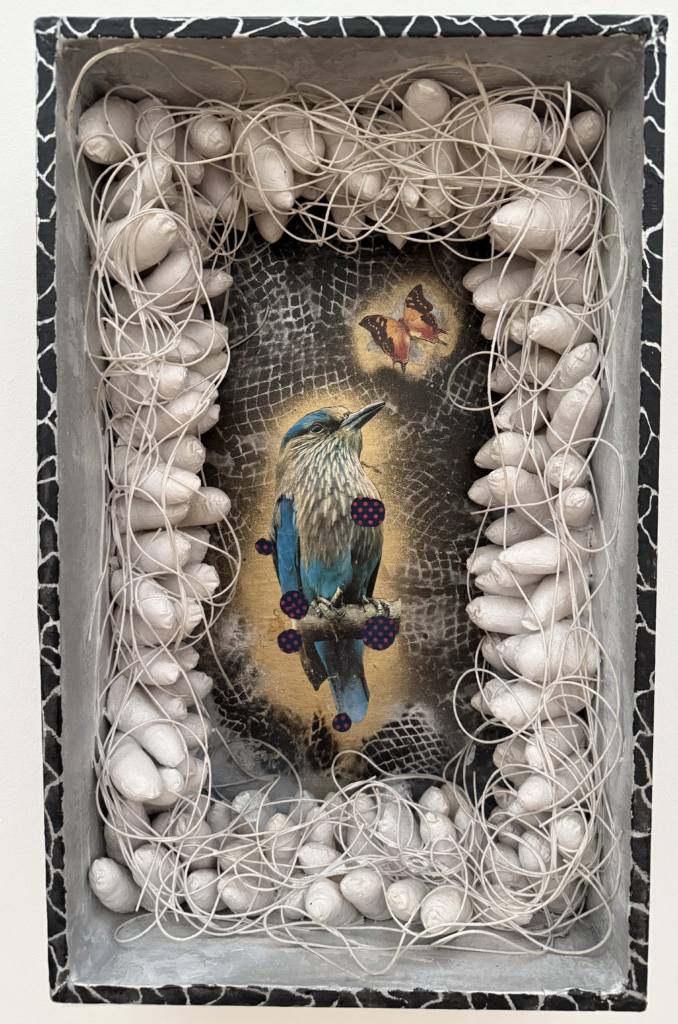
Yayoi Kusama, In the Woods, 1983, Mixed media. Collection of the Museum Voorlinden, Wassenaar, the Netherlands
‘NOW THAT YOU’VE DIED’
For my late parents,
Now that you’ve died
your soul, above cotton-rose clouds
mingles with powdered rainbow light
and disappears forever
And you and I
at the end of our endless battles
of love and hatred
have parted
never meet again
To me, born a child of people
parting is like quite footsteps
on the path of flowers
Beyond the clouds of sunset
a soundless hush
Yayoi Kusama,1975
Yayoi Kusama was born into a long-established dynasty of landowners and farmers in the Matsumoto City area in Japan in 1929. Kusama’s grandfather, Sueo Kusama, was a businessman and local politician. The only thing Sueo had ever struggled with was having a male heir. When no boys were forthcoming, the Kusama family, like other Japanese families with fortune but no male heirs, adopted one. Kamon Okamura took the name Kusama in 1923, married Shigeru, and became the father of four children: two boys and two girls. The second girl was Yayoi Kusama.
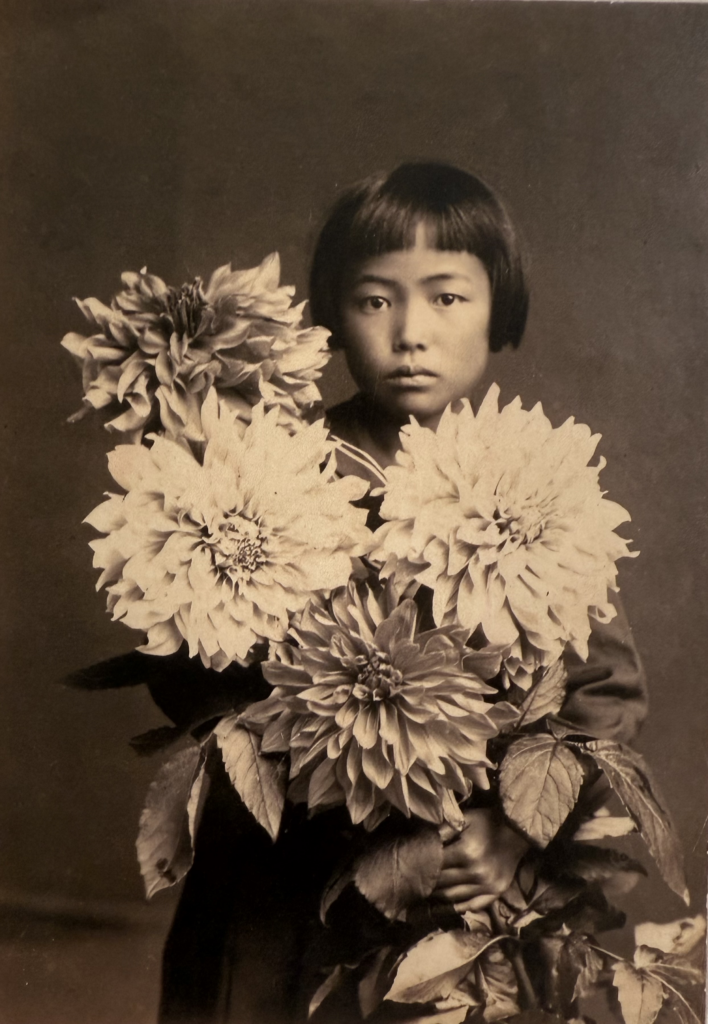
Yayoi Kusama’s early life was overshadow by memories of her dysfunctional family: her mother’s abuse and her father’s infidelity, which she had been forced to spy on.
One day, as Yayoi Kusama was walking through a garden, the violets started to talk to one another, appearing to bear ‘uncanny expressions’. Fascinated by her newfound ability to see the natural world in a different way, Yayoi Kusama engaged in ‘spiritual dialogues’ with the chattering flowers.
On another occasion, she found herself staring at a red floral pattern on a tablecloth. Suddenly, the pattern began to spread, covering the ceiling, the windows and Kusama’s own body. She feared becoming buried in the infinitude of time and space and being reduced to nothing.
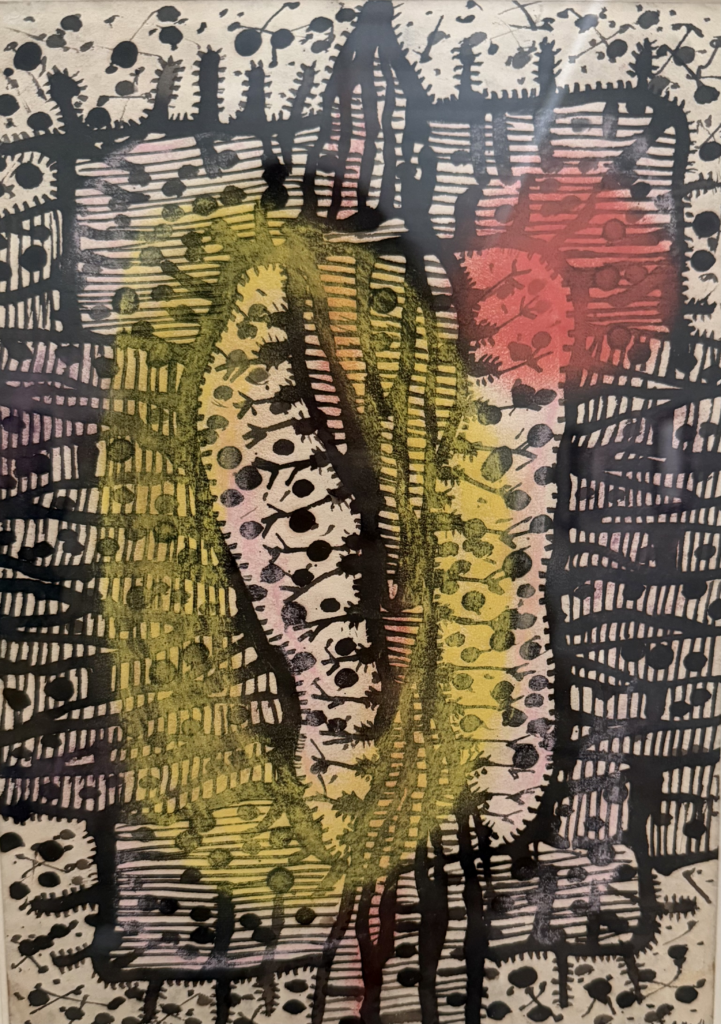
Flower Bud # 6, 1952, Ink and paper, Collection of the artist
HAVING LOST A STAR
passing each other going to the fields
passing again on the Way into town
crossing paths raoming the riverbed
at the foot of the mountain, unexpectedly passing
shadows that passed in the park at dusk
early summer’s too deep to hold
whenever I found the morning star
all the men already had wives
all the men already had lovers
Yayoi Kusama,1976
At around the age of ten, she began to experience hallucinations. This new phenomenon, the experience of self-obliteration and depersonalization, increased her sense of apartness, leaving her feeling disconnected from others.
In her isolation, painting would be her salvation. As she said, ‘I lost the sense of time, speed and distance, and how to talk to people, I end up locking myself in a room. Painting pictures seemed to be the only way to let me survive in this world, repetition was the foundation of my art.’
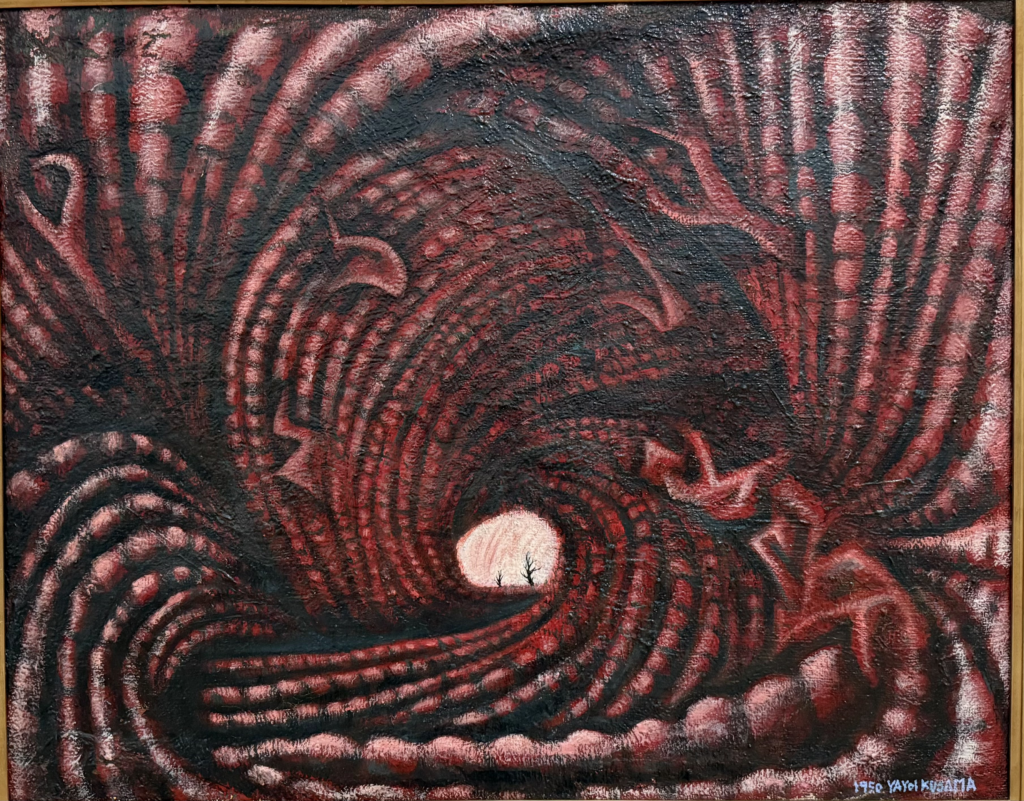
Yayoi Kusama, Accumulation of the Corps
(Prisonier Surrounded by the Curtain of Depersonalisation) 1950,
The National Museum of Modern Art, Tokyo
I wonder could Yayoi Kusama, a dreamy little girl in the 1940s who spent her days wandering through her family’s flower gardens beneath Mount Hotaka and wondering what lay beyond the Japanese Alps have imagined that her art would generate enormous buzz around the world in the 2020s?
Who knows….
Kusama’s artistic career has been shaped profoundly by her unique vision built on themes of repetition, infinity, self-obliteration, and transformation of perception.
In 1957, Kusama moved to New York City in search of creative freedom. It was her first time on a plane, she was deeply impressed by the view of the ocean from the window. Upon arriving in New York, she developed her own minimalist, obsessive style, creating her first “Infinity Net Paintings”-vast canvases covered with thousands of small, rhythmic brushstrokes. These monochrome, repetitive abstractions explore the ideas of infinity, self-obliteration, and psychological depth.
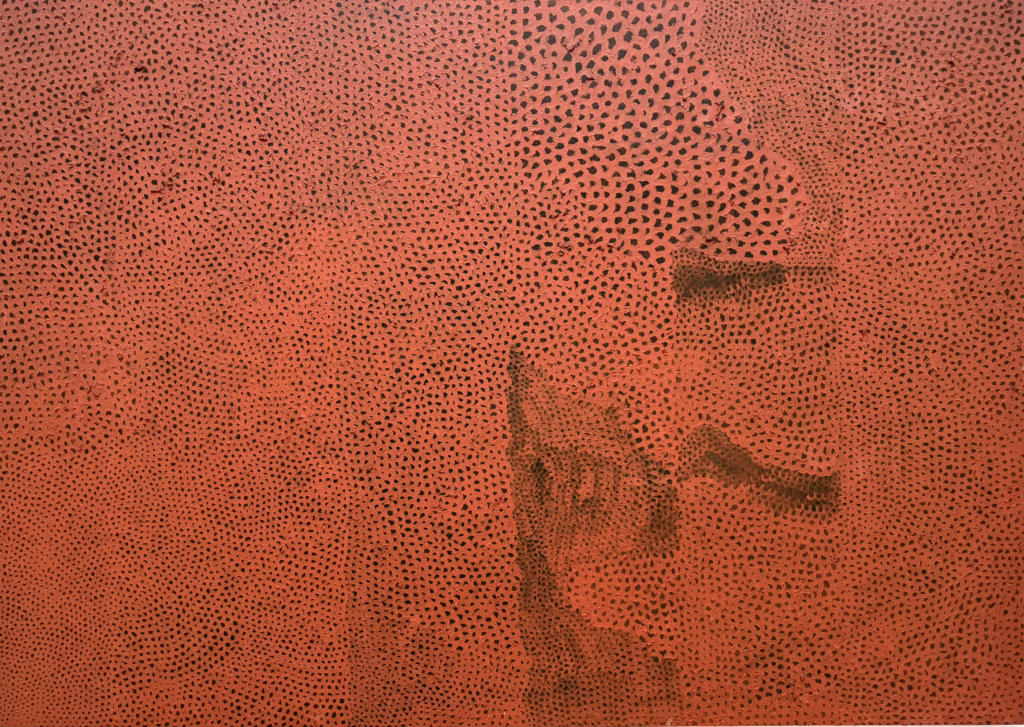
Yayoi Kusama, No.N2, 1961, Private Collection.
In 1960s, she became part of the avant-garde scene alongside Andy Warhol, Claes Oldenburg, Donald Judd in New York City.Truly, the young girl from Japan arrived in New York City with just one suitcase and knew no one, soon, she became a prominent artist and activist in the New York art scene, known for her controversial nude performances protesting capitalism and the Vietnam War.
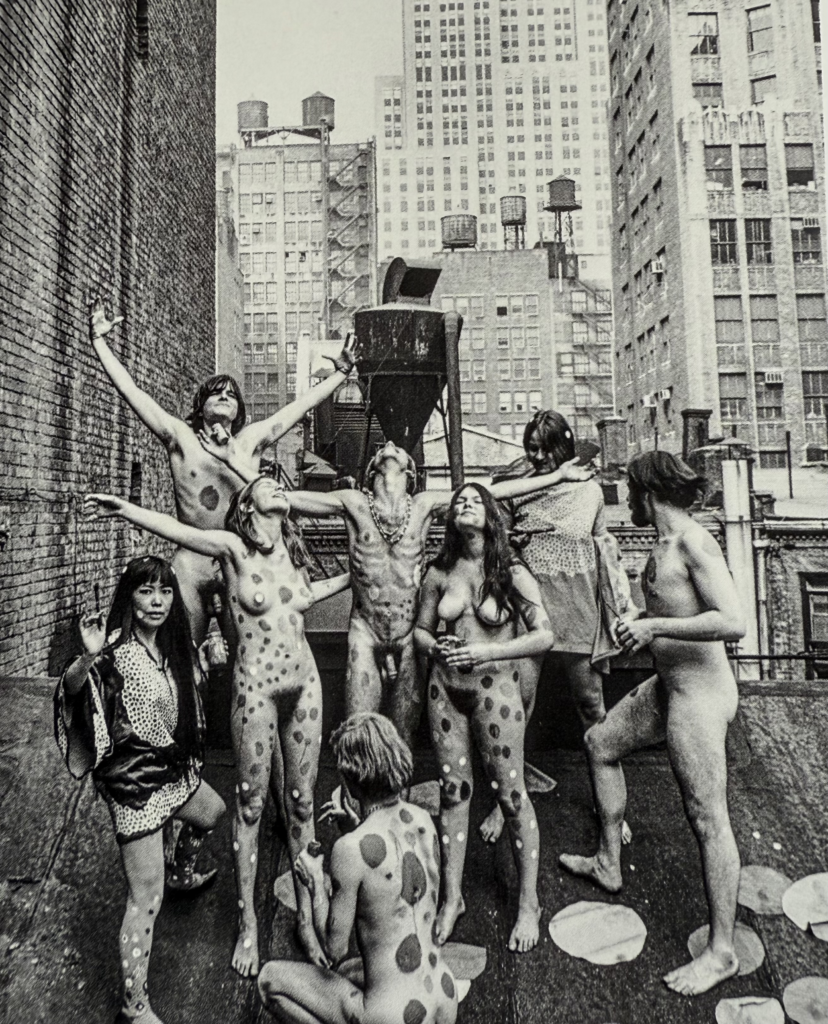
Naked Happening on a rooftop in New York, 1968
Her art became prominent not only in New York, but all over Europe. At the 33rd Venice Biennale, she unofficially installed her “Narcissus Garden” on the lawn outside the Italian pavilion. With the help of Lucio Fontana, she arranged around 1,500 silver-coloured mirrored plastic spheres in the shape of a carpet. She intended to sell each ball to visitors for two dollars, displaying signs with phrases such as “NARCISSUS GARDEN” and “YOUR NARCISSISM FOR SALE”, as a critique of the art market.Her provocation had an enormous impact, turning the Biennale’s marketplace and audience narcissism into the subject of the art itself.
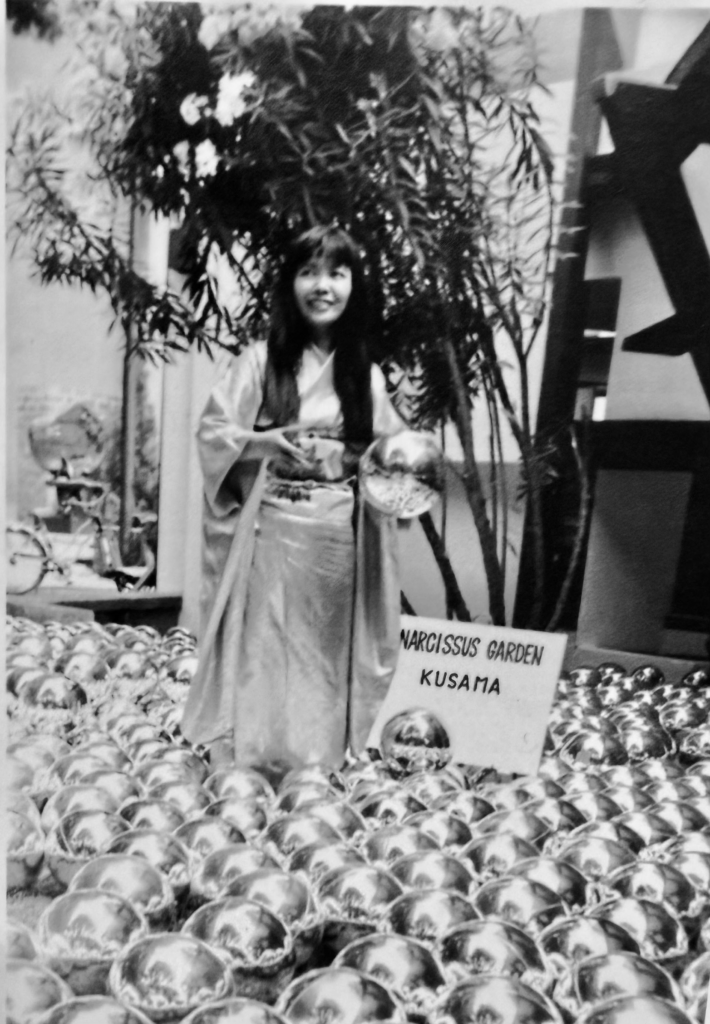
Nacissus Garden, 33rd Venice Bienalle, 1966
In the 1970s, she was exhausted and returned to Japan, voluntarily entering a psychiatric hospital in Tokyo, where she still lives and works today.During that period, her artistic style shifted towards a more introspective tone, focusing on psychological healing, memory, and the repetition of patterns. She created collages, wrote poems, and was particularly known for her autobiographical novels.
TEARLESS DOLL
the doll that can’t shed tiars is a freak in the world of men
glass eyes plastic eyelashes
wounded in the intervals of ambiguous love
a separate shadow alone in the crowd
coming back from inside the white bell and that
sigh of chaos and dazzling vertigo
today the words I offer you in your sadness
in the haevens a ring of white clouds, on the ground a bouquet of flowers
the flame in your heart, too, has withered tearless doll
whose date it was to be born in this transitent world
Yayoi Kusama,1988
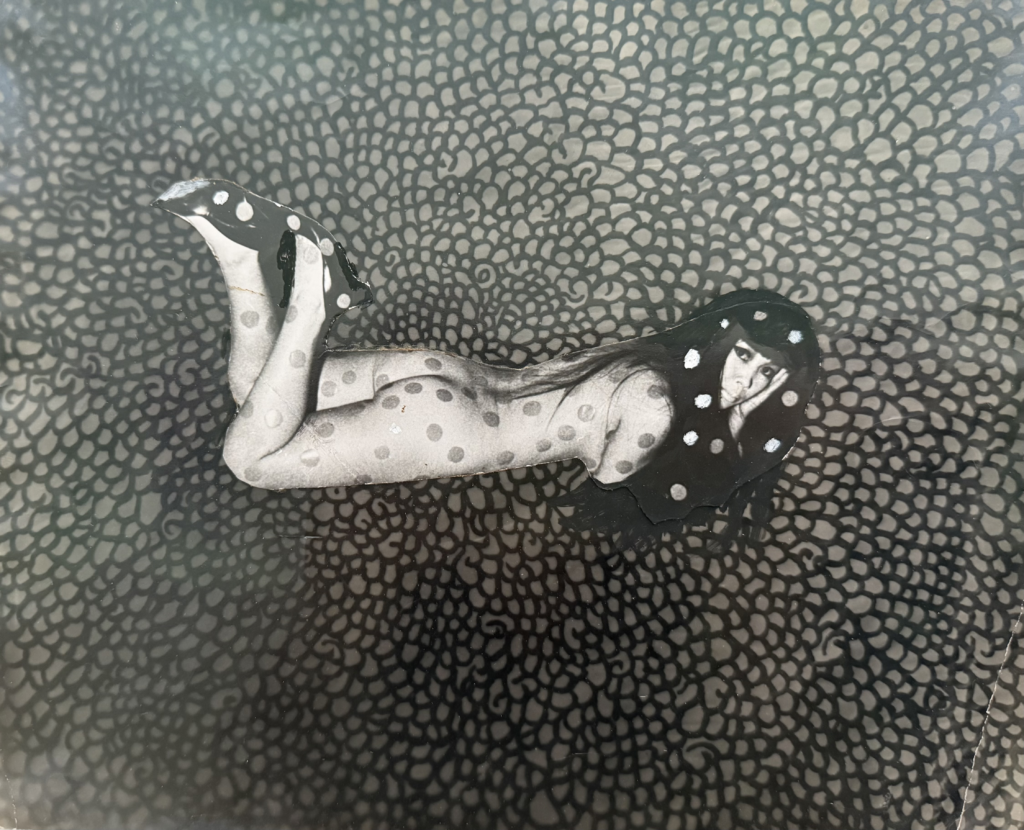
Self-Obliteration (Net Obsession Series), 1966
Yayoi Kusama became a global icon in the 2000s due largely to her use of striking colours and pumpkin motifs, as well as her repetitive polka-dot patterns. She developed large scale “Infinity Mirror Rooms” and outdoor sculptures. The themes of infinity, the cosmos life and death, joy and anxiety, were the core of her works.
MY ETERNAL SOUL SERIES
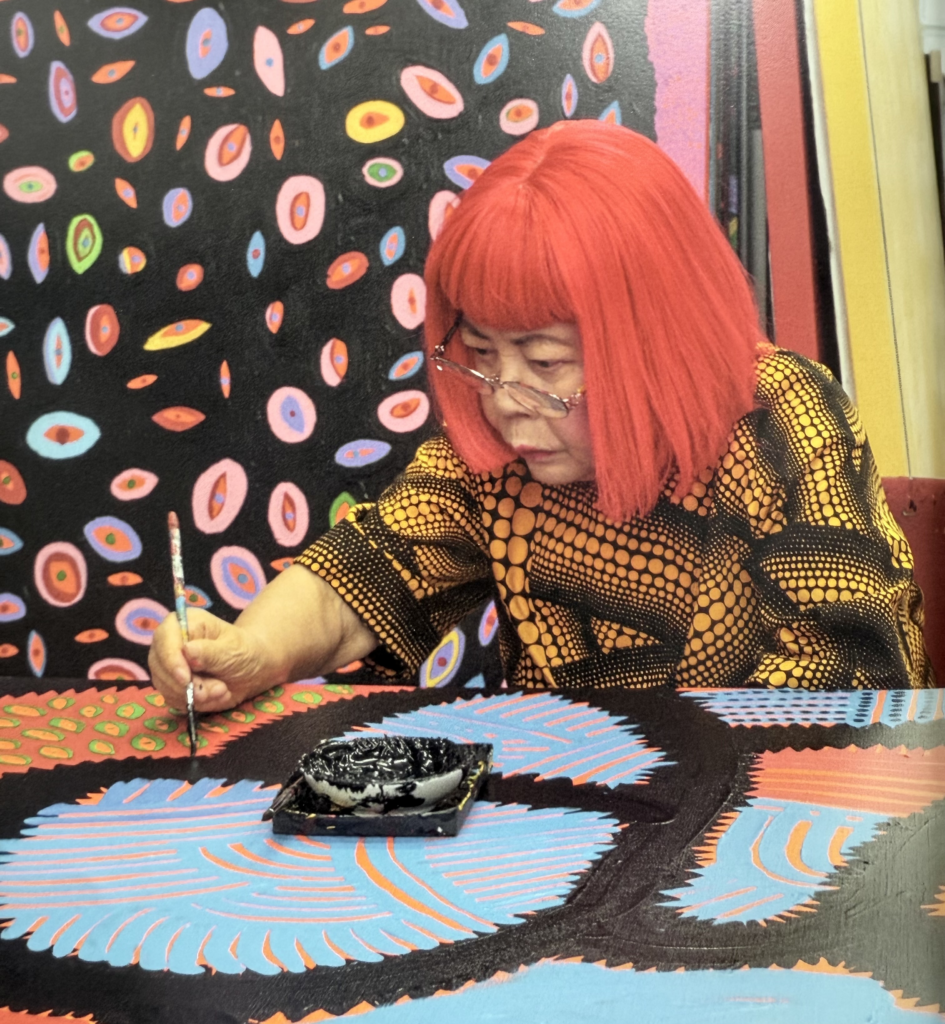
Yayoi Kusama’s “My Eternal Soul” series began in 2009 when she was in her 80s, and continues to this present day. It is one of the most ambitious and expressive phases of her late career. The title itself – My Eternal Soul – express Kusama’s idea that her artistic energy, emotions continue endlessly even beyond her physical life. The paintings features infinite creation, a stream of consciousness without beginning and end. Each work is unique yet part of an ongoing, never complete universe-much like Infinity Mirrors Rooms.
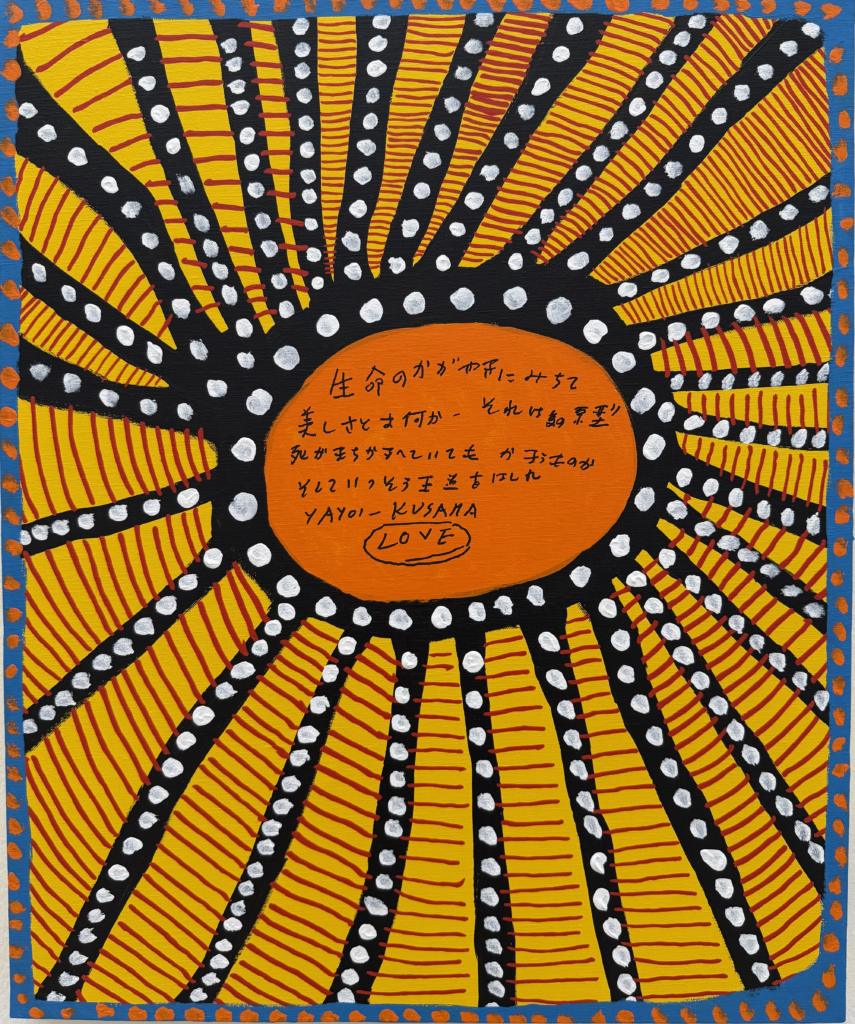
Yayoi Kusama, Every Day I Pray for Love, 2023, Collection of the Artist, Courtesy of Ota Fine Arts
EVERY DAY I PRAY FOR LOVE is Yayoi Kusama’s most intimate and late-life series, revealing both her physical perseverance and her spiritual depth as an artist.
The bright colours, organic shapes, faces, eyes, cells and flowers are arranged in dense, rhythmic compositions that seem to pulse with energy. These compositions represent Kusama’s inner cosmos and her lifelong vision of the infinite interconnectedness of all beings.
THE FUTURE IS MINE
“Sunk in the sorrows of my mind are the signs of
presence of all creation
Having reached the end of my sadness
I bury myself in the joys of the dazzling world of
people and
among the shed tears”
…
Yayoi Kusama, 2011
Nazli Kok Akbas, Octobre 2025, Geneva, Switzerland

