
Share this article:
There are exhibitions that celebrate a master, and there are exhibitions that quietly reorganize our perception and understanding of art history. The current exhibition at The Beyeler, Foundation, Basel, devoted to Paul Cezanne belongs to second category.
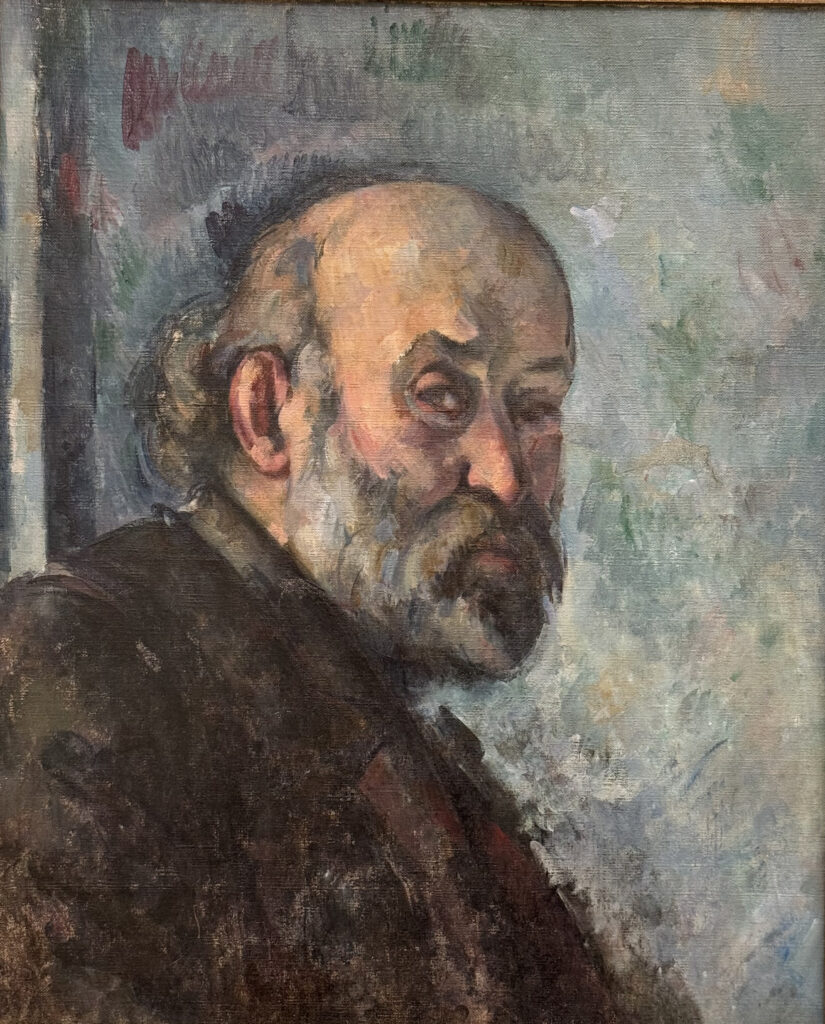
In the luminous architecture of Riehen, Cezanne does not appear as a distant monument of modernism, but as a working mind -restless, methodical, almost stubborn in his pursuit of clarity. What unfolds across the galleries is not a chronological survey, but an intellectual trajectory: the evolution of a painter who transformed structure and perception into a system.
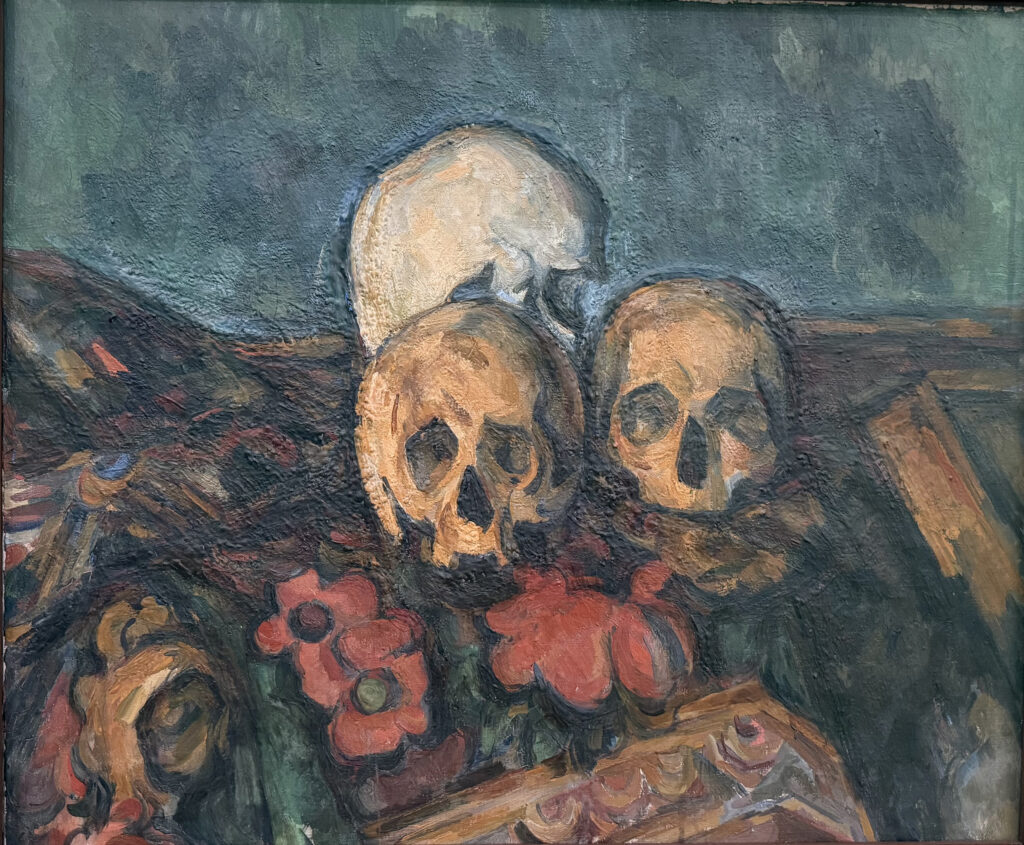
Cezanne’s early works carry the density of struggle. Dark tonalities, heavy impasto, dramatic contrast – that reveal an artist wrestling with the authority of tradition. Unlike the impressionists, who sought to capture the feeling atmosphere of modern life, Cezanne searched for permanence. Even when his palette lightened under the influence of Pissaro. His intention remained fundamentally different.
Cezanne did not want to paint light: he wanted to construct form.
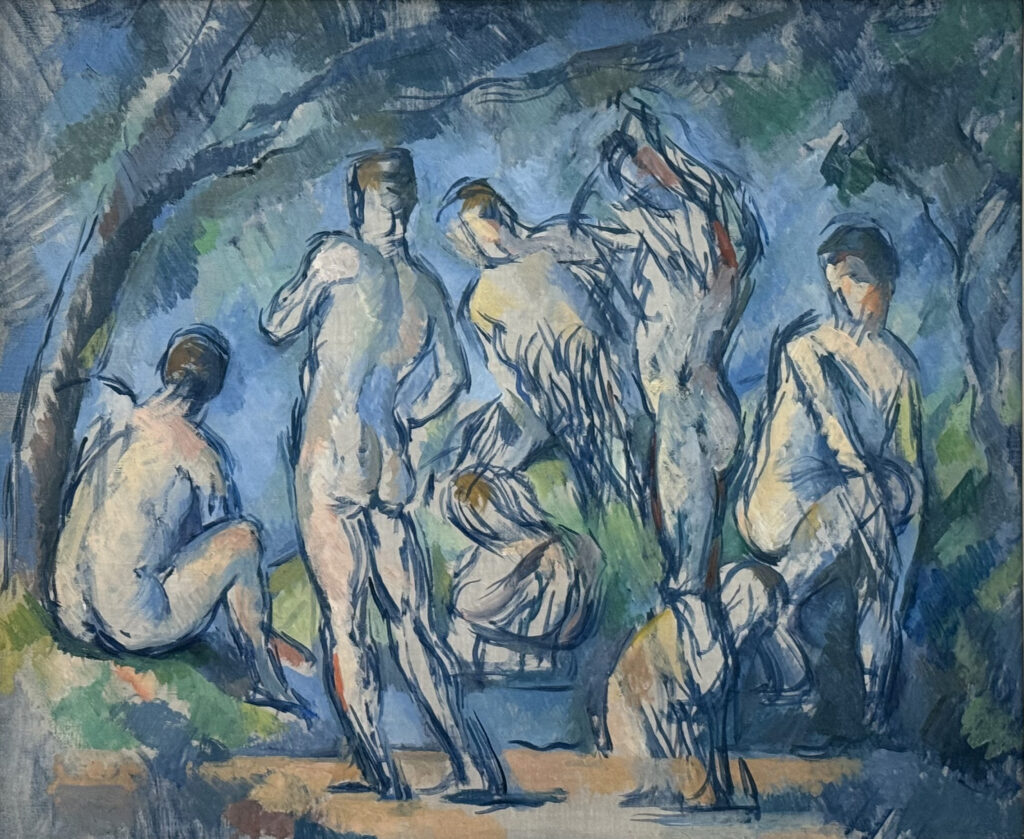
By the 1880s, this intention crystalized into what would become his defining language: the constructive brushstroke. Small, deliberate patches of color build volume through modulation. Contour dissolves. Color becomes architecture. The surface vibrates, yet nothing is accidental.
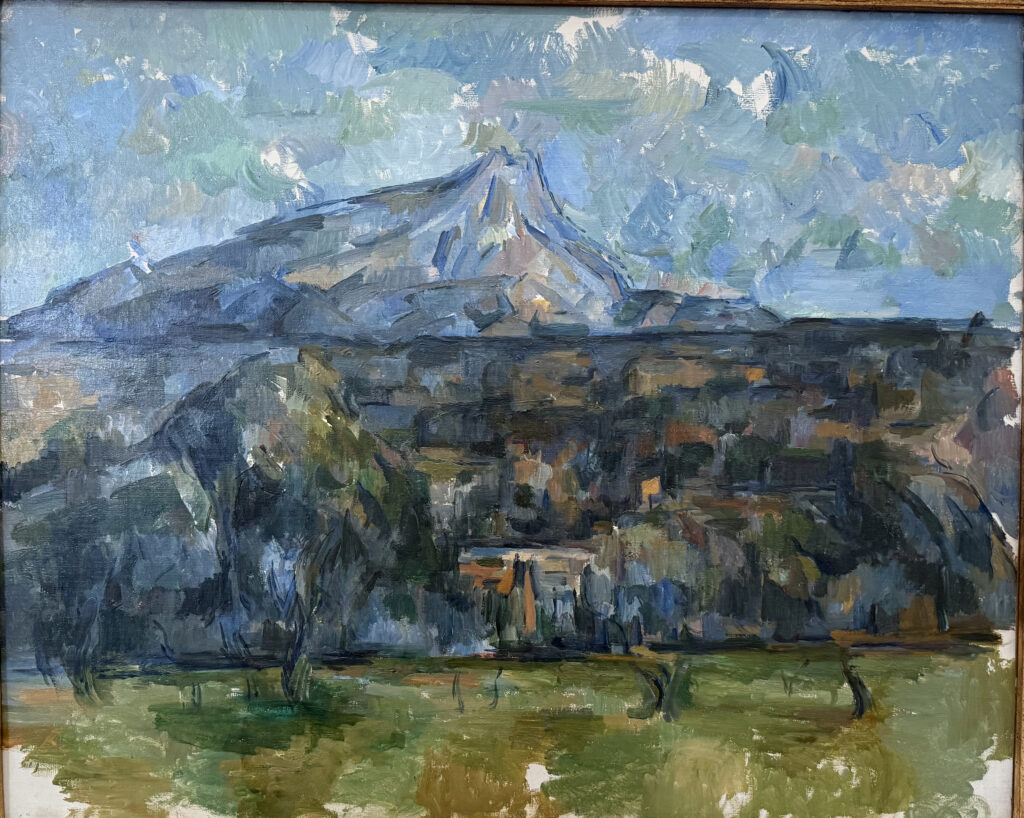
Looking at the repeated visions of Montagne Sainte-Victoire paintings, one senses that the motif is secondary. The Mountain becomes a laboratory. Planes shift, interlock, compress. Sky presses against earth. Perspective loosens its Renaissance certainty and becomes elastic, experimental.
It is here that Cezanne’s radicality becomes evident: he does not reproduce nature-he reorganizes it.
In the still lifes, this structure inquiry reaches a quiet audacity. Apples tilt precariously; tabletops slope; vessels defy gravitational logic. These distortions are not naïve irregularities – they are intentional refusals of illusion.
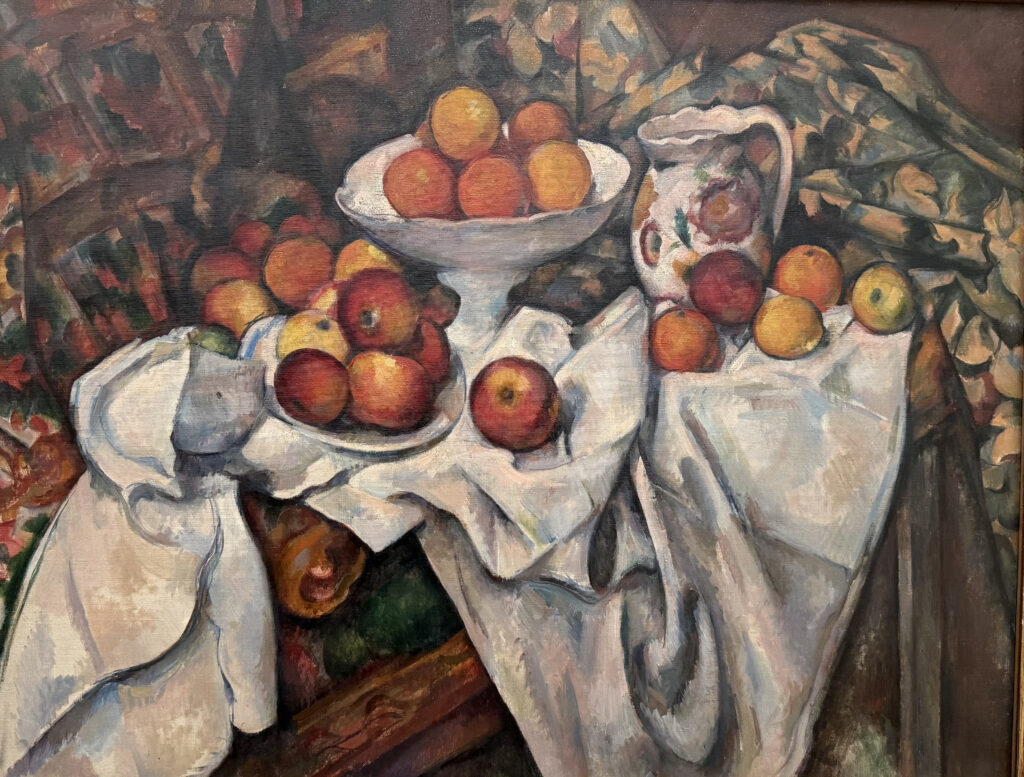
Cezanne allows us to see seeing.
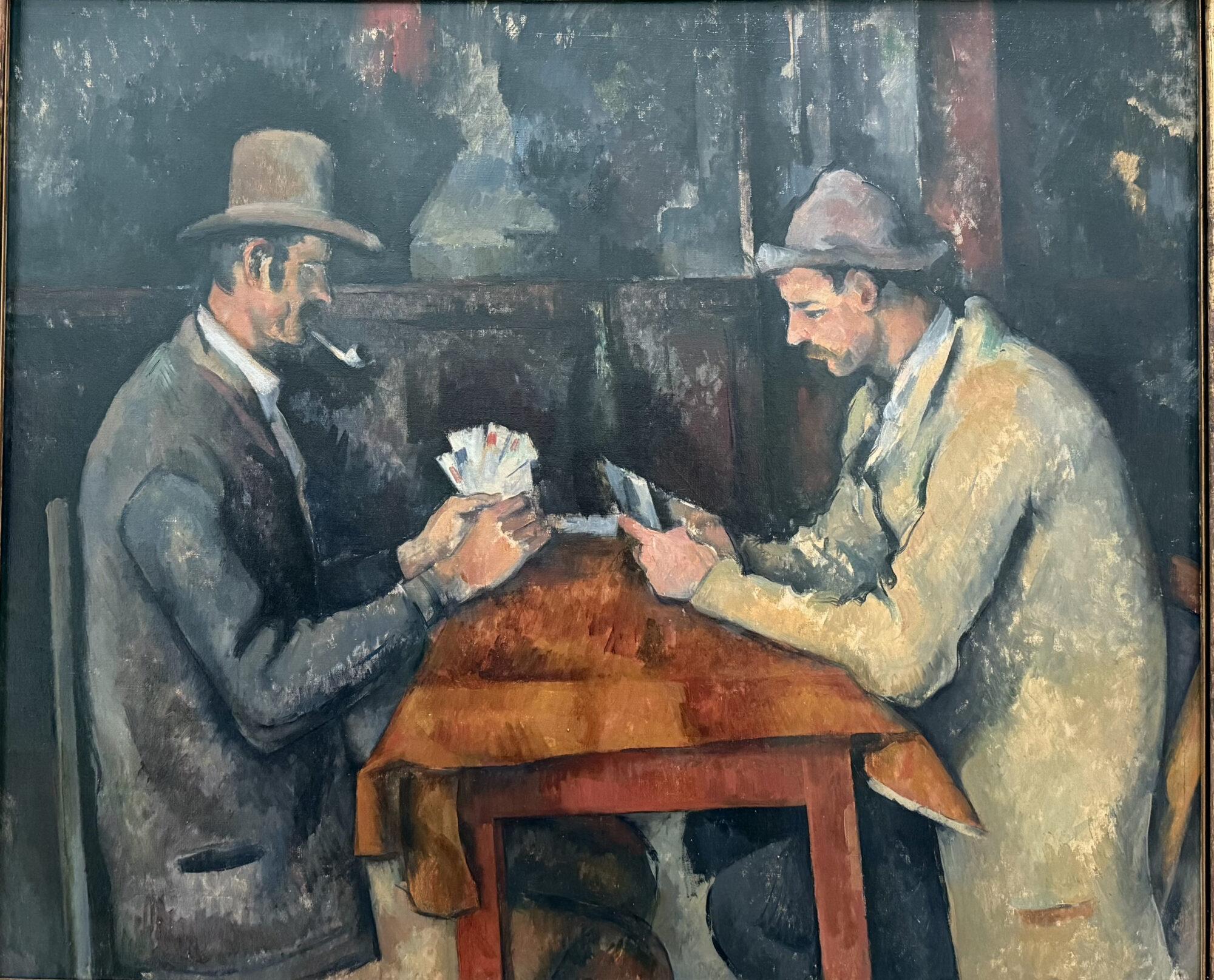
The Card Players, painted in the 1890s, the iconic series, at the first glance, the scene appears modest: Provencal peasants seated at the table, absorbed in a quiet game. There is no theatrical gesture, no anecdotical distraction.
Yet what emerges is monumentally spectacular.
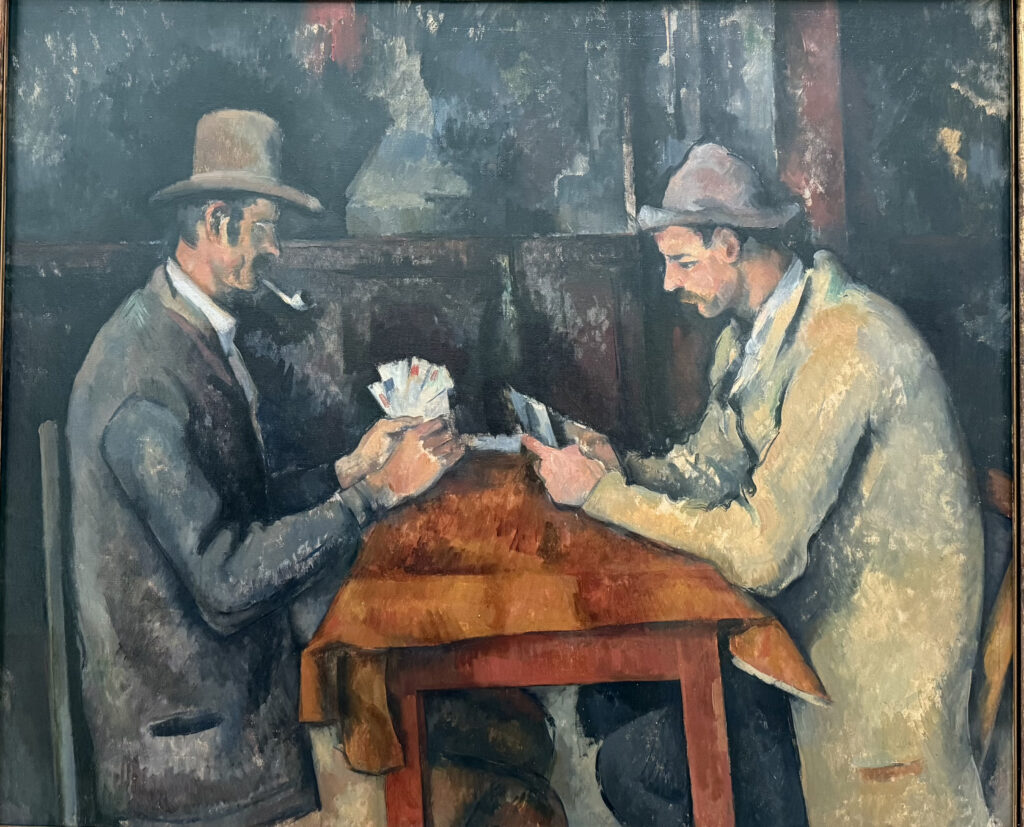
The figures are constructed as solid volumes, almost architectural in their presence. The table becomes as axis. Bottles stand like vatical columns. The space is compressed, perspective subtly tilts. Cezanne eliminates narrative drama in favor of structural quest.These men do not perform; they endure. Their silence is formal. Their gravity is chromatic. In The Card Players, Cezanne reveals that modernity does not require spectacle. It can emerge from compositional tension alone.
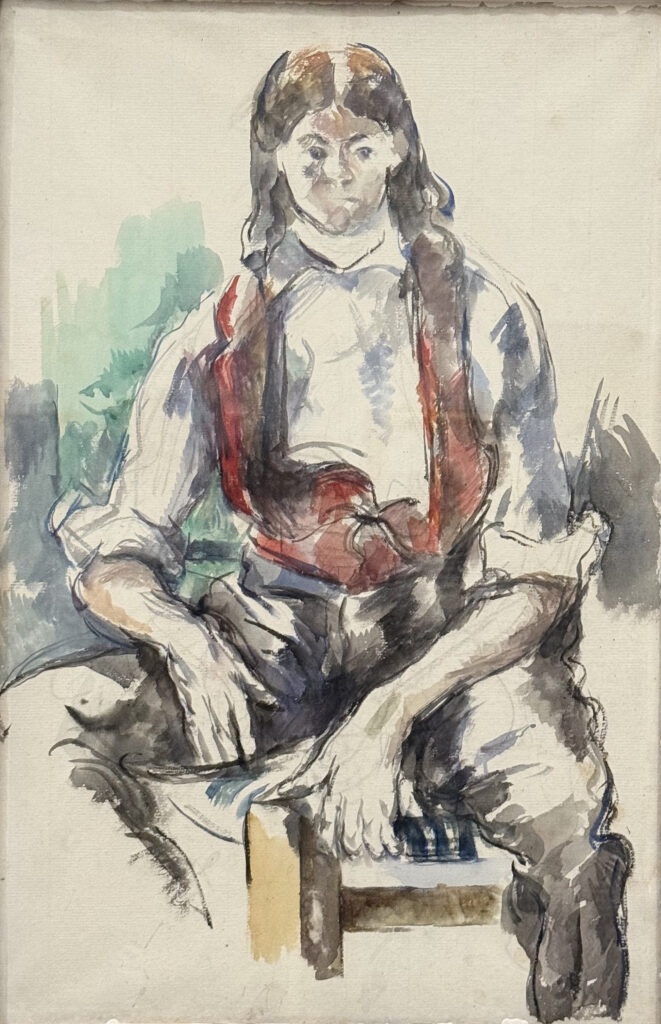
If The Card Players embodies structural stability, Boy in a Red Waistcoat introduce a subtle instability.
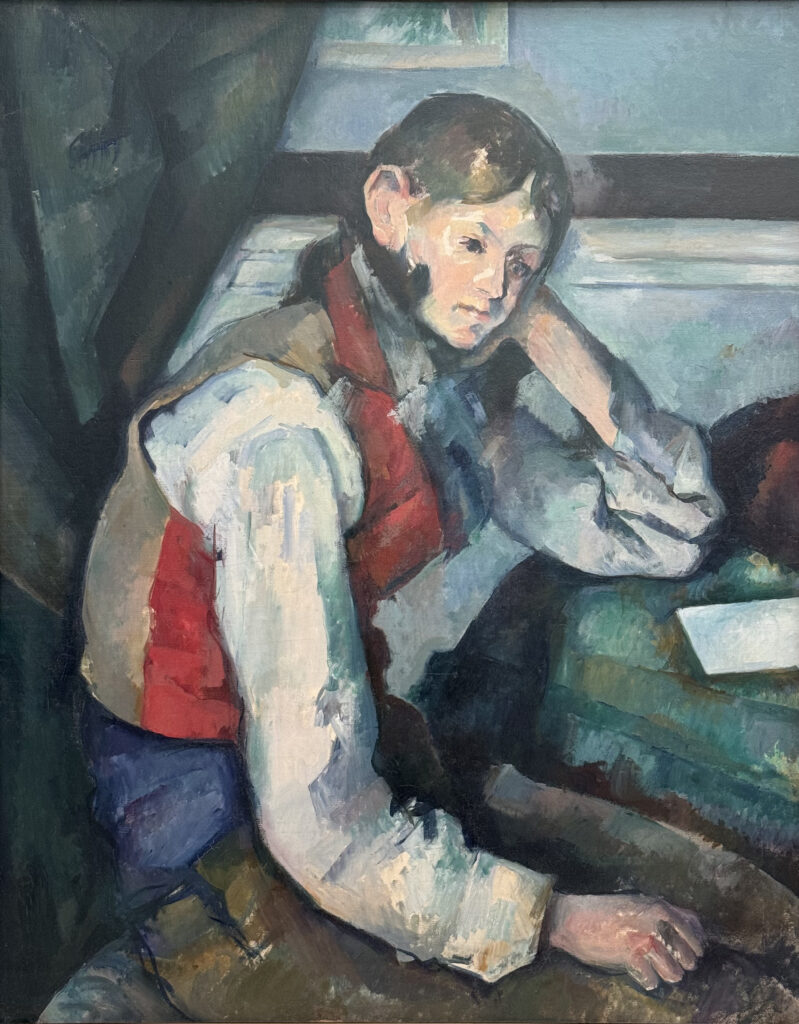
Cezanne deliberately painted the young boy as if he is dynamically suspended, creating the impression that he is poised between collapse and cohesion. This in not a psychological portrait in the conventional sense. The boy is less an individual narrative presence than a compositional event. The red waistcoat functions as structural force. Color replaces line as the governing principle.
Through this work, Cezanne demonstrates his mastery of tension: harmony achieved not through symmetry, but through calibrated imbalance.
For contemporary viewers, these works feel unexpectedly current. They reject spectacle. They demand time. They insist on attention.
The final decade of Cezanne’s life so powerfully represented in this exhibition. Working in relative isolation in Aix-en-Provence, he stripped painting to its essential questions:
How does one make perception durable?
How does one translate instability into structure?
Perhaps most striking is the sense of incompletion. Areas remain open. Forms hover between emergence and disappearance. But this incompletion is philosophical. Cezanne refuses closure. The painting remains alive, thinking.
Ultimately, this exhibition at the Beyeler Foundation, reuniting Cezanne’s remarkable works, clarifies how his art laid the structural foundations of modernism. He replaced line with color as a primary agent of construction. He destabilized single-point perspective. He transformed painting into an intellectual process rather than a finished illusion.
The exhibition “Cezanne” runs until 25 May 2026, offering a rare and concentrated opportunity to encounter the artist’s late mastery in its full architectural force.

