
REACTIVATING JOHN GIORNO: THE POLITICS OF LISTENING
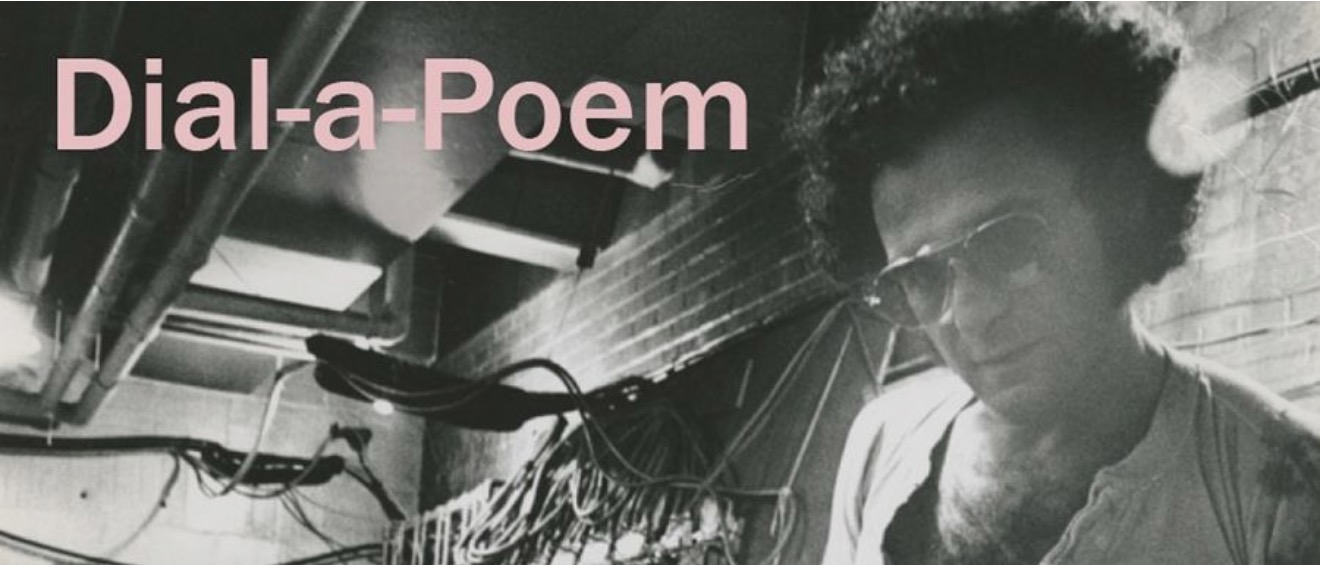
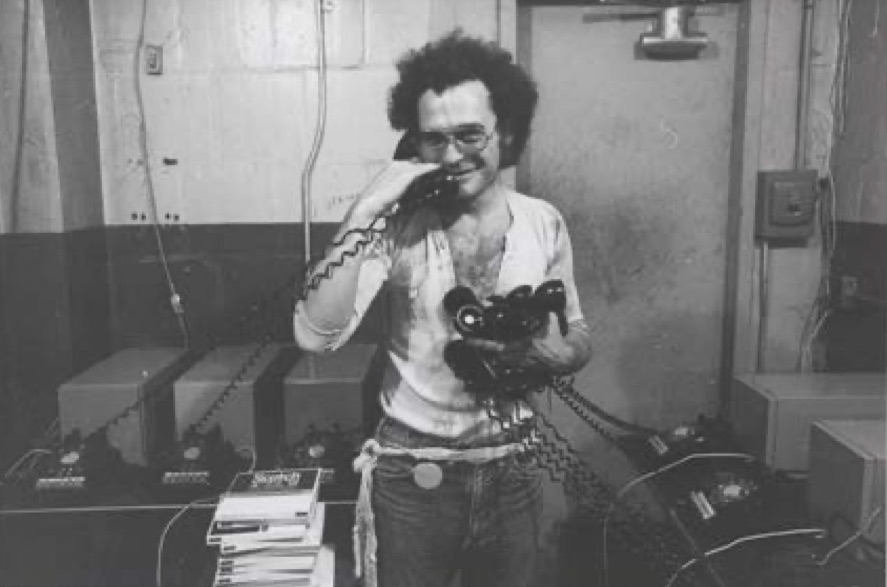
At the moment when contemporary art is increasingly mediated by screens, speed, and spectacle, the revival of Dial-a-Poem at MAMCO Geneva, feels both disarmingly simple and conceptually urgent. Originally conceived in 1968 by John Giorno, the project proposed a radical gesture: to make poetry as accessible as a phone call. Nearly six decades later, its resonance has not diminished -if anything, it has sharpened.
What is striking in this reactivation is not nostalgia, but precision. The work does not merely reconstruct a historical artifact of the late avant-garde; it repositions Giorno’s proposition within an era saturated by digital immediacy. Where contemporary culture privileges the visual and the instantaneous scroll, Dial-a-Poem insists on duration, attention, and the intimacy of listening. It is, fundamentally, a work of presence -one voice, one listener, suspended in time.
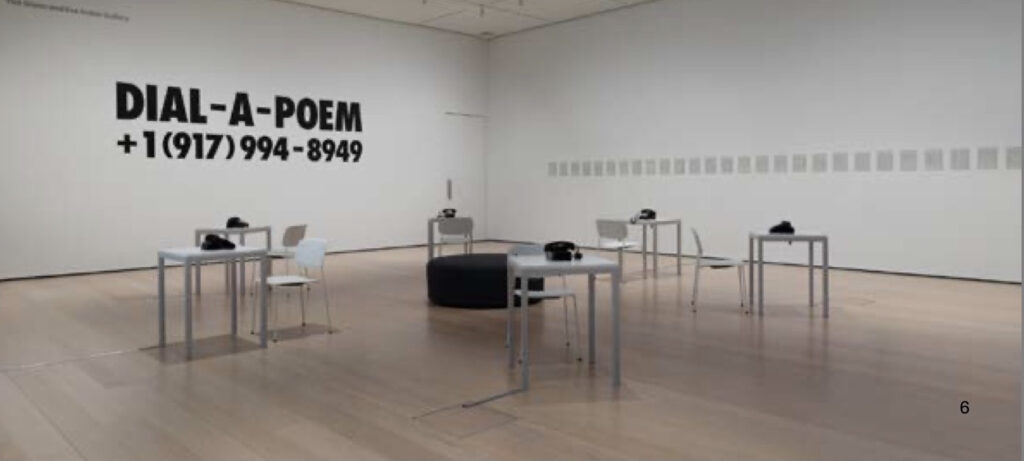
Installed within the space of MAMCO, the project unfolds as both archive and living organism. Visitors encounter discreet listening stations -objects that resists spectacle- while an expanded network allows participation beyond the museum through telephonic and digital interfaces. This dual structure is crucial: it preserves the conceptual austerity of the original while acknowledging the expanded conditions of contemporary communication.

The curatorial intelligence of the of the project lies in its attention to plurality. If Giorno’s initial version already challenged hierarchies by distributing poetry outside institutional frameworks, this iteration deepens that gesture through a polyphony of voices. Artists, poets, and performers contribute recordings that traverse languages, geographies, and registers-from the political to the intimate, from whispered confession to declarative acts of resistance. In the Swiss context, this multilingualism acquires resonance, transforming the work into a cartography of voices rather than a fixed canon.
Crucially, this project does not emerge in isolation. Over the past decades, Dial-a-Poem has undergone multiple reinventions across the globe, each shaped by local conditions and urgencies. In Mexico, for instance, artists-led initiatives have adapted the format into community based and activist contexts, where telephone poetry becomes a tool for both dissemination and resistance. There, the voice carries not only aesthetic weight but also social and political charge- addressing questions of identity, marginalization, and public space. The act of dialing becomes a gesture of connection across fragmented urban and social landscapes.
Similarly in New York and London, subsequently iterations have embraced evolving technologies, from answering machines to digital archives and mobile applications. Each version reflects a shifting media ecology while preserving the work’s conceptual spirit: immediacy, accessibility, and the primacy of the spoken world.
What distinguishes the presentation at MAMCO is its ability to synthesis these trajectories. The most compelling dimension of this project may be its redefinition of the voice itself. Here, the voice is not merely carrier of text; it becomes material -textured, fragile, embodied. Breath, hesitation, accent, and silence all acquire scruptural weight. In this sense, Dial-a-Poem aligns with a broader linage of sound art while maintaining its distinct conceptual clarity.
There is also a subtle political undercurrent. In bypassing algorithmic distribution and curated feeds, the project proposes an alternative economy of attention-one that is slower, to wait, to listen: these gestures reintroduce a form of agency that feels increasingly rare. The work does not demand visibility; it asks for presence.
By reanimating Dial-a Poem, MAMCO does more than revisiting a canonical conceptual artwork. It reopens a question that remains unresolved: how can art circulate freely while retaining its intensity?The answer, suggested here, is deceptively modest. Sometimes, all it takes is a voice on the line
Share this article:

