
Share this article:
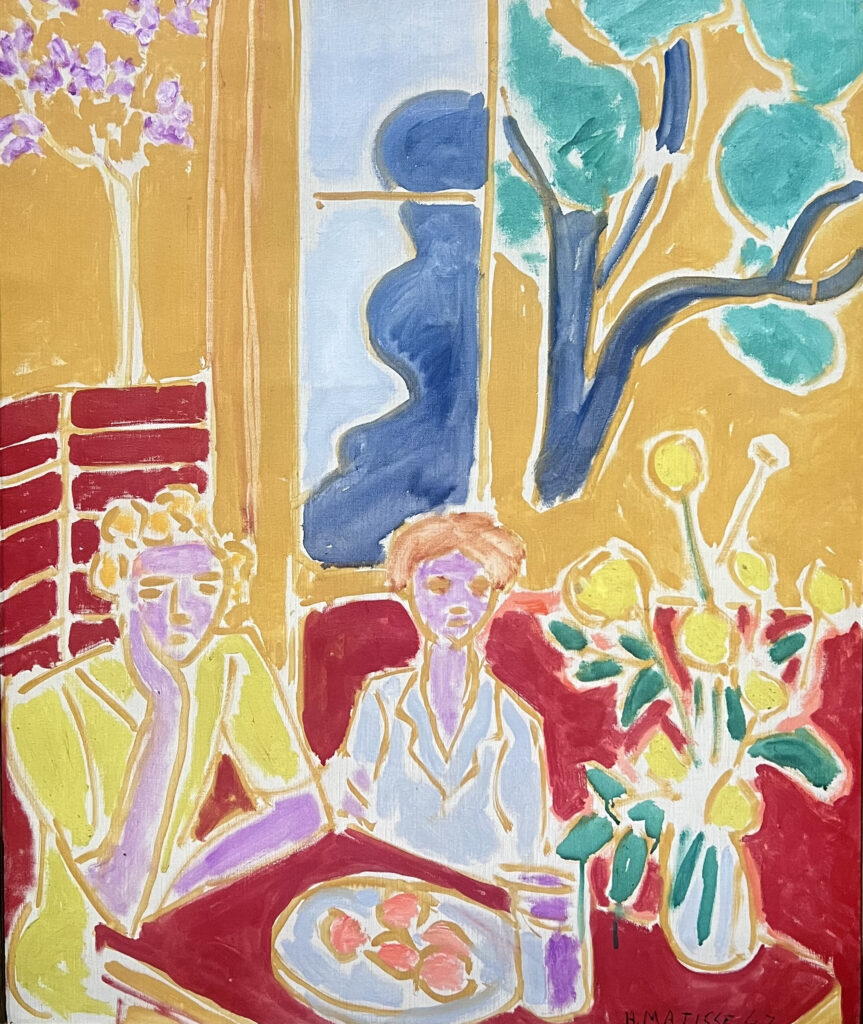
The exhibition Matisse.1941-1954 at Grand Palais, Paris sheds light on the final years of Henri Matisse’s career. Claudine Grammont, exhibition’s curator, has realized a colossal work in bringing together more than 300 works between 1941 and 1954; paintings, drawings, cut-out gouaches, illustrated books, textiles, and stained glass, from Centre Pompidou collection and major international loans.
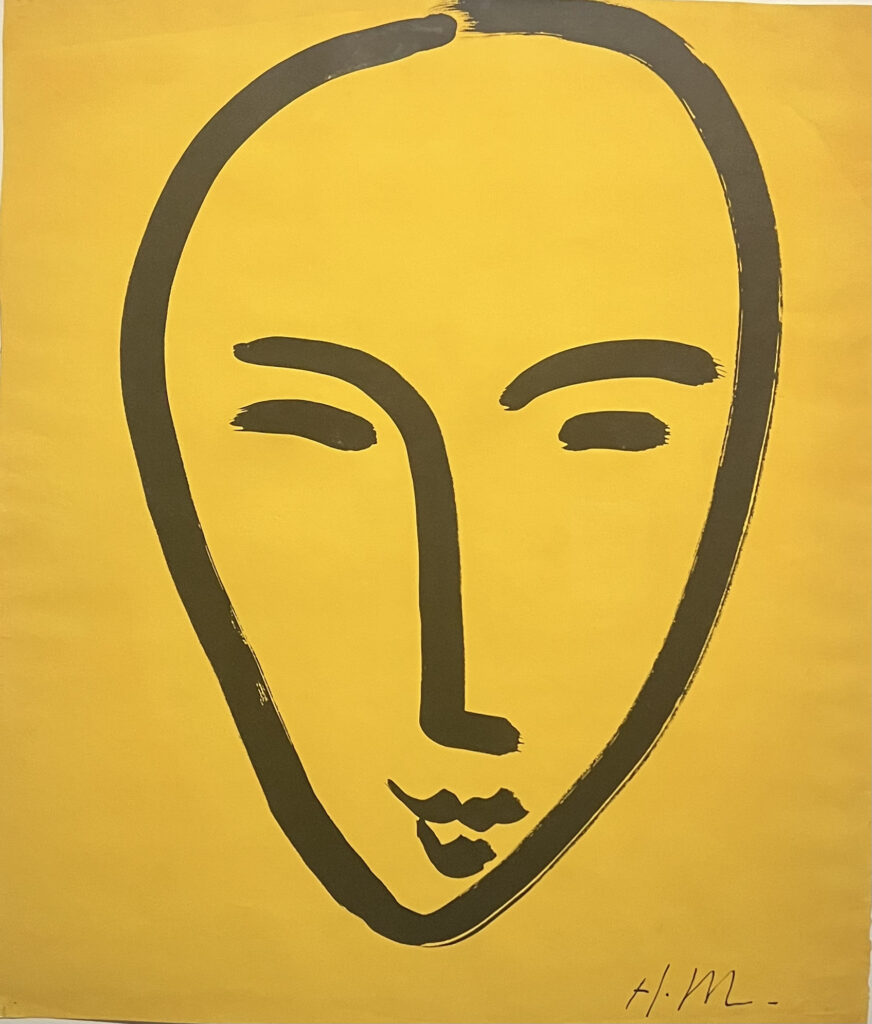
It was the war period. Many great masters, including Matisse, had their work marked as “degenerate art”.It was almost impossible to exhibit. Then, in 1941 when he was 72, he underwent major surgery in Lyon. Complications followed. According to the doctors, he had only a few days left.
“I had prepared so throughly for my departure from life that it feels as though I am living a second life” wrote Henri Matisse in 1942.
Matisse turned decisively toward the final chapter of his career, those last years in which, faced with physical limitations, he searched for purity and serenity, ultimately producing one of the most radical reinventions in modern art. Meanwhile, a miracle occurred: he recovered and lived until 1954, reaching the age of 84.
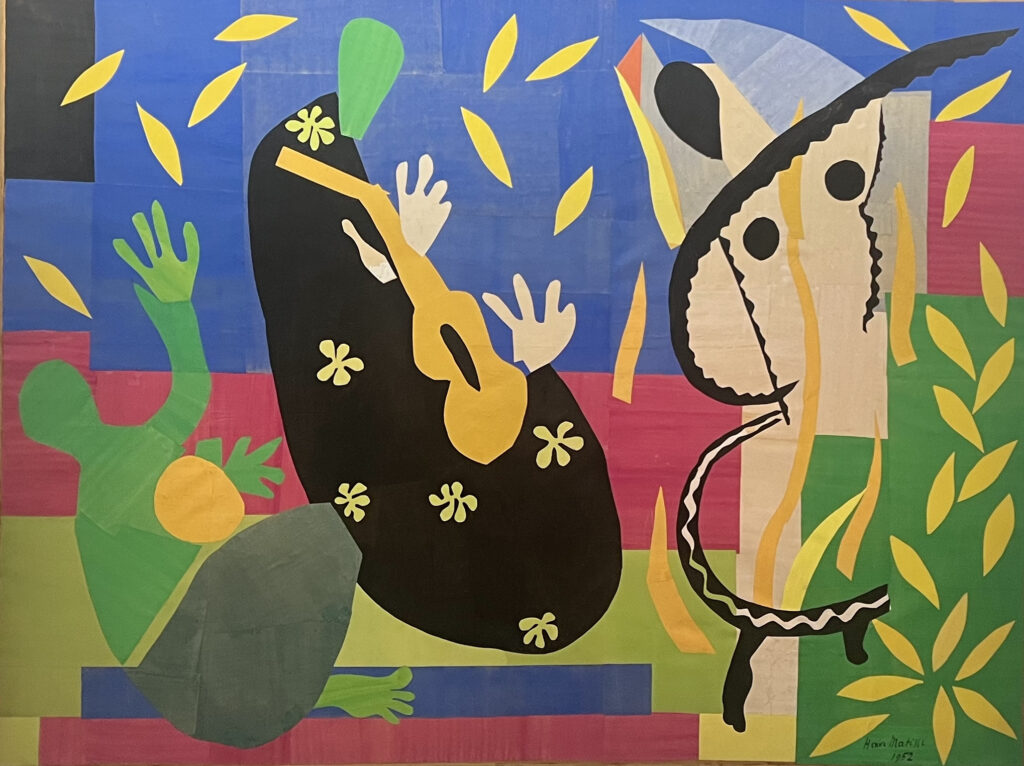
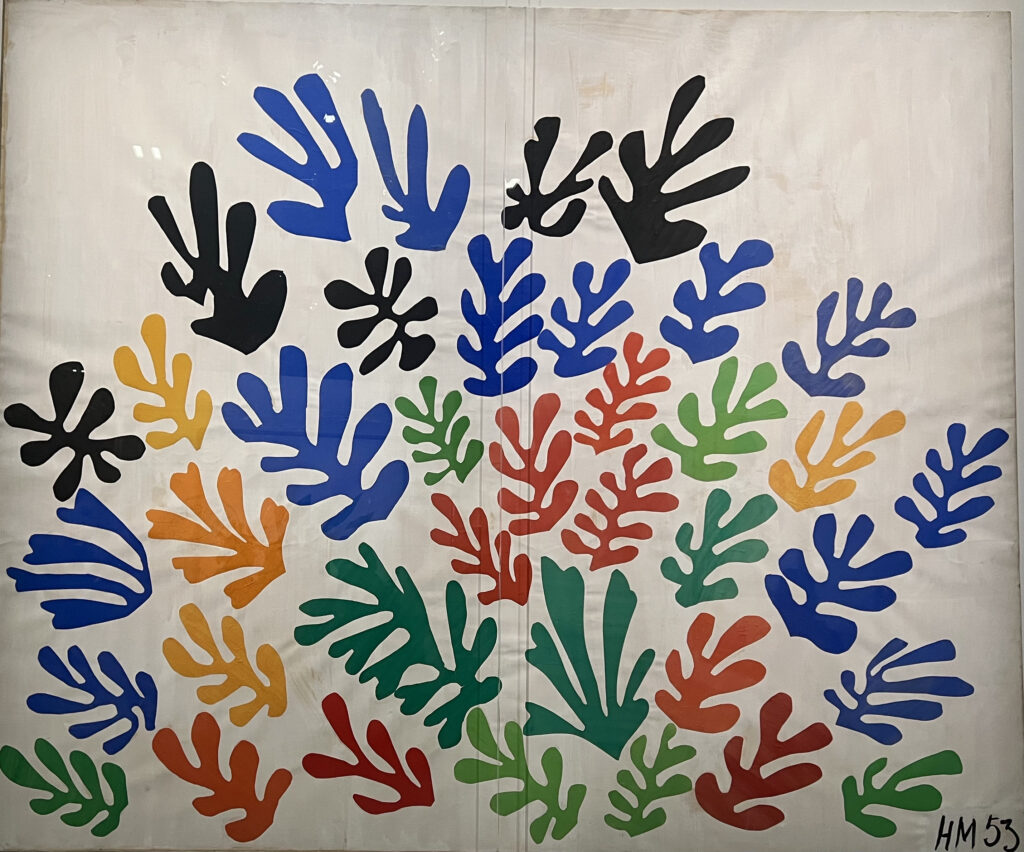
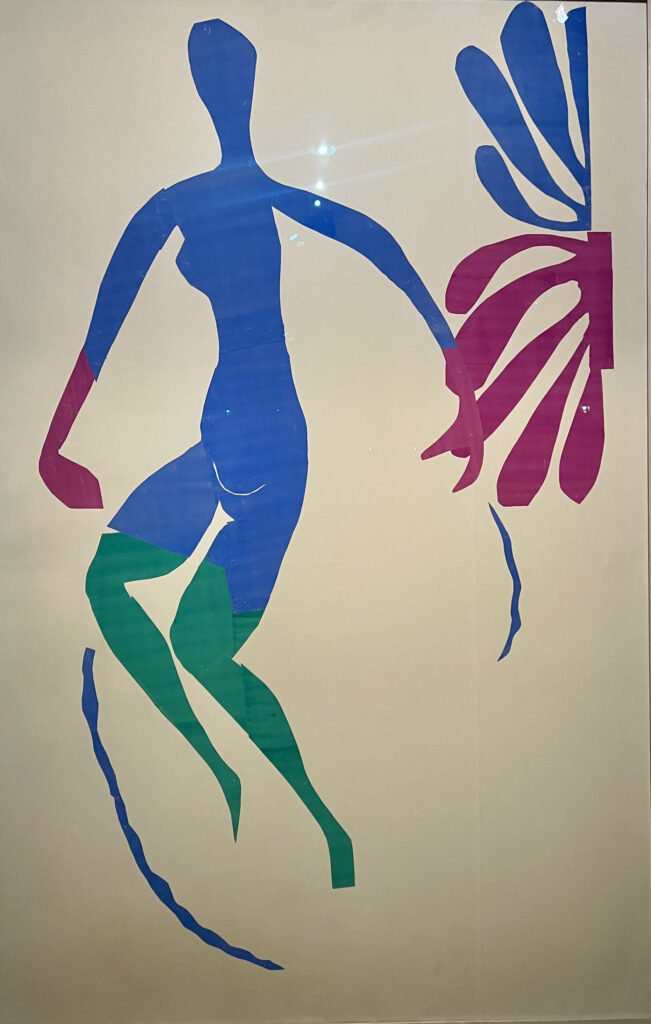
At nearly eighty years old, Matisse reinvented himself through the medium of the cut-out gouache, which he elevated into autonomous visual language, free and capable of reaching the universal through its simplicity.
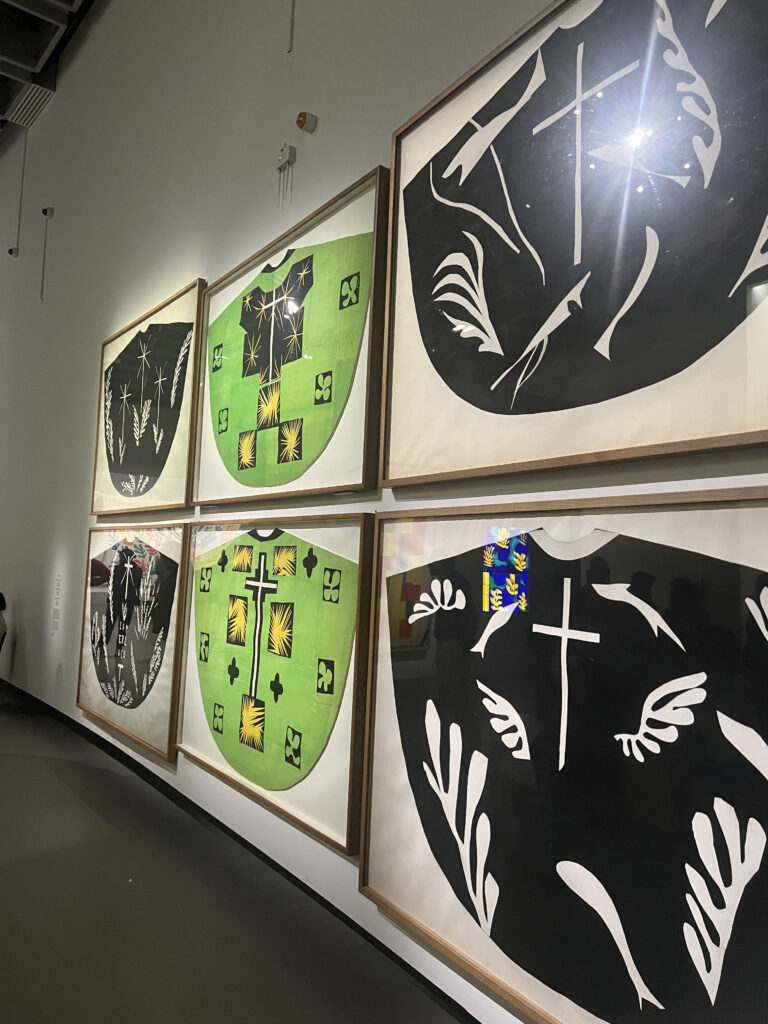
In 1949 Matisse confessed to Time magazine: “Gifted with this second life, I could do as I liked. I could create what I had been fighting for all these years.”
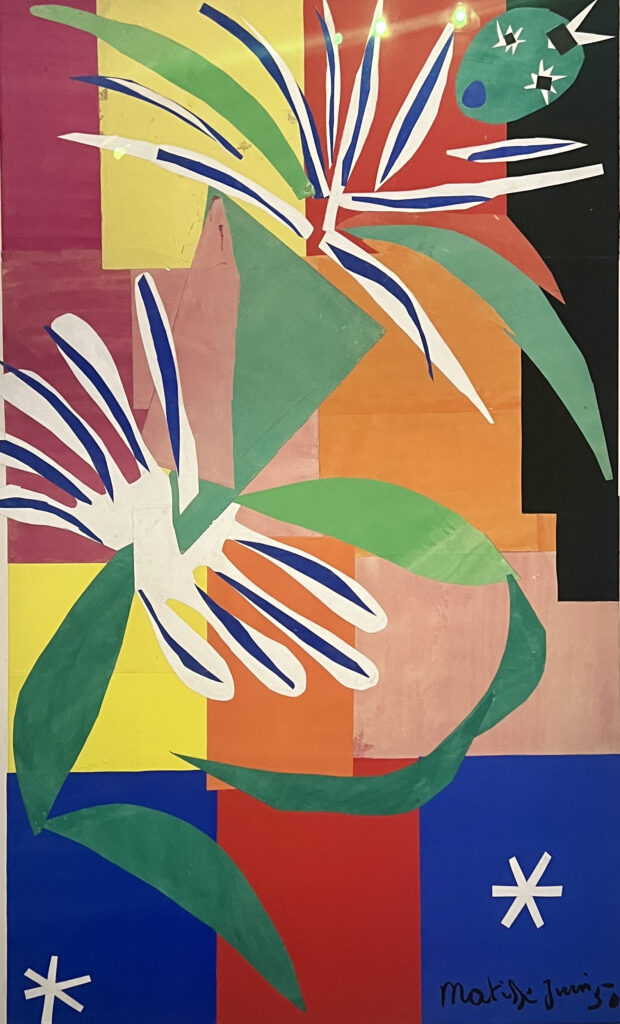
What becomes striking throughout the exhibition is the clarity of his late language. Color is no longer modulated or layered; it is absolute, unbroken, and self-sufficient. Shapes, leaves, corals, bodies, organic fragments, float, interlock, and expand across the walls. In works such as the iconic Blue Nudes, the human figure is reduced to its most essential rhythm.
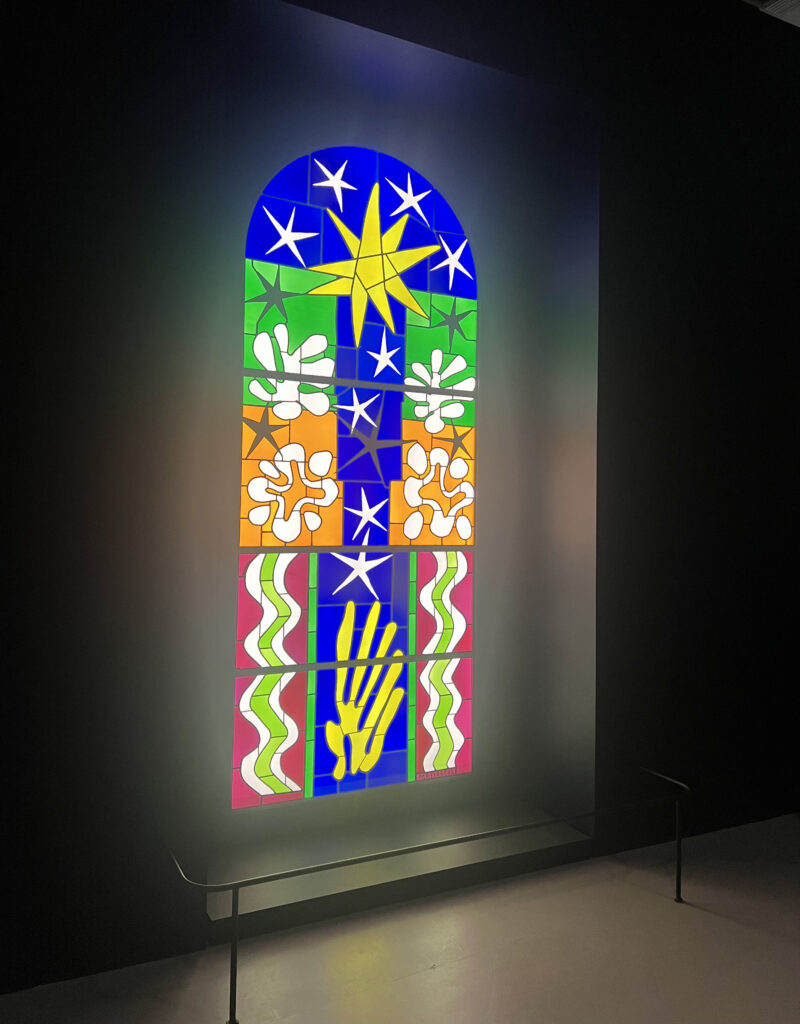
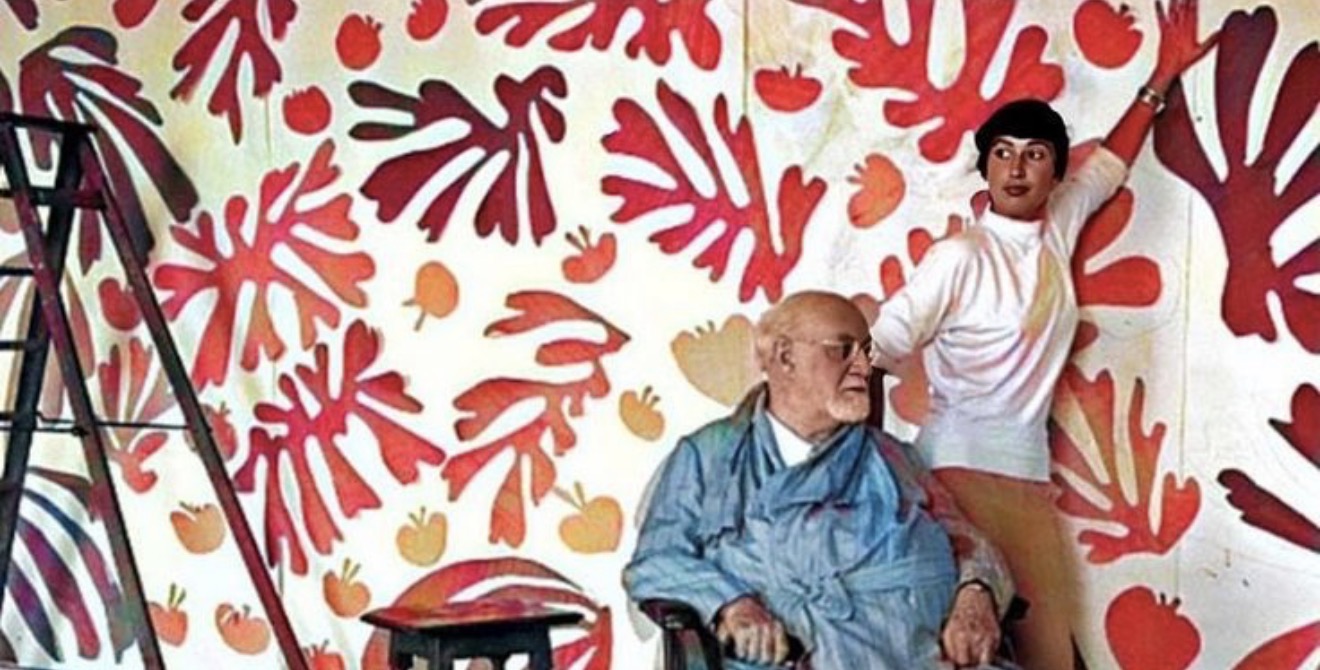
After his major surgery, he was often confined to bed or a wheelchair, yet this physical limitation reorganized his practice rather than diminishing it. Matisse developed a highly orchestrated method, surrounded by assistants, many of whom were beautiful young women who served as nurses, models and collaborators.
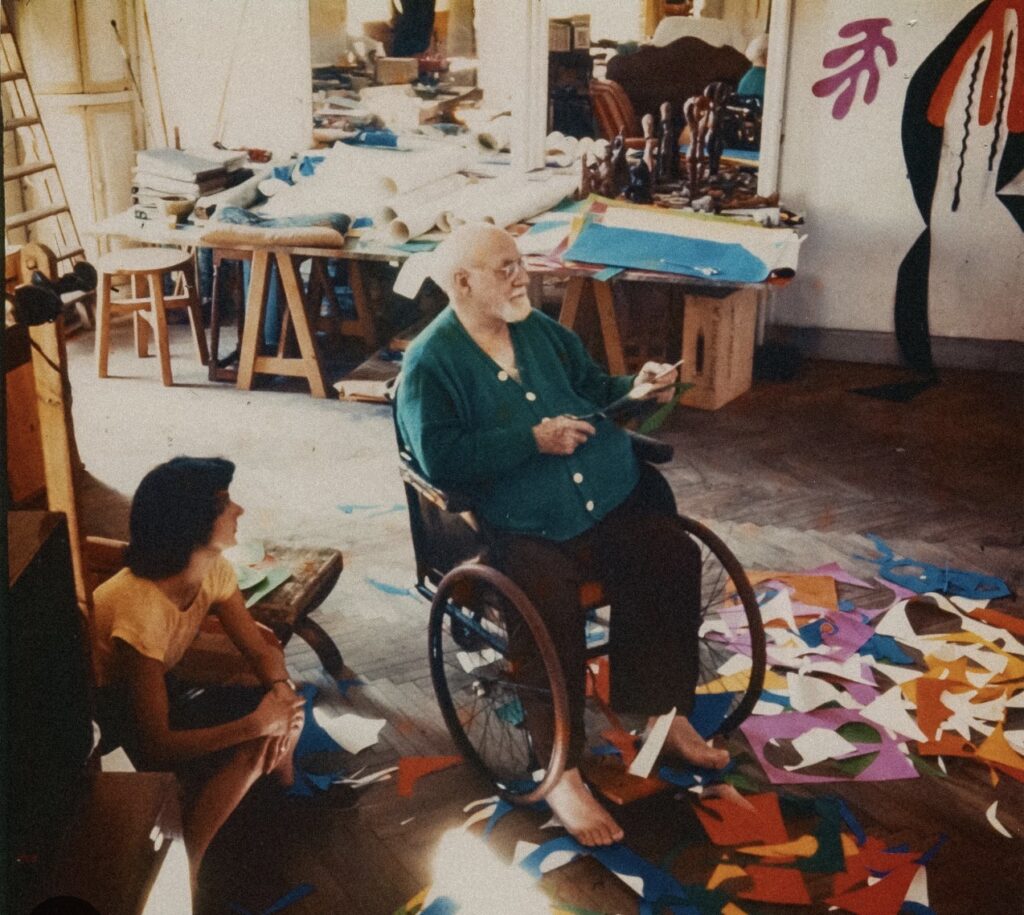
Sheets of paper were painted in advance with gouache by assistants such as Monique Bourgeois, creating a reservoir of pure color from which he could work. He would than cut directly into these sheets and have shapes pinned to the walls of his studio, constantly moving, adjusting, and recomposing them. His studio became a living composition.
What defines this late practice is the paradox between freedom, dependence, and full control. He described this practice as;
“I am led, I do not lead.”
The idea is echoed in his definition of the cut-out technique itself, which he called “drawing with scissors”. Matisse suggested, the act of cutting preserved a directness that drawing could not: instead of outlining and then filling in, he “draw(s) directly into the color”.
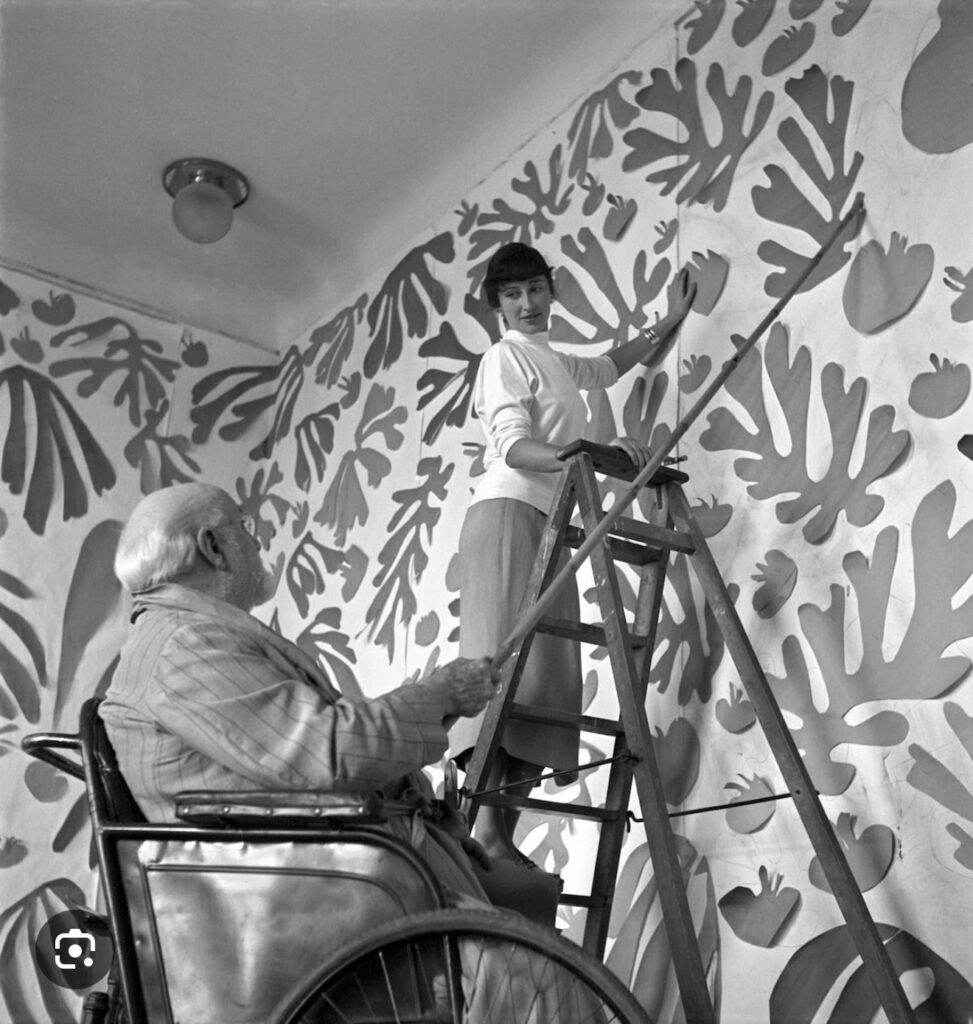
In this late language, chance, movement, and decision merge, producing compositions that feel at once spontaneous and rigorously composed, like visual equivalent of improvisation held in structure.
Ultimately, this exhibition at Grand Palais organized by Center Pompidou, not only redefines Henri Matisse’s late work as a radical reinvention, but also situates it within a precise curatorial vision.
The exhibition is on view until July 26, Matisse does not simply delight the eye; he reconstructs it.

