
Share this article:
Few artists have challenged the conventions of exhibition-making as radically as Huyghe. Since 1990s, he has steadily abandoned the idea of the artwork as a fixed object. Instead, he creates situations: environments inhabited by animals, algorithms, microorganisms, weather conditions, artificial intelligence, and human visitors. At Beyeler, this vision reaches a remarkable level of maturity. The exhibition does not present artworks to be observed; it presents conditions in which events may occur.
Pierre Huyghe’s exhibition in Basel is a living ecosystem, conceived specifically for the Fondation Beyeler, that brings together newly created works and major recent installations transforming the museum into a territory where biological, technological, and fictional realities continuously intersect.
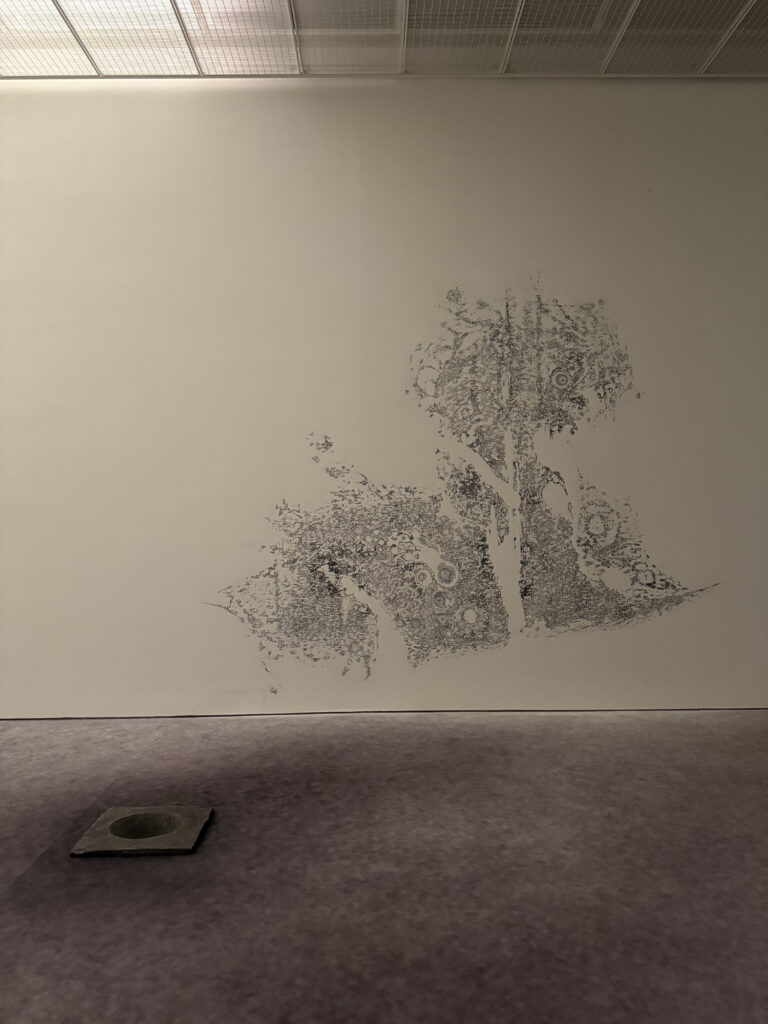
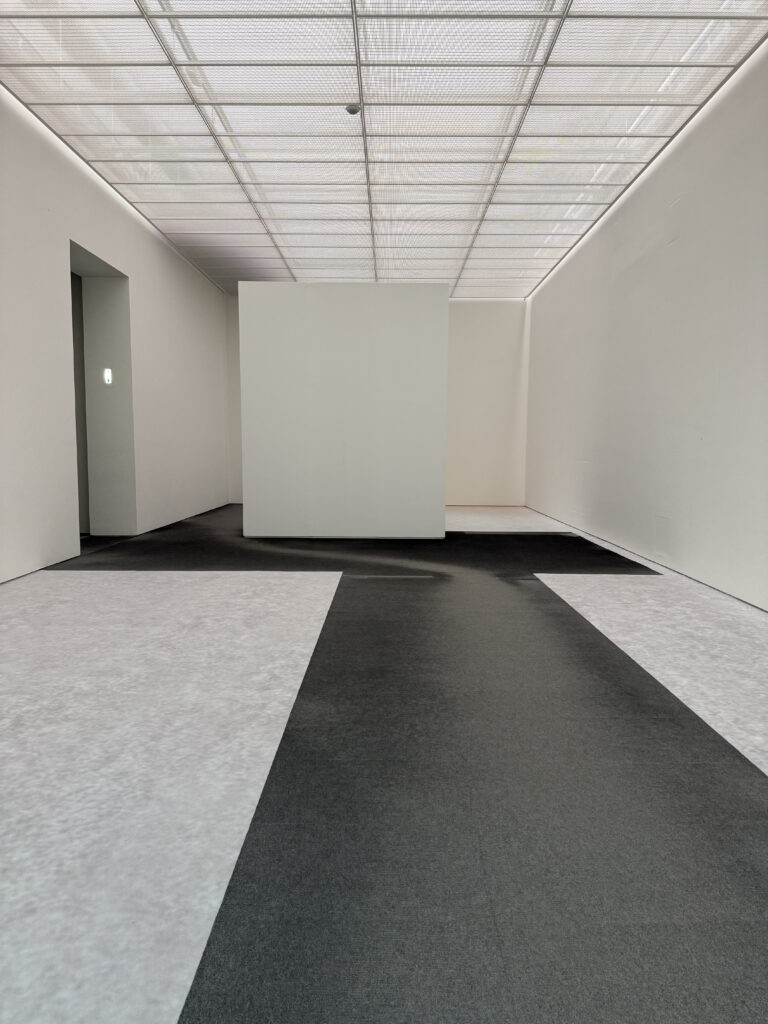
Upon entering, visitors perceive an ecosystem that is entirely distinct from the prevailing exhibition environment. A vast printed floor installation whose appearance changes according to the shifting light of the galleries, and a colony of ants, welcomes the visitors. These works immediately destabilize perception. The ground itself becomes active, mutable, and alive, rather than serving as a neutral support, in an active way the ground participates in the exhibition’s continuous transformation.
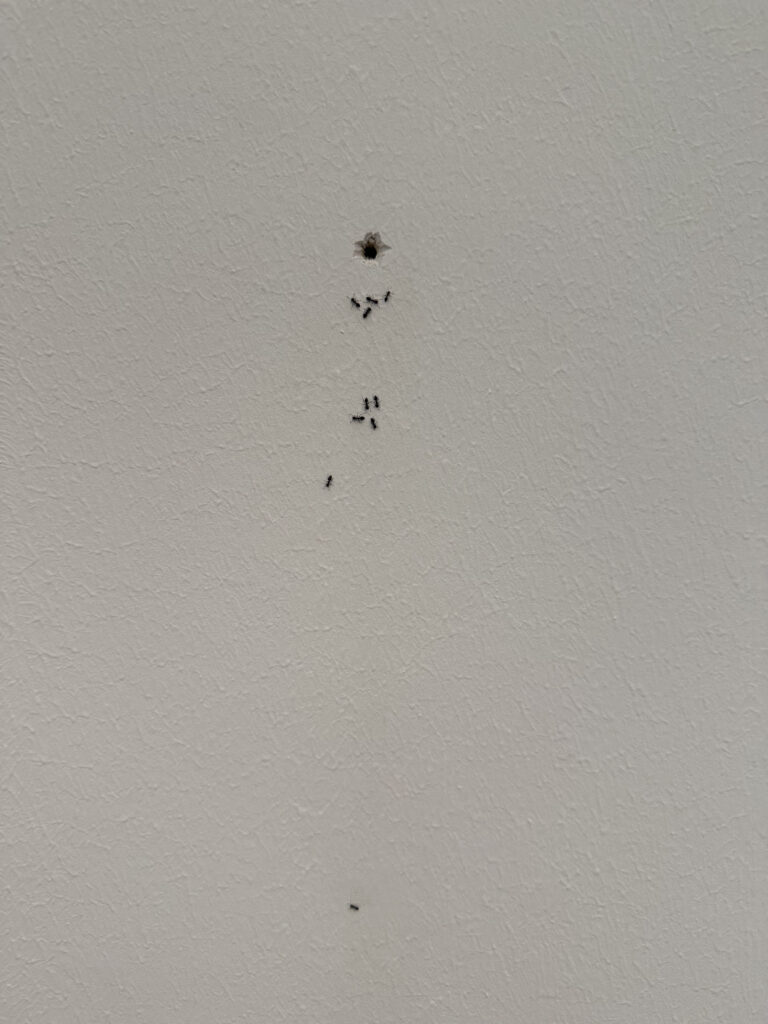
One of the most striking moments occurs with Umwelt (2011), where a wall punctured by an opening is surrounded by colonies of ants. Behind it a window alternates between opacity and transparency according to programmed rhythms. The work appears deceptively simple, yet it condenses many of Huyghe’s central concerns: uncertainty,coexistence and the impossibility of stable perception. The ants are not symbolic figures; they are collaborators. Their activity continuously alters the work, Introducing an element to the exhibition beyond human control.
The presence of ants has become emblematic within Huyghe’s universe. They represent a form of intelligence radically different from our own. Collectively organized and operating without a centralized consciousness, they challenge the human tendency to position ourselves at the center of existence. In Huygeh’s work, ants are not metaphors. They are agents. They remind us that life unfolds through countless systems that neither require nor recognize human dominance.
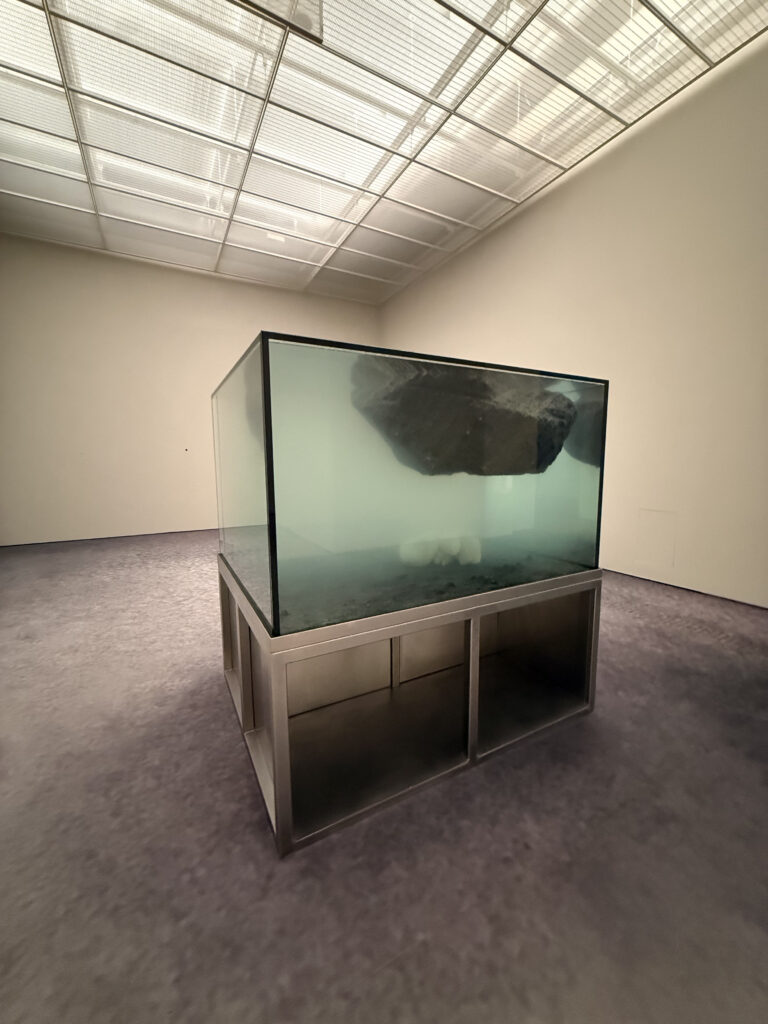
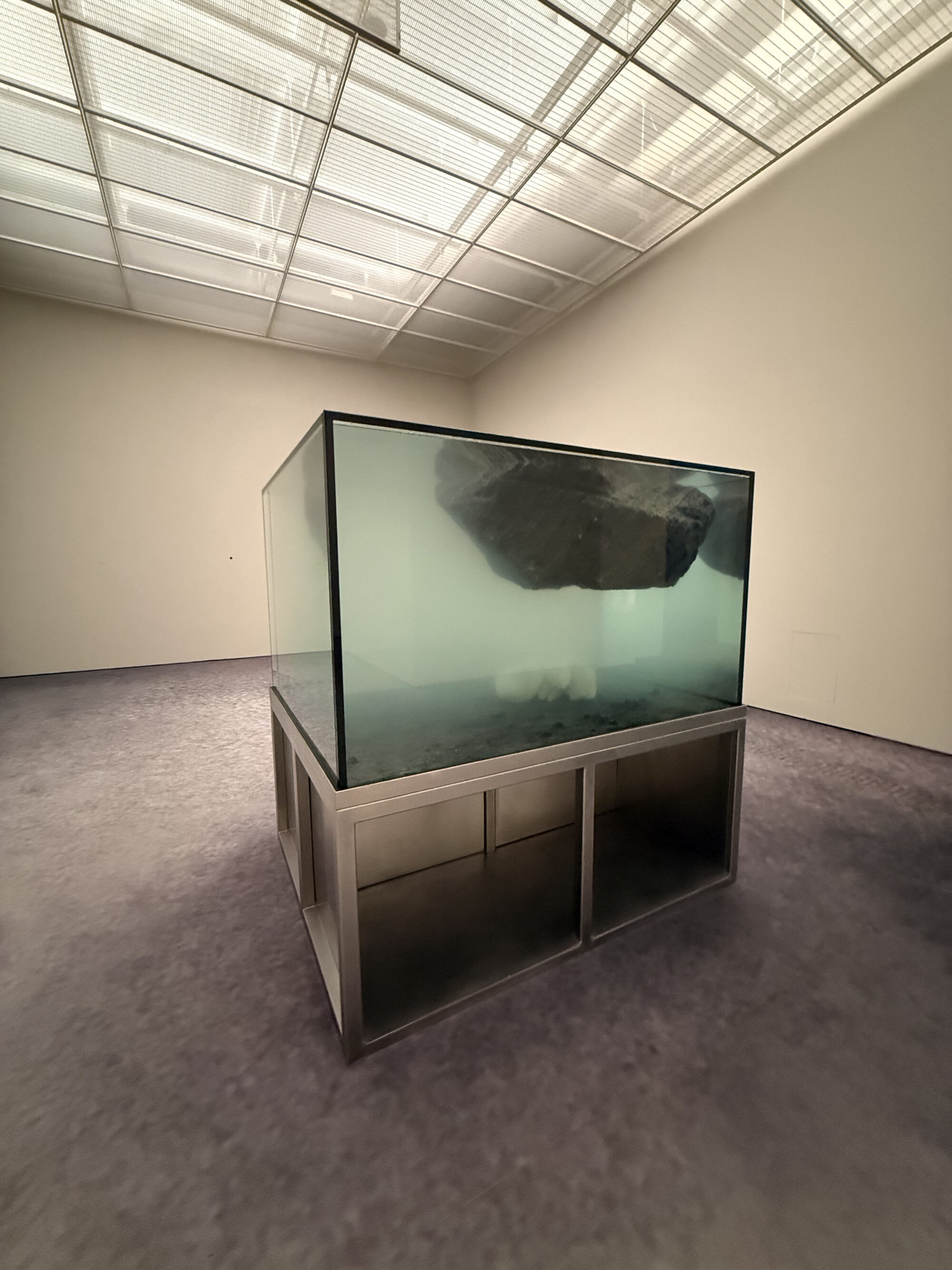
Another major installation, Cambrian Explosion 19 (2013), represents a large stone floating mysteriously on water. The scene possesses an almost prehistoric quality, evoking geological timescales vastly exceeding human story. Watching it, one experiences a suspension of temporal certainty. The work seems to belong simultaneously to the distant past and an unknown future.
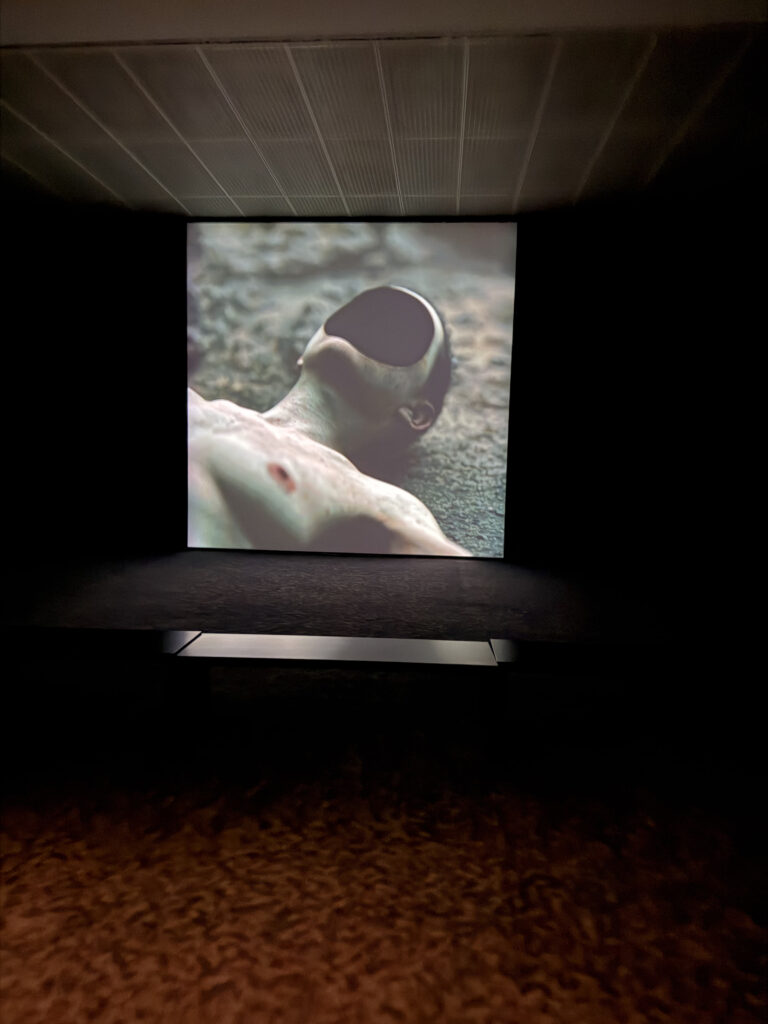
The exhibition also features Huyghe’s ongoing project Liminal (2024-ongoing), a real-time simulation integrating sensors, sound and evolving digital processes. Here Huyghe approaches a form of autonomous image making. The work exists in a perpetual state of becoming, responding to data and environmental conditions rather than following a predetermined narrative.
This film is a living artwork that never repeats itself. It is not a film with fixed beginning and end. Instead, it is a digital being that constantly changes, learns, evolves through real-time data collected from its environment.
A simple explanation of LIMINAL (2024-Ongoing)
Image entering a room where a dream is unfolding on a screen. The dream is created by artificial intelligence, sensors and data from the surrounding world. Temperature, humidity, and other environmental conditions influence what happens. Because this work is constantly receiving new information, no two visitors see the same film.
Here What is Huyghe asking?
He asks, “what could exist between human, animal, machine and environment”. Liminal is less about technology than about uncertainty. Huyghe creates space where viewers experience a world that seems familiar yet impossible to fully understand. Huyghe very clearly asks what might emerge after the human is no longer the sole authors of the world. This concept provokes feelings of unease in visitors, who find themselves somewhere between fear and deep curiosity as they seek to uncover the question; who is the author, human, machine, or a combination of both?
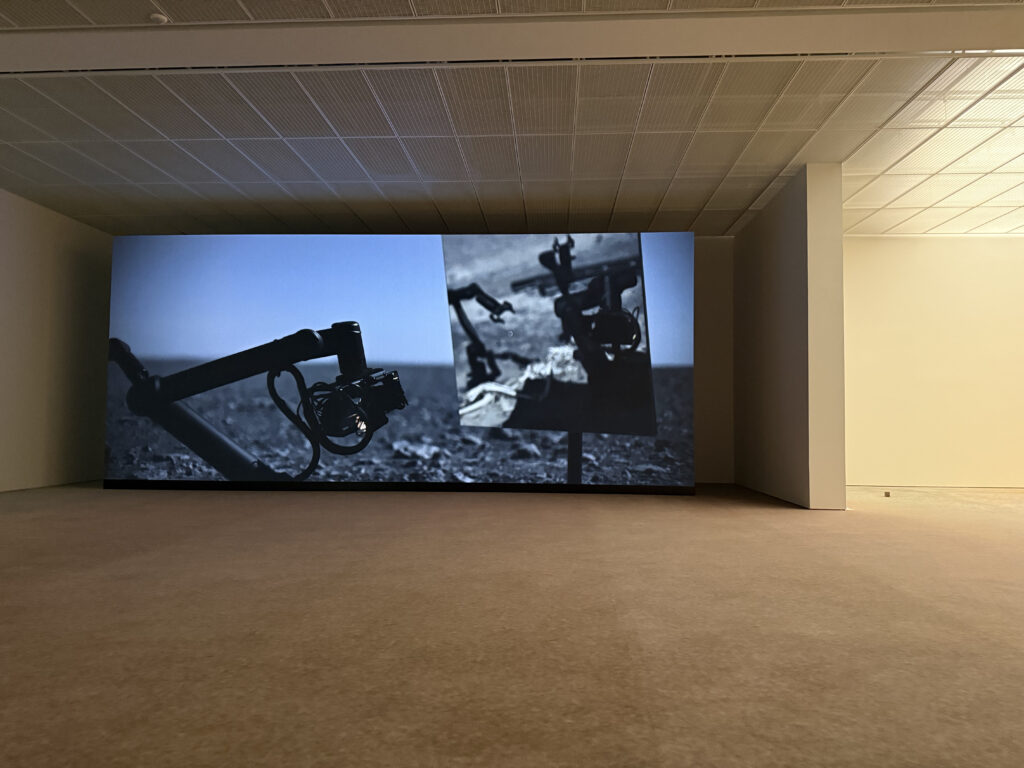
What makes this exhibition exceptional is the way it dissolves the boundaries. Nature and technology, organic life and artificial systems, fiction and reality no longer appear as opposites. Huyghe proposes a world in which these categories have merged into unstable hybrid forms. The exhibition unfolds like a speculative landscape where multiple forms of intelligence coexist.
This perspective resonates profoundly with the contemporary anxieties surrounding climate change, artificial intelligence, and the future of life on Earth. Yet Huyghe avoids direct political statements. Instead, he constructs situations that allow visitors to experience uncertainty itself.
The exhibition asks no simple questions and offers us to inhabit a condition of not knowing.
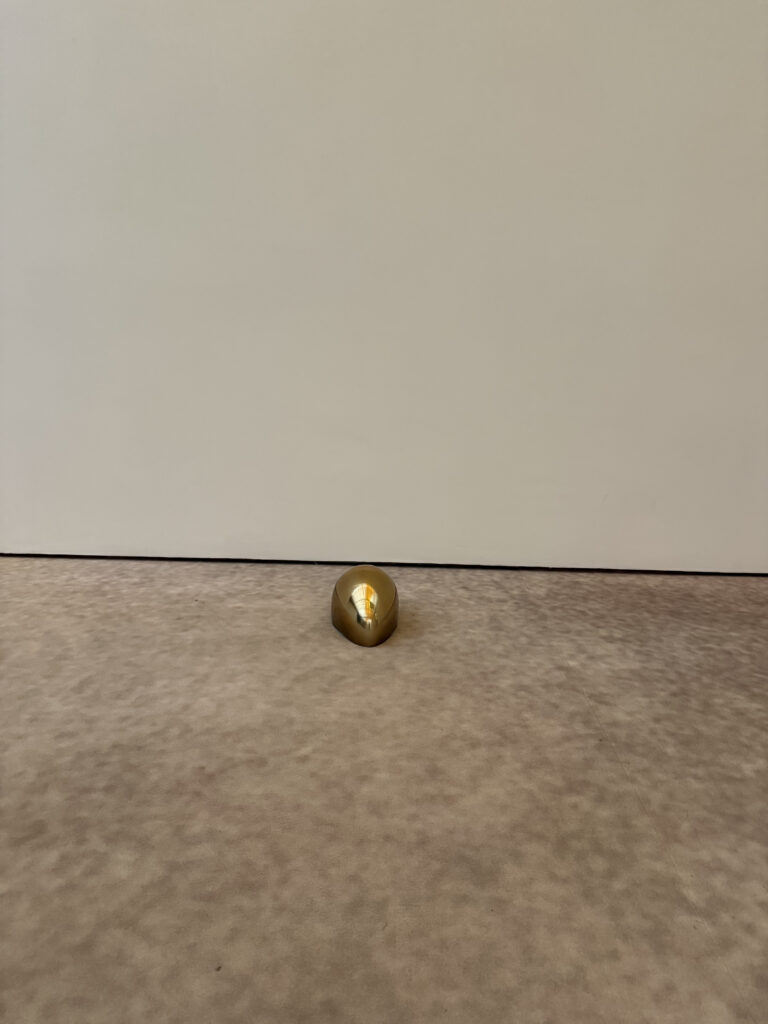
What emerges is a vision of a post-human world, not a dystopian future without people, but a reality in which humanity is no longer the privileged measure of all things. Animals, machines, minerals, algorithms, and environmental process become equally significant participants in the production of meaning.
Standing with these evolving environments, one senses that Huyghe is ultimately asking a question that has haunted much of his recent work: What forms of life, perception and consciousness might emerge after the centrality of the human has faded?
At the Fondation Beyeler, this question is not illustrated, but enacted. The exhibition becomes a living experiment in which visitors are no longer spectators but temporary inhabitants of an uncertain world still in the process of becoming.
It is one of the most intellectually ambitious and philosophically compelling exhibitions currently on view in Europe.
For Pierre Huyghe “fictions are vehicles that give us access to other possible worlds, to a counterfactual imagination. Such fictions, separated from the known, unconstrained by here and now, are open to speculation, to other roads not taken. They make it possible to experience ourselves from the outside.”
The Curators of the exhibition are, Mouna Mekouar, Curator at large, Fondation Beyeler, and Anne Stenne, independent curator.
The exhibition runs until 13 September 2026.

