
Share this article:
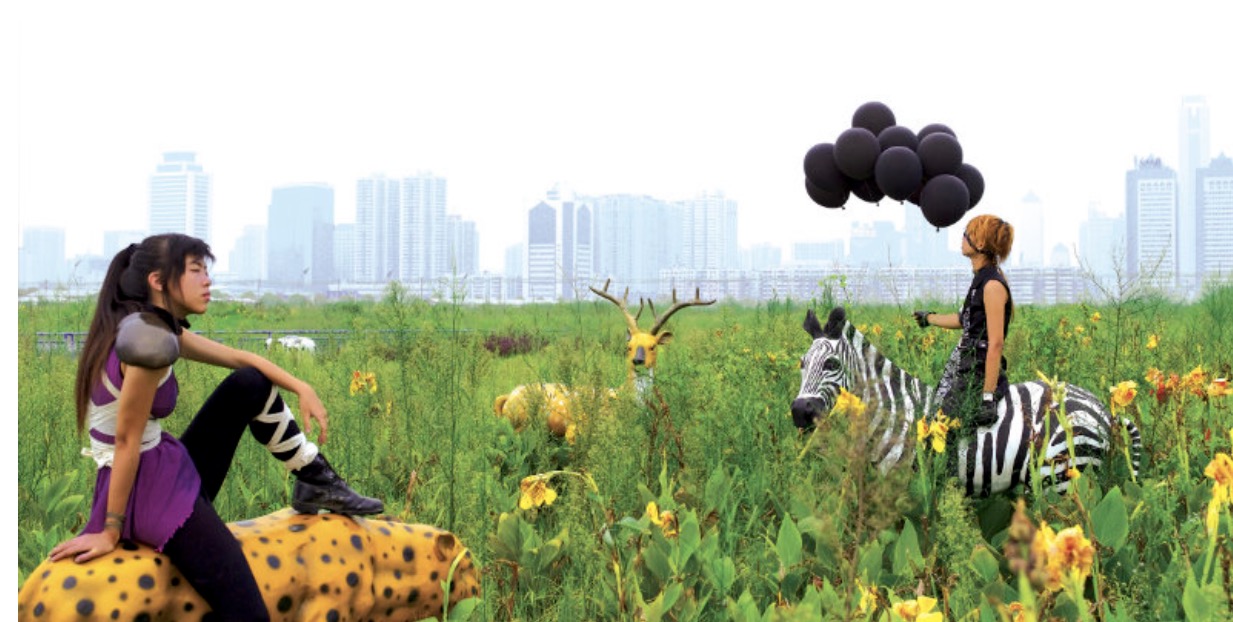
Cao Fei is one of the most influential contemporary artists to emerge from China in the 21st century. Born 1978 in Guangzhou, she is known for her multimedia practice combining video, photography, virtual reality, installation, and digital culture. Her work explores the rapid transformation of Chinese society through globalization, technology, urbanization, and consumer culture.
Rather than presenting China through traditional symbols, Cao Fei often focus on everyday life, youth culture, factory workers, online identities, and futuristic urban dreams. Her works move between documentary realism and speculative fiction, creating poetic yet critical vision of contemporary life.
TESTIMONIES TO THE NEAR FUTURE, KUNSTMUSEUM, BASEL
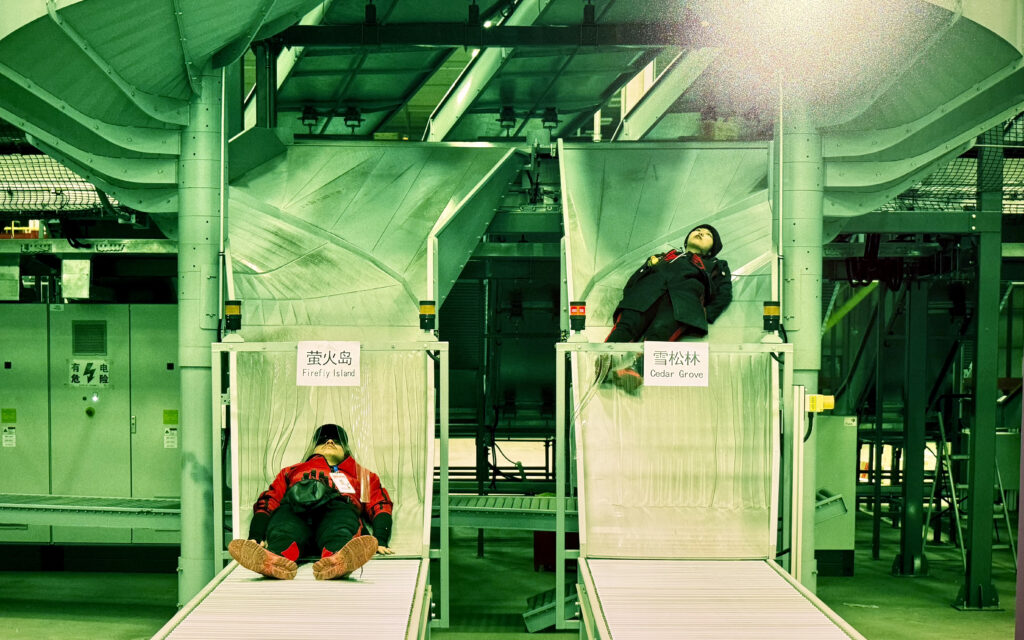
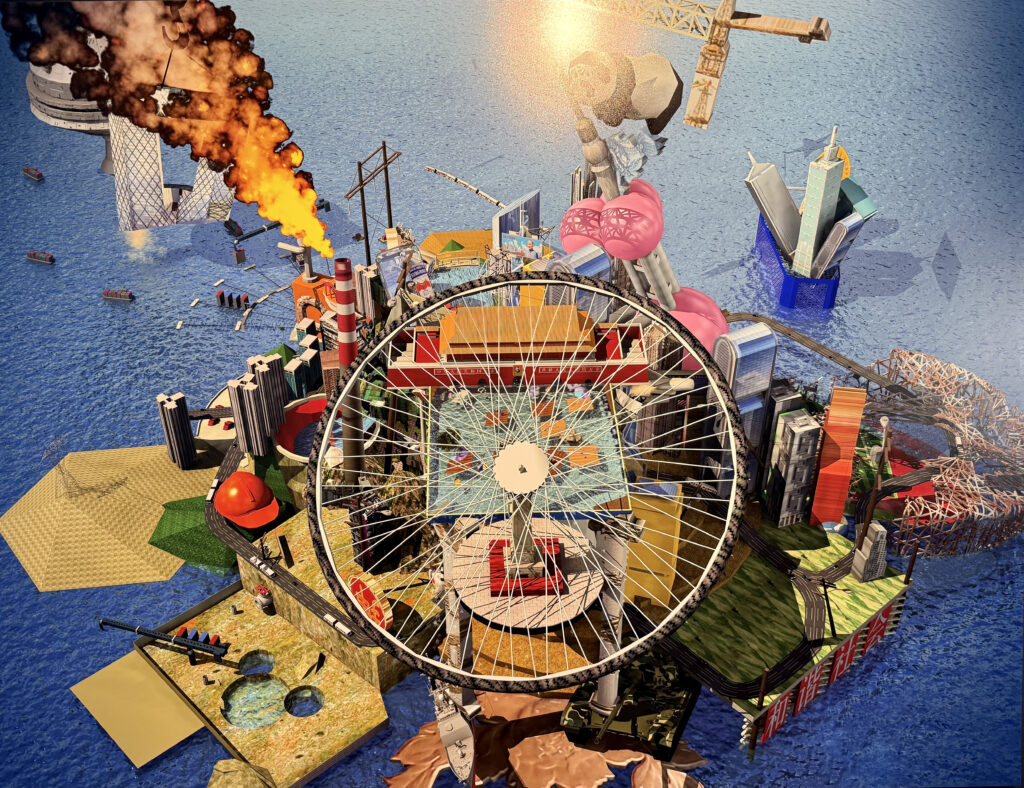
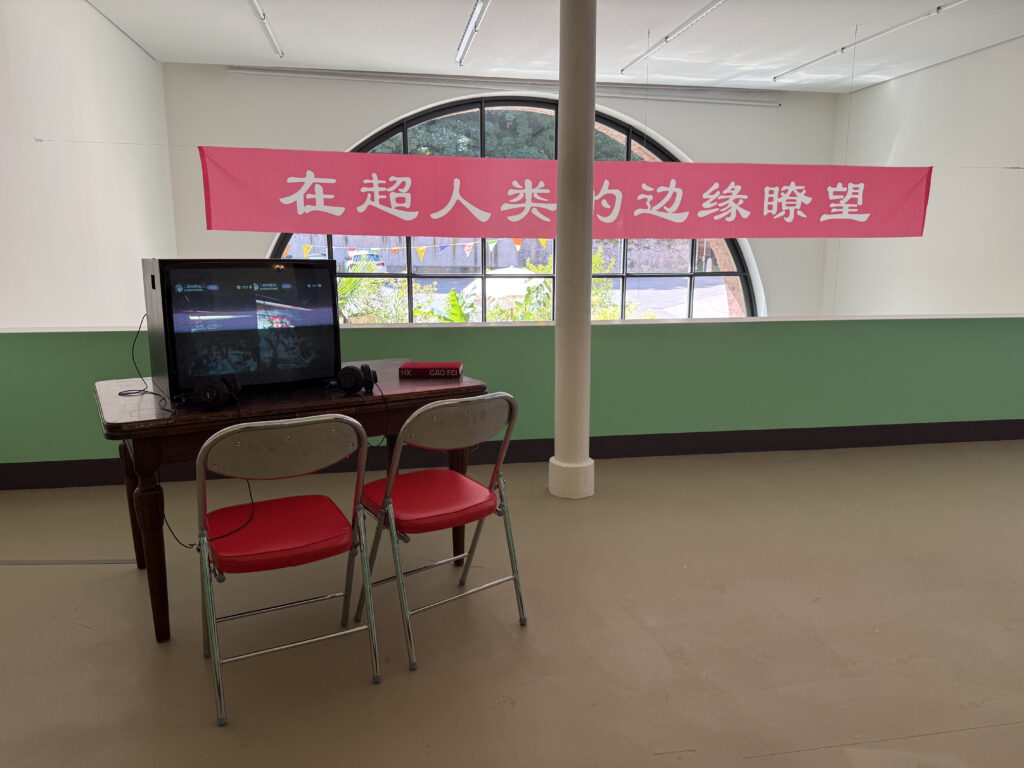
There are exhibitions that present artworks, there are exhibitions that construct worlds. Testimonies to the Near Future, The exhibition of Cao Fei at Kunstmuseum Basel, belongs firmly to the latter category. Spread across the four floors of the museum’s Gegenwart building, the exhibition unfolds less as a retrospective than as an immersive journey through the psychological landscape of the twenty-first century.
Cao Fei does not guide her audience through a linear narrative, instead she invites them to wander through a constellation of stories, images, and environments that mirror the fragmented experience of contemporary life.
Walking through the galleries feels at times like moving through subconscious of globalization itself. The experience oscillates between wonder and melancholy, fascination and unease, it is this emotional ambiguity that gives the exhibition its power.
By the end of the exhibition, visitors are left with the feeling that have travelled through a city built from memories of the future. Cao Fei offers neither utopia nor dystopia. Instead, she presents a poetic cartography of contemporary existence, revealing how imagination, technology, and human experience become inseparable.
CONVERSATION WITH CAO FEI
By Nazli Kok Akbas, Kunstmuseum Basel, May 2026
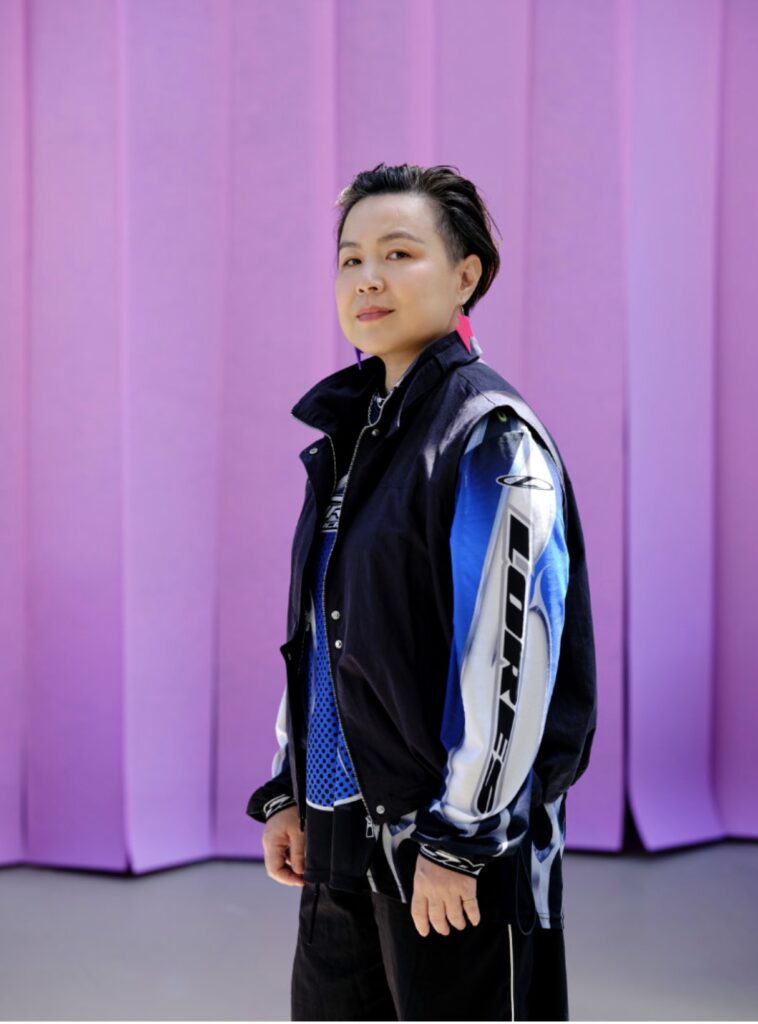
I was delighted to meet Cao Fei during her stay in Basel and to have the opportunity to discuss her exhibition at Kunstmuseum Basel, that invites visitors into her unique universe where memory, technology and imagination continuously intersect.
Nazli Kok Akbas: Your exhibition Testimonies to the Near Future moves between documentary reality and speculative fiction. Do you see the future as a space of hope, anxiety, or contradiction?
Cao Fei: In the exhibition Testimonies to the Near Future, the future is not about being good or bad, nor is it a mythological “prophecy” made by an artist. The future is not a “space,” but rather a relative “sense of time.” The future is where we assume we are going to arrive, yet with every passing second, we are already stepping into its river. Therefore, the future is the present; it is built by stacking up every single second of the past.
The future is vast and hazy. Anxiety or hope regarding it are simply reflections of humanity’s skepticism about existence, our dread of death, and our yearning for what has not yet occurred. The truth is, whether in the present, the past, or the future, humanity has never possessed a total sense of security.
NKA: Many of your works explore the emotional effects of technology, automation, and virtual life. How do you think digital culture is transforming human intimacy and memory today?
Cao Fei: Digitalization has obliterated traditional intimacy. It gradually estranges our everyday physical interactions, but it also manufactures a new kind of intimacy—one that is screen-based and editable. For instance, the meme-style intimacy of social networks, the utilitarian intimacy of dating apps, or the virtual intimacy of AI companions.
Our memories used to be like “film” or written correspondence—they would fade and blur, but they could be touched, and they held warmth. Yet, for the people in Second Life who fall in love and marry in a virtual world, those digital memories are equally real. Even though our information is no longer lost, and everything can be digitalized, those digital memories are rarely truly digested by us.
NKA: In works like Whose Utopia and Asia One, labor appears both deeply human and increasingly mechanized. What continues to fascinate you about the relationship between workers and technological systems?
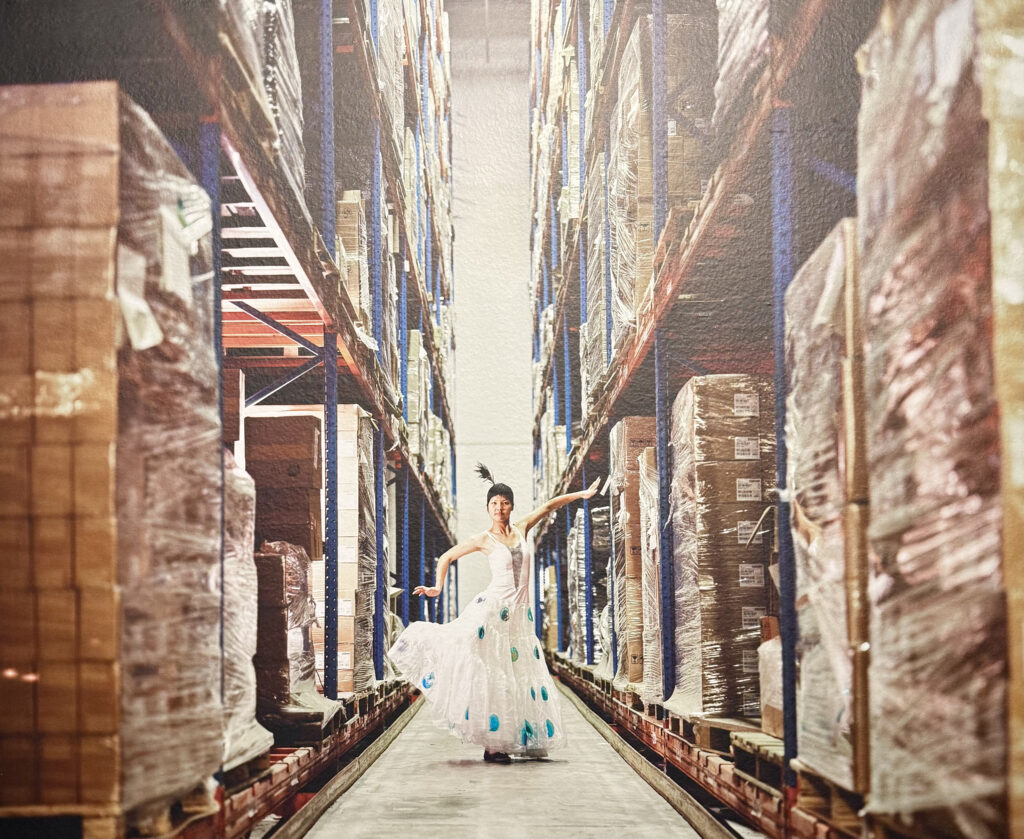
Cao Fei: My focus is not on whether technology is good or bad. In Whose Utopia, the female factory worker dancing next to the assembly line uses her body to declare: I still have dreams, and I refuse to let the value of my life be tethered to a machine. In the hyper-automated warehouse of Asia One, the workers develop a dance with the machinery, entering a moment of negotiation with technology.
On one hand, capital seeks to develop superhuman efficiency; on the other, humans wish to break free from the constraints of machines. I have always wanted to track and record this dynamic evolution between humans and technology—at what point humans yield ground, how they negotiate, how they struggle, and how they find a way out.
NKA: Your artistic language often combines cinematic storytelling with immersive installation. When creating an exhibition such as this one in Basel, do you think more like a filmmaker, an architect, or a novelist?
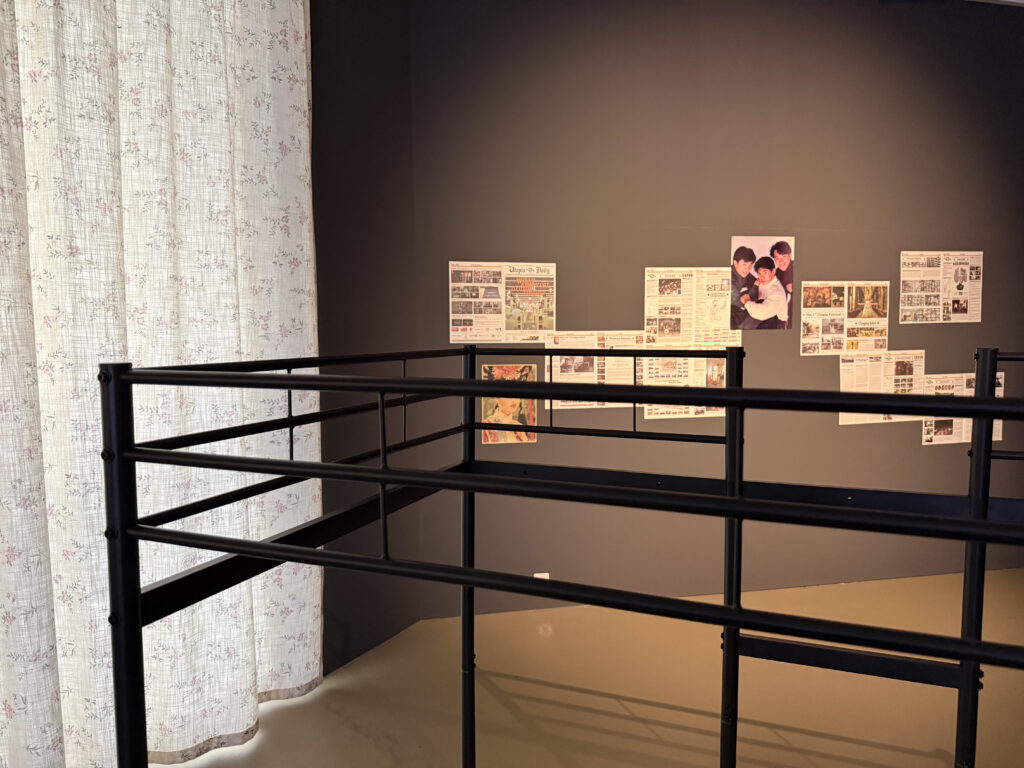
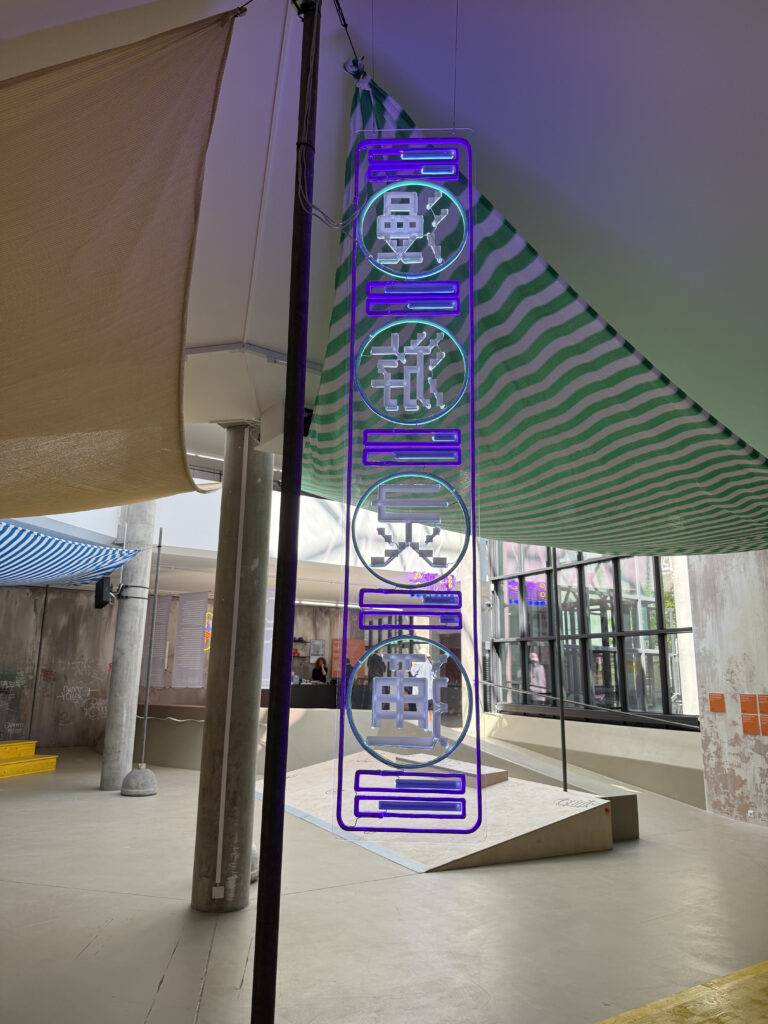
Cao Fei: For this solo exhibition in Basel, I built a “city.” Upon entering the museum, visitors will find they have inadvertently stumbled into countless parallel worlds that might somehow relate to them. It could be a factory, a workshop, a construction site, a ruin, a post-apocalyptic world, or an amusement park. The goal is to make the audience forget they are looking at an “exhibition.”
NKA: Your work frequently captures the speed of transformation in contemporary China, yet it also speaks universally. How do you balance local social realities with global questions about the future?
Cao Fei: I don’t need to force a “balance,” nor do I intentionally label things as Eastern or Western culture. The deepest level of globalization isn’t about cultures becoming identical, but rather about empathy in the face of shared struggles. I find that when audiences see my work, their first reaction is rarely, “This is from China.” Instead, they feel, “This is our shared experience, too.” Or, the work takes them to places they have never been—like virtual worlds, the Sino-Russian border, or the past and the future.
My curiosity, how I am moved by the world, my optimism, and my melancholy… these are what drive me to dig deeper. And I believe this underlying emotional foundation is something shared by all of humanity.
I would like to warmly thank to Cao Fei sharing her thoughts and reflections, as well as the entire team at Kunstmuseum Basel for their assistance for making this conversation possible.
Nazli Kok Akbas

